Why Pique Works Beyond the Golf Course
Few fabrics move as easily between golf, tennis, a company uniform and a business-casual wardrobe as pique. Its textured face gives a simple polo visual depth without elaborate decoration. That makes it an attractive starting point for brands developing a versatile everyday product.
But “send me pique” is not a complete sourcing brief. Cotton, polyester, yarn, stitch pattern, finished weight and finishing all change the outcome. This guide focuses on polo-shirt knits and explains which choices to make before approving a swatch or placing a production order.
What Is Pique Fabric? Structure, Not Fiber Content
Pique, also written piqué, describes a textured fabric rather than one fiber composition. In polo sourcing, it usually means a weft-knit construction with a regular raised surface made using knit and tuck arrangements. The texture may resemble small cells, diamonds or a honeycomb. PK is a trade shorthand, while Chinese suppliers may also use names translated as “pineapple cloth.”
The broader piqué name also covers woven fabrics, so specify knitted polo pique if that is what you need. A smooth fabric is not necessarily inferior, and a visible cell does not prove cotton content, machine type or tested breathability. Ask for the structure and composition separately.
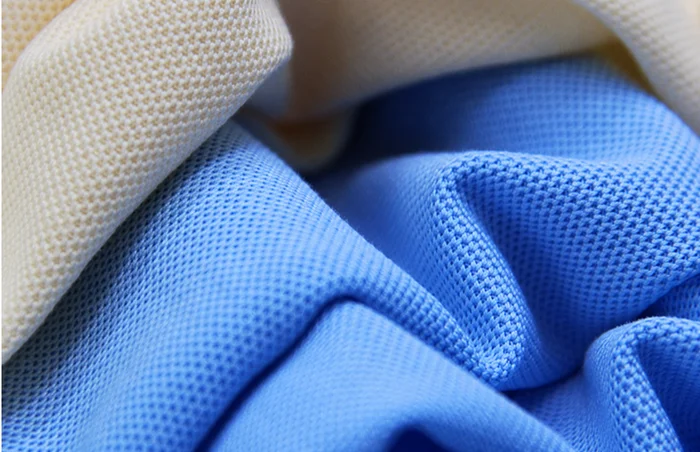
Small vs. Large Texture: Agree a Physical Reference
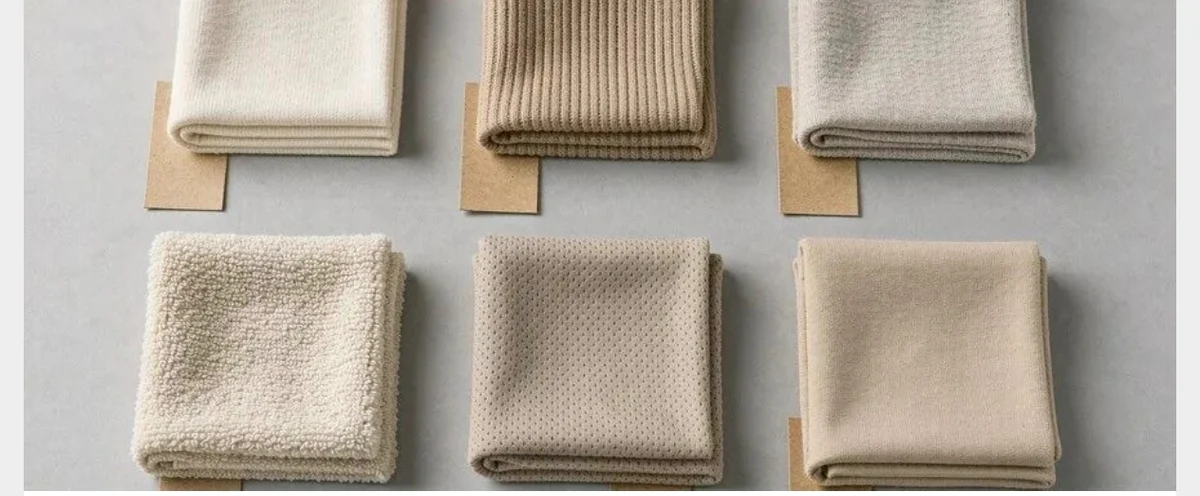
Fine pique textures can produce a discreet, refined face for tees and polos. Coarser textures make the surface more prominent and can suit sporty or heavier casual pieces. Descriptions such as small pique and large pique are supplier shorthand, not universal millimeter categories.
Cell size alone does not determine softness, thickness or airflow. Yarn size, stitch length, density, finishing and stretch content also contribute. Instead of ordering “1–2 mm pique” as though it were a complete standard, approve a face-and-back reference swatch and record the construction with the mill.
Single Pique vs. Double Pique: Verify the Repeat
Single and double pique are common knit trade descriptions. The supplied notes describe four-feed and six-feed repeats and distinguish four-sided and six-sided cell appearances. These can be useful descriptions of particular constructions, but do not make them universal definitions across suppliers. Ask for the actual stitch repeat, needle arrangement and sample.
Importantly, “double pique” does not automatically mean a double-knit fabric made on two needle beds. Names used for a tuck pattern and names used for machine-bed construction are different classifications. Compare the actual fabric’s density, handle, extension and stability; a double label alone does not establish better abrasion resistance or a premium quality tier.
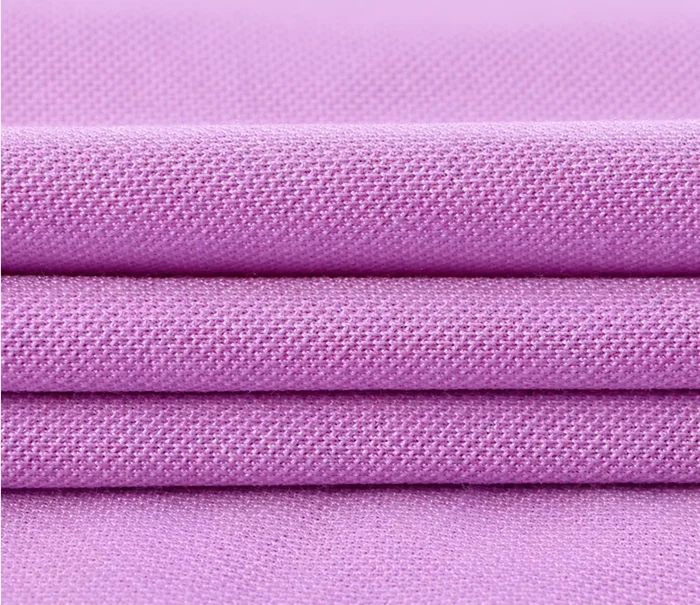
Cotton vs. Polyester Pique: Choose for the Product
Cotton pique is often selected for an absorbent, familiar handfeel in casual polos and tees. It can suit direct skin contact, but softness varies by yarn and finishing. Dimensional change and drying behavior should be verified. High-quality cotton does not necessarily arrive preshrunk; ask what stabilization has been performed and require the agreed wash result.
Polyester pique can suit sportswear or uniforms where drying behavior and dimensional stability matter. Polyester absorbs less moisture into the fiber than cotton, but a finished garment’s wicking and drying performance still depends on yarn, structure and treatment. It is not automatically sweat-concealing, odor-free or comfortable in every climate.
Cotton–polyester blends offer another balance of handle, care, cost and stability. The blend percentage matters, and no composition guarantees a lower price without comparing yarn quality, dyeing, finish, quantity and commercial terms. Approve the complete fabric rather than deciding from a fiber label alone.
| Option | Why sample it | What to verify |
|---|---|---|
| Cotton | Absorbent, familiar handle | Shrinkage, handle, drying and colorfastness |
| Polyester | Performance and easy-care development | Wicking/drying evidence, feel and odor expectations |
| Cotton–polyester | Balance of care and handle | Blend ratio, pilling and quotation basis |
| Elastane blend | Fit and recovery | Extension, recovery and wash stability |
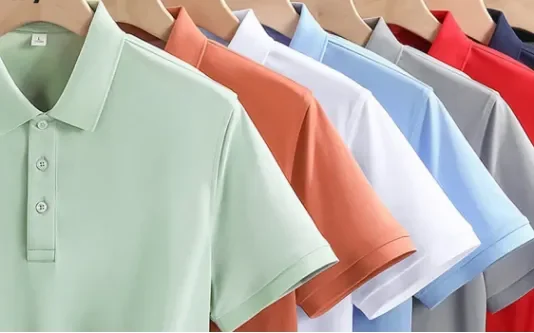
Stretch, Modal and Other Blend Options
Elastane can add extension and recovery for a fitted polo. Specify composition, stretch direction, required extension and recovery rather than treating any elastane addition as identical. A denser stretch construction may reduce airflow, but this is a construction trade-off to measure, not an unavoidable consequence of a small elastane percentage.
Modal or viscose can change softness and drape. A softer, more fluid handle may suit one silhouette while undermining another that needs body. Materials marketed as bamboo are often bamboo-derived viscose; the plant origin does not establish antibacterial performance in the finished textile. Any functional claim requires relevant evidence.
Plated arrangements described as cotton-over-polyester or polyester-over-cotton can give the two faces different characteristics. Confirm which yarn appears on which face and evaluate the complete structure. Fiber positioning alone does not prove one-way moisture transfer.
Pique vs. Jersey vs. Interlock
Single jersey usually offers a smooth technical face and a different reverse. Knit pique adds a textured arrangement; interlock is a double-knit construction commonly chosen for a smoother, more substantial handle. These are useful directions for sampling, not a universal softness ranking.
For a relaxed tee, a smooth jersey may fit the design better. For a classic polo with a visible textured body, pique is a strong candidate. For a smooth polo or a fuller-bodied product, trial interlock. The collar is a separate component decision: it may use rib, flat-knit material or a cut-and-sewn construction rather than the same body fabric.
| Structure | Typical visual direction | Potential application |
|---|---|---|
| Knit pique | Textured cells or raised pattern | Classic textured polos |
| Single jersey | Smooth face, different reverse | Tees and smooth polos |
| Interlock | Smooth double-knit appearance | Fuller-bodied smooth tops |
Does Pique Breathe Better, Resist Wrinkles or Avoid Pilling?
A raised texture can change the way fabric contacts the skin and create an airy visual character. It does not guarantee higher air permeability than every jersey. Compare similar weights and intended fits, and test airflow or moisture behavior where these support a product claim.
Wrinkling, pilling, snagging and wash stability depend on yarn, fiber, structure and finishing. Pique can pill, lose shape or catch on a rough bag strap. Hanging a garment does not reliably remove every crease, and texture does not eliminate ironing requirements. Good sourcing replaces “never pills” with agreed performance criteria.
The same caution applies to cost. Some pique constructions use more knitting time or material than a proposed jersey alternative, but quotes must be normalized for composition, yarn, weight, width and finish. A higher price is not itself a quality certificate.
Applications: Match Texture to the Wearing Scenario
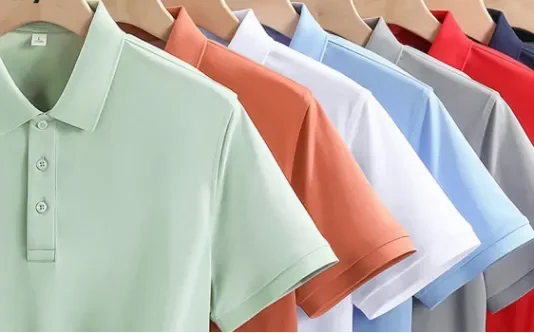
Pique is a useful candidate for summer polos, tees, company uniforms, golf and tennis tops, schoolwear and selected casual layers. Heavier or specially engineered versions may suit jackets, but simply increasing GSM changes consumption, drape and comfort as well as thickness.
Children’s tops and loungewear need particular attention to skin feel, safe components and care performance. Do not claim prevention of heat rash from the fabric name. For a sports polo, verify mobility and drying alongside appearance. For a business polo, check opacity, collar recovery, placket flatness and whether the garment still looks tidy after repeated care.
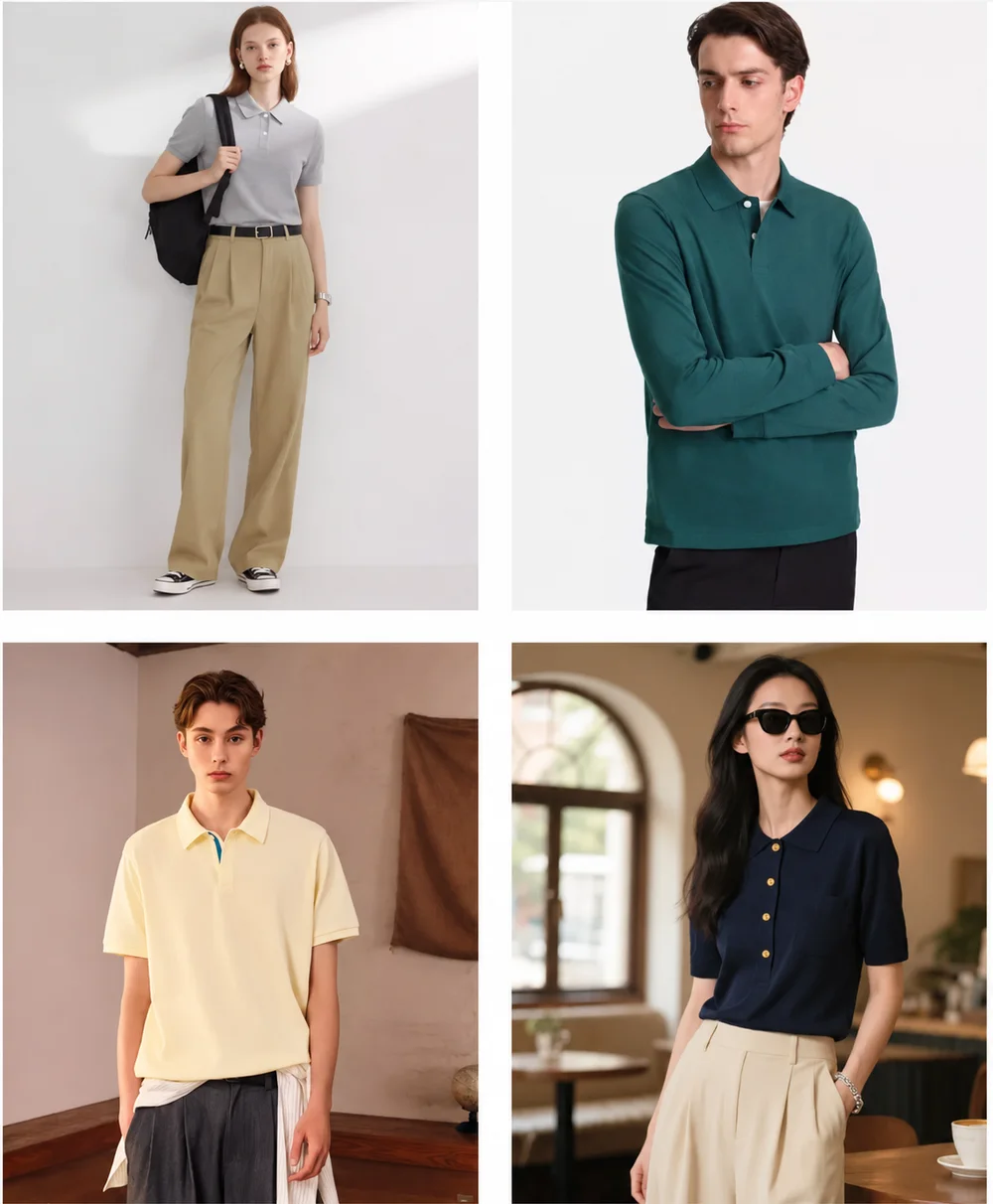
Polo Sourcing: GSM, Collars, Color and Washing
Select weight by garment brief, climate, opacity and fit. As development examples rather than standards, a supplier might propose a lighter 160–180 GSM fabric for a summer top or 180–220 GSM for a more substantial polo. Actual workable weights extend outside these bands. Compare full garment samples before setting the final target and tolerance.
Approve collar and cuff material alongside the body. Compare shade in suitable controlled lighting, then wash the assembled sample to check differential shrinkage, twisting, collar curling and seam appearance. A matching dry swatch does not establish matching performance after laundering.
Check washing and rubbing fastness, pilling or snagging as appropriate, dimensional change, skew and stretch recovery. Agree test methods and criteria with the supplier for the intended market and use. Keep an approved production reference and verify repeat availability, minimum quantities and lead time for each color.
An RFQ Checklist for Pique Fabric
An effective inquiry identifies knit pique and the approved texture reference, then specifies the fiber percentages, yarn requirements, target GSM and tolerance, usable width, finish, color and end use. Include the intended care process, functional claims that need proof and the performance acceptance criteria.
If requesting a plated or stretch product, state face orientation and recovery expectations. If ordering matching collars and cuffs, make these separate deliverables. Ask what the quotation includes, whether pricing is by kilogram or meter, and whether sample and bulk constructions will be identical.
For example: “Please quote knitted pique for a business-casual polo. Match the attached face and reverse swatches. Propose cotton and cotton–polyester options at our target weight, with usable width, wash-test data, matching collar options, color MOQ and bulk lead time.” Replace the open choices with confirmed specifications before the purchase order.
How to Wash and Store Pique Garments
Follow the finished garment’s care label. Composition, dyes, prints, trims and finishing determine suitable washing and drying conditions. Gentle handling, washing inside out and separating colors can reduce avoidable abrasion or color transfer, but a universal temperature instruction is inappropriate for every pique product.
Do not add kitchen salt expecting it to permanently fix a finished garment’s dye. Colorfastness must come from a suitable dyeing and afterwashing process. Avoid bleach unless the care instructions permit the specific product, and choose detergent compatible with the garment; alkaline detergent does not automatically damage all cotton at normal use conditions.
Avoid excessive drying heat where the label restricts it, and reshape the garment as directed. There is no universal 60°C threshold at which cotton suddenly becomes brittle. Dry thoroughly before storage; fold heavier knits when prolonged hanging would distort them. Keep rough accessories away from vulnerable surfaces.
From a Pique Reference to the Right Fabric
The best pique fabric is the one that meets the product brief: an appropriate texture, composition, weight, handle and care performance. Neither a double-pique name nor a premium fiber claim replaces a representative swatch and a washed garment sample.
If you already have a fabric photograph or reference piece, our sample-search service can help locate the same or similar candidates. Tell us whether composition, texture, color, weight or handfeel is the priority. Finding a similar fabric is the first step; functional testing and the garment factory’s sample approval remain separate requirements before production.
Translated and consolidated from two contributor-supplied Chinese sections. Duplicate passages removed. Supplier repeat descriptions qualified; fiber/structure distinctions and unsupported no-pilling, medical, antibacterial, salt-fixing and temperature guarantees corrected. GSM bands are explicitly illustrative development options.
A sourcing guide, not a laboratory report. Photographs illustrate texture or styling and cannot establish fiber content or performance. Woven pique is distinguished from the knit polo focus.
Sources
Find the right pique reference
Send a photo or physical reference with your fabric priorities to compare candidate swatches.
YOUR NEXT STEP
Put the details to work.
Estimate an order or turn your specifications into a supplier inquiry.