An Annual Summer Dilemma
A crowded commute, a warm meeting room or a short walk can leave a visible damp patch across a summer shirt. On some colors the wet area looks darker; after drying, pale residue may remain. For clothing brands, these are familiar appearance problems that a quick-dry label alone does not resolve.
Sweat-concealing fabric—also marketed as sweat-masking or sweat-invisible fabric—is designed to make perspiration less noticeable. It helps a garment look drier; it does not stop the wearer sweating. “Anti-sweat-stain” is an ambiguous sales term, so clarify whether the supplier means reduced wet patches, reduced dry residue or another effect before comparing products.
Why Wet Fabric Looks Different
When water replaces air within a textile, it changes the optical interfaces and the balance of reflected, scattered and absorbed light. Many fabrics therefore appear darker when wet. The result depends on fiber, dye, structure, moisture level, lighting and viewing angle. A pale fabric may also become more translucent.
Dark fabrics do not universally turn white when wet. They can darken, show a different sheen or reveal a wet boundary. White rings after drying are a separate deposit problem and may include sweat salts or product residues. Reducing wet-state color contrast does not automatically prevent those deposits. Evaluate the wet and dried states separately.
Technical Principle: Ask Which Route the Supplier Uses
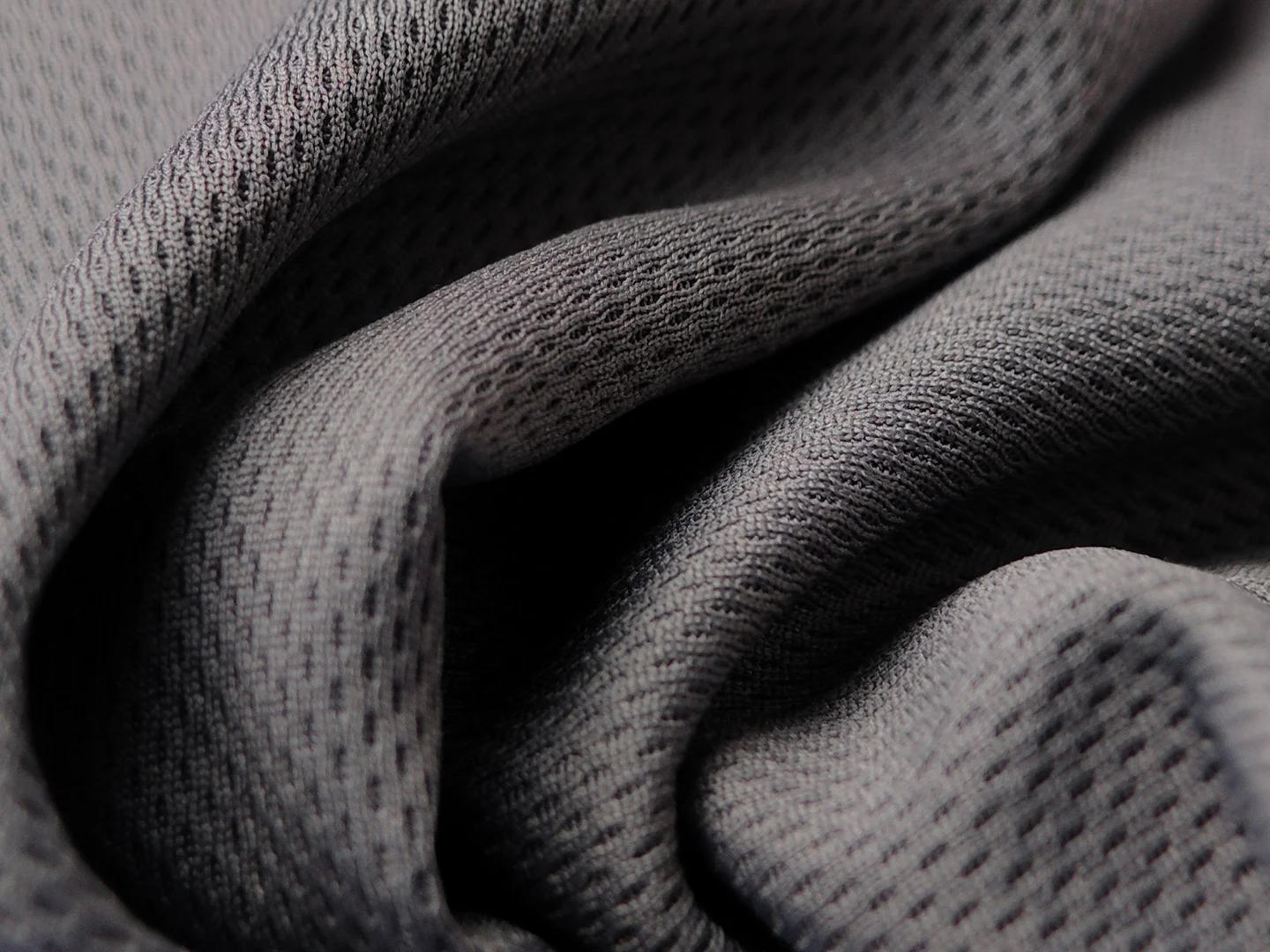
Sweat concealment is a performance objective, not the name of one universal polymer recipe. Some products use optical modification within a manufactured fiber; other appearance strategies depend on the fabric construction, surface treatment or a combination of approaches. Do not assume every supplier uses a light-absorbing additive or the same proprietary chemistry.
A documented example is COOLMAX CloakFX™ fiber. Its manufacturer describes fiber-level optical masking that helps maintain a similar shade when wet, while allowing moisture transport. This is a manufacturer-described mechanism, not independent proof that every fabric containing the fiber will perform equally. [1]
For a proposed material, ask which component creates the effect, where it is located and how much is required in the finished construction. Request supporting data for the actual yarn, color and fabric—not a demonstration on a different sample.
Built-In Function Does Not Mean Unlimited Durability
Incorporating a functional component during fiber manufacture can avoid relying solely on a removable surface deposit. It does not guarantee that appearance will remain unchanged through unlimited laundering, abrasion, heat exposure or garment finishing. Changes elsewhere in the textile can alter the visual result even if the additive remains present.
Post-applied treatments are not inherently fake, either. Judge any route against a defined claim, repeatable test and the intended service life. Specify the laundering method, detergent, drying procedure and evaluation intervals. Compare retained performance rather than accepting “permanent” as a complete specification.
Light and Dark Shades Need Separate Validation
Concealment can vary substantially by color. A successful gray swatch does not validate white, navy or every dye recipe in the collection. The contrast can involve lightness, hue, translucency and directional shine; a single face-on photograph may hide important differences.
Validate each intended shade or a justified representative selection, including the colors most likely to reveal moisture. Compare against a conventional control of similar construction under the same wetting and viewing conditions. Separate shade-specific results do not establish that all light and dark fabrics necessarily require two distinct chemical formulations.
Avoid unsourced claims such as a universal “one-quarter reflectivity” result. Ask for the comparison sample, test conditions, measurements and repeatability behind any percentage. Under saturation or sustained perspiration, some visible change may remain.
Sweat Concealment vs. Moisture Wicking
Moisture wicking describes liquid movement through or along a textile. Quick drying concerns how rapidly moisture is lost under specified conditions. Sweat concealment concerns how visible the moisture looks. A fabric may combine these functions, but one test cannot establish all three.
A wicking fabric can still show a conspicuous wet patch. A fabric that masks a patch may still feel damp, dry slowly or perform poorly in a complete garment. Conversely, the absence of an added wicking finish does not prove that a fabric traps sweat: yarn and construction also influence transport. Evaluate appearance and wearer comfort as separate requirements.
| Function | Main question | What it does not prove |
|---|---|---|
| Sweat concealment | How noticeable is moisture on the fabric? | Dry feel, drying speed or no salt residue |
| Moisture wicking | How does liquid move through the textile? | An invisible wet patch |
| Quick drying | How rapidly does moisture leave under agreed conditions? | No visible sweat during use |
| Dry-residue control | What remains visible after perspiration dries? | Wet-state optical concealment |
Applications and Fiber-Carrier Limits
Activewear is a natural sampling opportunity because polyester-based performance fabrics are already widely used. Polos, commuting tees and other business-casual products may also benefit where visible perspiration is a meaningful customer concern. These are product-development opportunities, not a verified ranking of market size or demand.
Fiber-integrated technology is limited to the particular polymer and yarn systems for which it has been developed. A polyester product cannot simply be spun into an existing natural cotton fiber. That does not mean every concealment strategy is categorically unavailable to natural-fiber garments. Ask what is commercially available for the actual construction instead of accepting a blanket claim about all polyester, nylon, cotton or wool products.
How to Evaluate Dry-to-Wet Color Difference
Agree a written protocol with the supplier and testing laboratory. Specify specimen conditioning, test face, backing, liquid type, dose per area, application method, waiting time, temperature, humidity and drying stage. Distilled water and artificial perspiration answer different questions. Use repeated specimens and an appropriate conventional control.
Record color coordinates in the dry and wet states, then calculate their difference using an agreed ΔE formula and instrument configuration. ΔE is a difference between two measurements, not a standalone value measured “on dry fabric.” A lower dry-to-wet difference can indicate better shade stability within that protocol, but it does not fully capture gloss, patch boundaries or transparency.
Use controlled visual assessment alongside instrumental results. Define an acceptance target appropriate to the color and end use rather than treating one number as a universal sweat-concealment standard.
Post-Wash Retention and Real-Wear Trials
Retest the same appearance protocol after agreed laundering intervals. Fifty cycles could be a buyer-selected target where relevant, but it is not a universal pass requirement. Keep unwashed retains and compare both absolute performance and the change from baseline; a stable but ineffective sample is not a successful product.
Then test complete garments against suitable controls. Document fit, garment weight, panel placement, activity, duration and environmental conditions. Use standardized lighting and camera settings, avoid image enhancement and capture the wet, partly dried and fully dried stages. Gather wearer feedback on dampness, sticking, heat and drying.
Wear photos complement laboratory measurements rather than automatically outweighing them. Human sweat rates and exercise intensity vary, so an uncontrolled before-and-after image is weak evidence. Use the two approaches together to assess appearance and comfort.
A Hybrid Option: Functional Face, Comfortable Back
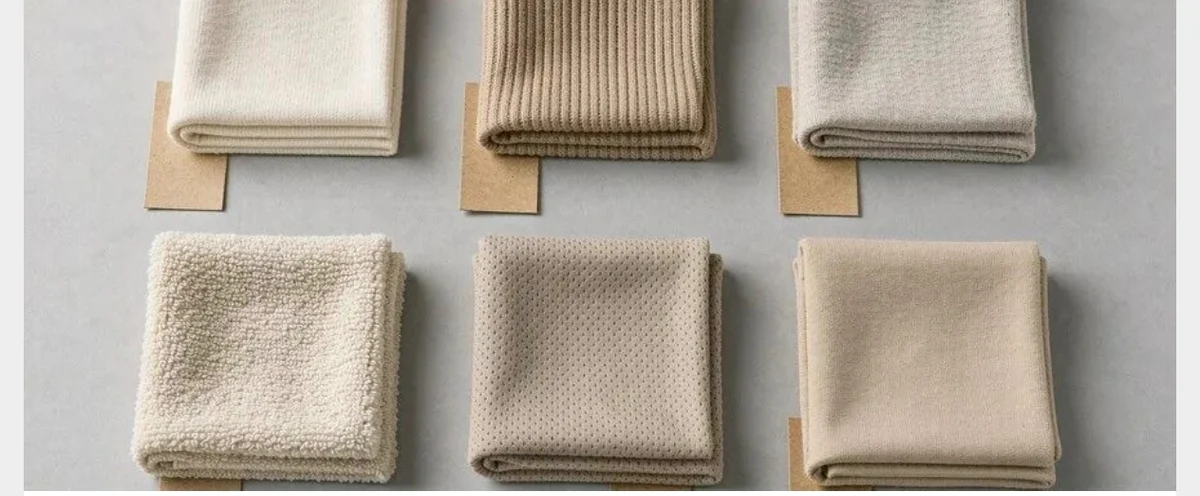
A double-faced or plated construction can place an appearance-focused yarn on the outside and a different yarn against the skin. Polyester with a cotton or lyocell-rich skin side is one possible development route, subject to yarn availability and the mill’s capabilities. Not every interlock or air-layer knit has independently controllable faces.
For a polo, trial a stable, breathable construction with the desired face coverage. For a premium tee, assess skin-side handle and overall weight. A multilayer sports jacket needs a garment-level moisture strategy; adding an outer optical effect cannot compensate for a poorly ventilated system.
Check whether the inner layer retains liquid, whether moisture reaches the functional face and whether the whole structure dries acceptably. Confirm differential shrinkage, pilling, snagging, colorfastness and the visual effect after care. The proposed layer arrangement is a sampling concept, not a ready-validated formula.
Market Opportunity: Test the Customer Promise
The consumer problem is easy to explain: people may want a garment that feels comfortable without broadcasting perspiration. That creates a plausible product proposition, but it does not prove universal willingness to pay, a particular sales volume or a guaranteed early-mover advantage.
Validate the opportunity with customer interviews, controlled product demonstrations and small production trials. Distinguish wet-patch concealment from dry salt residue, odor control, waterproofing and reduced perspiration in product copy. Quote only performance supported by the finished garment’s evidence.
A progression from activewear into business casual and other categories is one possible development path, not a fixed market timetable. Wider adoption depends on cost, design, reliable performance and whether customers notice a useful benefit.
The Sourcing Checklist: Turn a Claim into a Specification
Ask for the functional mechanism, yarn supplier and traceable material identification; the actual composition, construction, GSM and usable width; and dry-to-wet appearance data for the proposed colors. Agree wash-retention testing, visual assessment, garment trials and acceptance criteria before bulk purchasing. Keep approved samples and records of the tested production route.
When comparing quotations, separate the material premium from testing costs, order minimums and delivery conditions. If you need a market alternative to a reference, our fabric sample-search service can help locate candidate swatches. Specify sweat concealment as a requirement and ask what evidence is available. Finding a visually similar fabric does not certify its functional performance.
The practical objective is a balanced summer garment: appearance that meets the agreed claim, moisture behavior suited to use, an acceptable handfeel and performance that survives the intended care routine.
Edited from the contributor’s manuscript. The named fiber-level optical masking example was checked against manufacturer descriptions. Unsupported additive chemistry, universal carrier restrictions, fixed reflectivity ratios, sales figures, unlimited wash-life guarantees and market-stage assertions were removed or qualified. Proposed testing is a buyer-defined protocol, not a claim of certification.
No supplied textile or garment was independently tested. Manufacturer descriptions are attributed, not independent product verification. Visual concealment, drying, comfort and dry residue require separate evidence.
Sources
Find candidate functional fabrics
Send your reference and performance priorities. Candidate swatches still need agreed functional testing before production.
YOUR NEXT STEP
Put the details to work.
Estimate an order or turn your specifications into a supplier inquiry.