What Is Single Jersey Fabric?
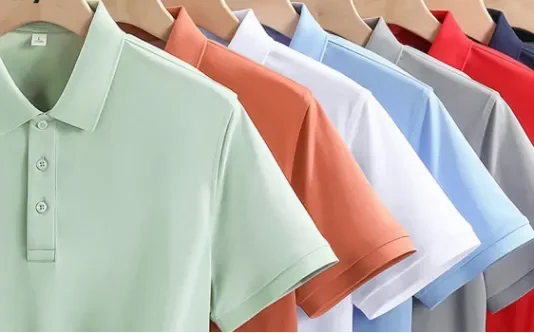
Many everyday T-shirts, underwear styles and lightweight sports tops use single jersey. It is a basic weft-knit structure, not a fiber name: cotton, polyester, viscose and blends can all be knitted into jersey. Not every T-shirt or sports garment uses this construction.
Its appeal is easy to understand: a light, flexible fabric can move with the body and feel comfortable against the skin. Airflow, absorbency and recovery still depend on the fiber, yarn, stitch density and finish. The same loop structure that allows extension also creates vulnerabilities when a yarn breaks or a loop escapes.
How Intermeshing Loops Make a Fabric
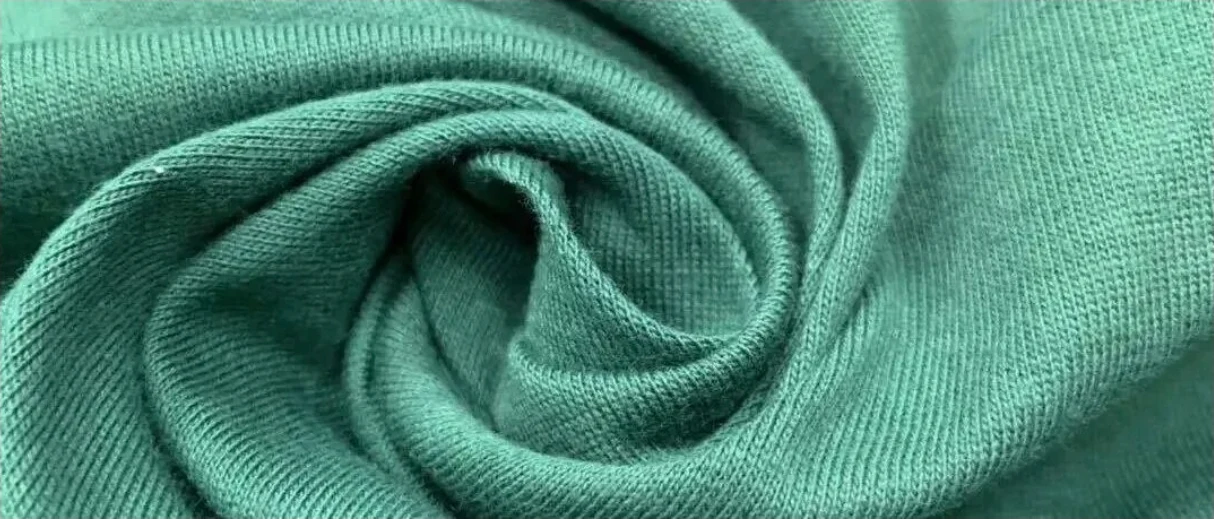
In plain single jersey, each new loop is drawn through a loop in the preceding course. Vertical columns of loops are called wales; horizontal rows are courses. The technical face shows recognizable V-shaped stitch columns, while the reverse shows the curved loop portions. This difference between the two sides is a useful starting point for identification.
Single jersey is made on one needle bed or needle set. Circular machines are widely used, although plain jersey can also be produced on flat machines. Industrial circular knitting commonly uses multiple yarn feeds, so a finished T-shirt should not be described literally as one uninterrupted yarn. The fabric yarn and the sewing thread joining the garment are also different things.
Jersey commonly extends more across its width than along its length. That does not mean it cannot stretch lengthwise, and extension is not the same as recovery: a cotton jersey can stretch without returning as strongly as an elastane blend.
Why Single Jersey Can Unravel
A broken yarn or dropped loop can allow neighboring loops to disengage, creating a run or ladder. An exposed edge can also ravel as yarn is withdrawn along a course. Think of a linked structure losing support, rather than assuming one broken stitch inevitably destroys an entire garment.
The extent of damage depends on where the break occurs, the structure, yarn, density, finish and stresses during wear or laundering. A loose sewing thread may open a seam without the body fabric unraveling; a hole in the fabric may involve damaged knitted loops. These are related quality concerns, but they need different diagnoses. Do not pull a loose yarn to test a saleable garment.
| Potential advantages | Limitations to check |
|---|---|
| Soft, flexible handle and comfortable drape | Susceptibility to runs or unraveling after loop damage |
| Open spaces between loops can support airflow | Cut edges tend to curl; direction depends on edge orientation |
| Useful crosswise extension | Loops can snag on sharp or abrasive surfaces |
| Absorbent summer options when suitable fibers are used | Dimensional change after laundering must be checked |
| Efficient production for many basic styles | Often less body and structure than denser or double-knit options |
How to Read Single Jersey Specifications: Yarn Count and GSM
Two useful starting points are yarn count and finished fabric weight. Specify the count system: for English cotton count (Ne), a higher number means finer yarn. In direct systems such as tex, a higher number means a heavier yarn per unit length. A number without its system and ply information can be misleading. [2]
GSM means grams per square meter of fabric. It describes mass per area, not garment weight or thickness by itself. Yarn count, stitch length, machine gauge, density and finishing interact; count alone cannot predict the final GSM. CottonWorks also identifies these construction and processing variables as important to dimensional stability. [1]
The following combinations are contributor-supplied reference options for development discussions, not mandatory relationships or independently measured market averages. Confirm that the supplier means Ne and whether the yarn is single or plied.
| Yarn count (Ne, assumed singles) | Illustrative finished GSM | Possible handle | Possible application |
|---|---|---|---|
| 16–20 | 200–280 | Fuller, coarser texture; substantial handle | Workwear tees and heavier casual T-shirts |
| 30 | 160–200 | Balanced weight and relatively smooth surface | Everyday T-shirts and underwear styles |
| 40 | 120–160 | Finer, softer and lighter handle | Lightweight T-shirts and underwear |
| 60 and finer | 100–140 | Very fine, delicate handle; finish affects luster | Fine lightweight T-shirt development |
What GSM Is Suitable for an Everyday T-Shirt?
Within the Ne system, lower counts indicate coarser yarns and higher counts finer yarns. Other things being comparable, that can influence texture and weight, but the finished fabric is not automatically thin because its yarn is fine. Knit density and finishing can change the result substantially.
Around 180–220 GSM is a useful starting range for an everyday cotton T-shirt brief when a moderate amount of body and coverage is wanted. Treat it as a development preference from the supplied notes, not a universal best weight. Lighter options around 120–160 GSM may suit layering and hot-weather products; options above 220 GSM may suit a substantial silhouette.
A fabric below 160 GSM is not necessarily transparent or poor quality, and a fabric above 220 GSM is not necessarily uncomfortable. Color, density, yarn, fiber, fit and finish affect opacity and comfort. Evaluate the intended color on the body or a suitable backing, including under stretch. Do not reject a fabric below 150 GSM simply because it uses a coarser yarn.
How to Reduce Unraveling and Seam Failure
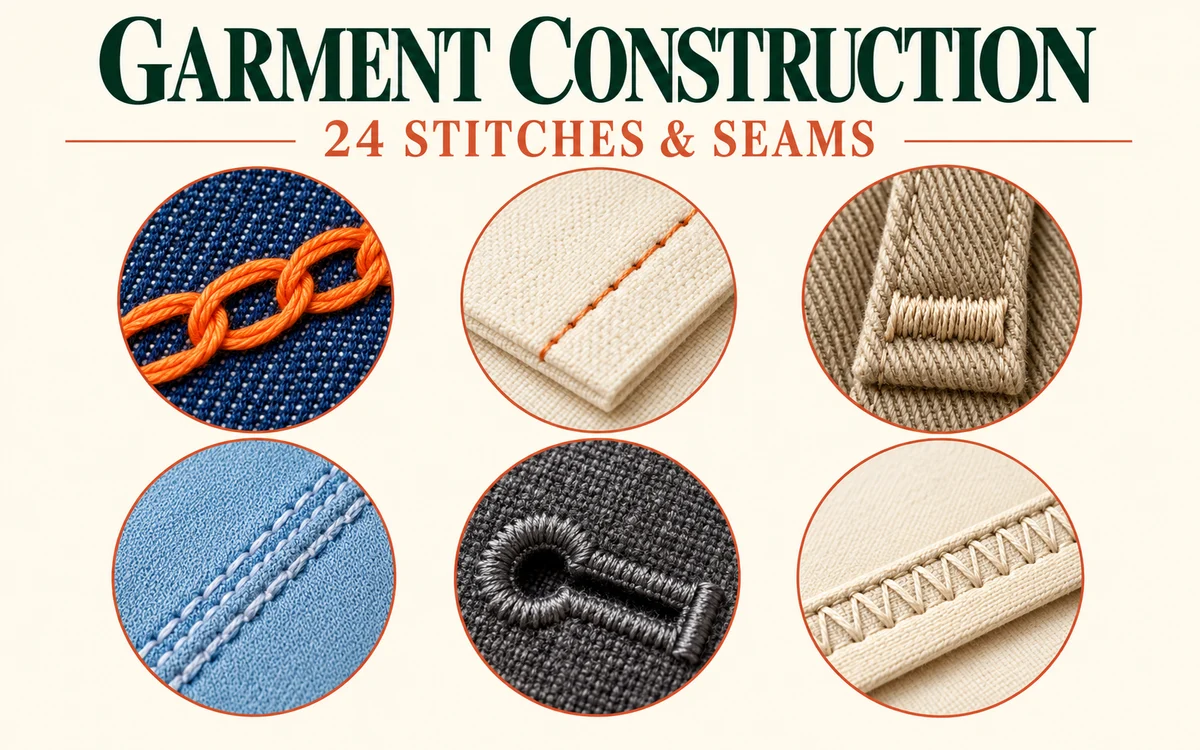
Start with construction. Use seam and edge finishes appropriate to the jersey, with enough seam allowance, suitable stitch formation and balanced tension. Overlocking can secure cut edges; necklines, cuffs and hems need construction compatible with the garment’s stretch. Prevent needle damage during sewing, and check for skipped stitches, broken threads and holes beside the seam.
An open neckline seam is not automatically proof that the knitted body has unraveled. Check whether the sewing thread broke, the seam slipped open or fabric loops were cut. Repair small damage promptly and avoid pulling exposed yarns. A correctly sewn edge reduces risk, but cannot make all damage impossible.
Would Double Knits, Different Yarns or Finishing Help?
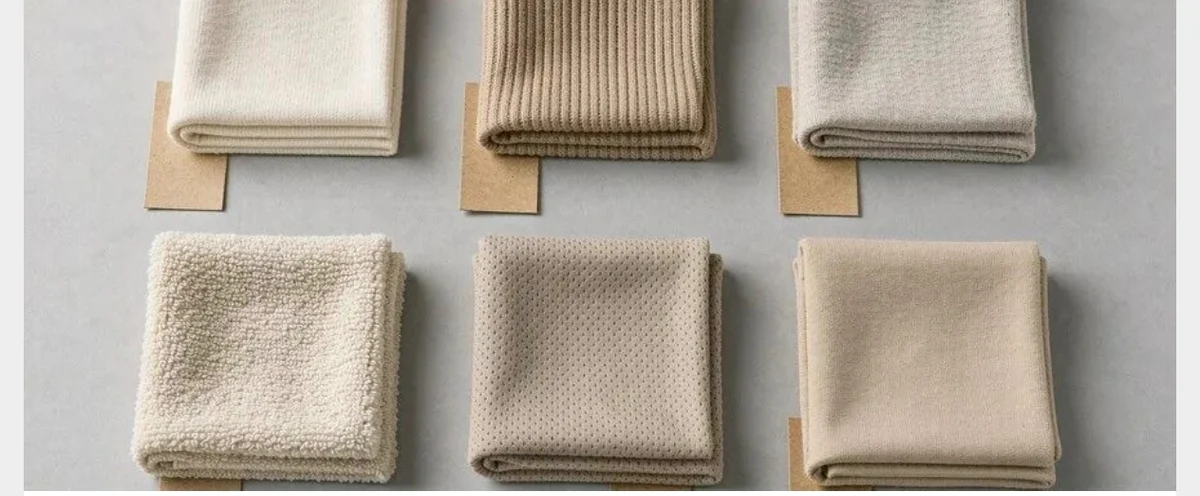
If the product needs a different balance of body, stretch and stability, compare a suitable rib or interlock construction with single jersey. Double knits use two needle sets, but they are not universally run-proof. Sweatshirts and thermal underwear also span several constructions; their garment names do not establish the knit structure.
Yarn strength, twist, hairiness, friction and loop tightness can influence how damage develops. There is no reliable rule that all cotton jersey unravels more easily than all polyester jersey, or that a coarser yarn automatically produces larger loops. Judge comparable swatches and sewing trials rather than ranking fiber names alone.
Specialist binders, coatings or other stabilization approaches may be proposed for particular products. They are not a default requirement for a good T-shirt. Ask what treatment is used and compare handle, stretch, breathability, wash durability and relevant compliance requirements before approval.
How to Check Single Jersey Quality Before Buying
Inspect the face and reverse under consistent lighting. Look for uneven stitch size, unintended density differences, holes, dropped stitches, streaks and excessive surface irregularity. Some textured yarn effects are intentional; compare with the approved reference rather than rejecting every variation.
Gently stretch a sample across and along its length, then observe recovery. Uneven distortion or persistent bagging deserves investigation, but a quick hand pull cannot isolate whether the cause is fiber, construction or finish. Agree a test method when recovery is important.
Check neckline, sleeve and hem seams for even stitching, secure ends and damage around needle penetrations. Test a sewn sample through the intended care cycle, recording length, width, twist, seam condition and appearance before and after. Finished GSM should be measured under agreed conditions and tolerances.
Finally, compare quotations against the same specification: composition, yarn system/count/ply, finished GSM, usable width, finish, color, quantity and tested performance. A higher retail price does not prove a higher yarn count, and a lightweight fabric is not automatically a premium fabric.
A Practical Single Jersey Sourcing Checklist
For your next inquiry, provide the garment type, intended fit, fiber blend, target yarn count with its numbering system, finished GSM and tolerance, usable width, color and required handle. Include a physical reference where possible.
Before approving production, check opacity in the intended color, extension and recovery, laundering dimensional change, garment twist, surface appearance and seam performance. Keep the approved fabric and sewn sample for comparison with bulk delivery.
The central trade-off is the loop structure: it makes jersey flexible and comfortable, while requiring care with exposed edges and damaged loops. Good sourcing combines the fabric specification with sound sewing and wash verification; neither yarn count nor GSM can replace that complete assessment.
Translated and consolidated from contributor-supplied Chinese text and two tables. Reference count/GSM ranges retained as illustrative options, not verified market averages. Unsupported retail-price tiers, fiber-friction rankings and universal anti-run finishing claims removed. Screenshot tables recreated as accessible English HTML tables.
For T-shirt and lightweight knit sourcing. This is not a laboratory report or a guarantee of any particular swatch’s composition, run resistance, opacity or wash performance.
Sources
Source single jersey against a clear brief
Share a reference swatch or photograph, composition, finished GSM, width and end use to help identify suitable fabric options. Laboratory testing and bulk purchasing are separate from sample search.
YOUR NEXT STEP
Put the details to work.
Estimate an order or turn your specifications into a supplier inquiry.