The “Second-Skin” Feel
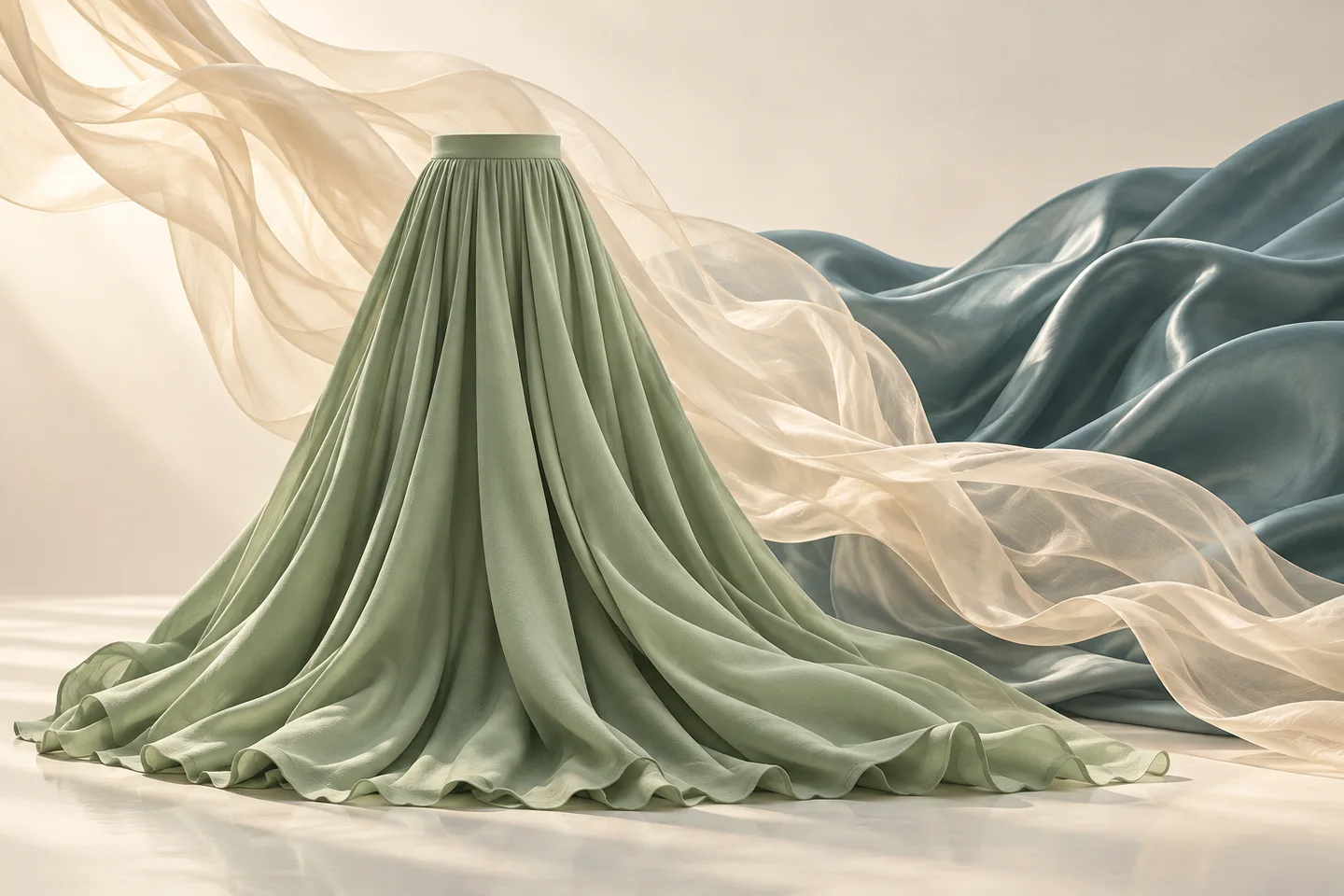
If you have ever worn a high-quality modal T-shirt or loungewear piece, you likely remember that sensation: a featherlight veil of softness against your body. It can feel plush, buttery and gently contouring rather than crisp or rigid. Yet why do some pieces stretch out after washing, how does modal differ from Tencel, and why do prices vary so widely? The answer starts with the fiber, then moves to yarn, fabric construction and finishing.
What Is Modal Fabric Made Of?
Modal fabric is made from regenerated cellulose fibers, usually derived from wood pulp. The wood is processed into dissolving pulp; cellulose is converted into a spinning solution, extruded through spinnerets and regenerated into fibers. Those fibers become yarn, which is knitted or woven into fabric. Modal is therefore plant-derived but manufactured—not a natural fiber harvested in its final form like cotton. A modal garment may also contain cotton, polyester or elastane, so read the percentage composition rather than the product name alone.
Modal, Tencel, Lyocell and Viscose: Clear Up the Names
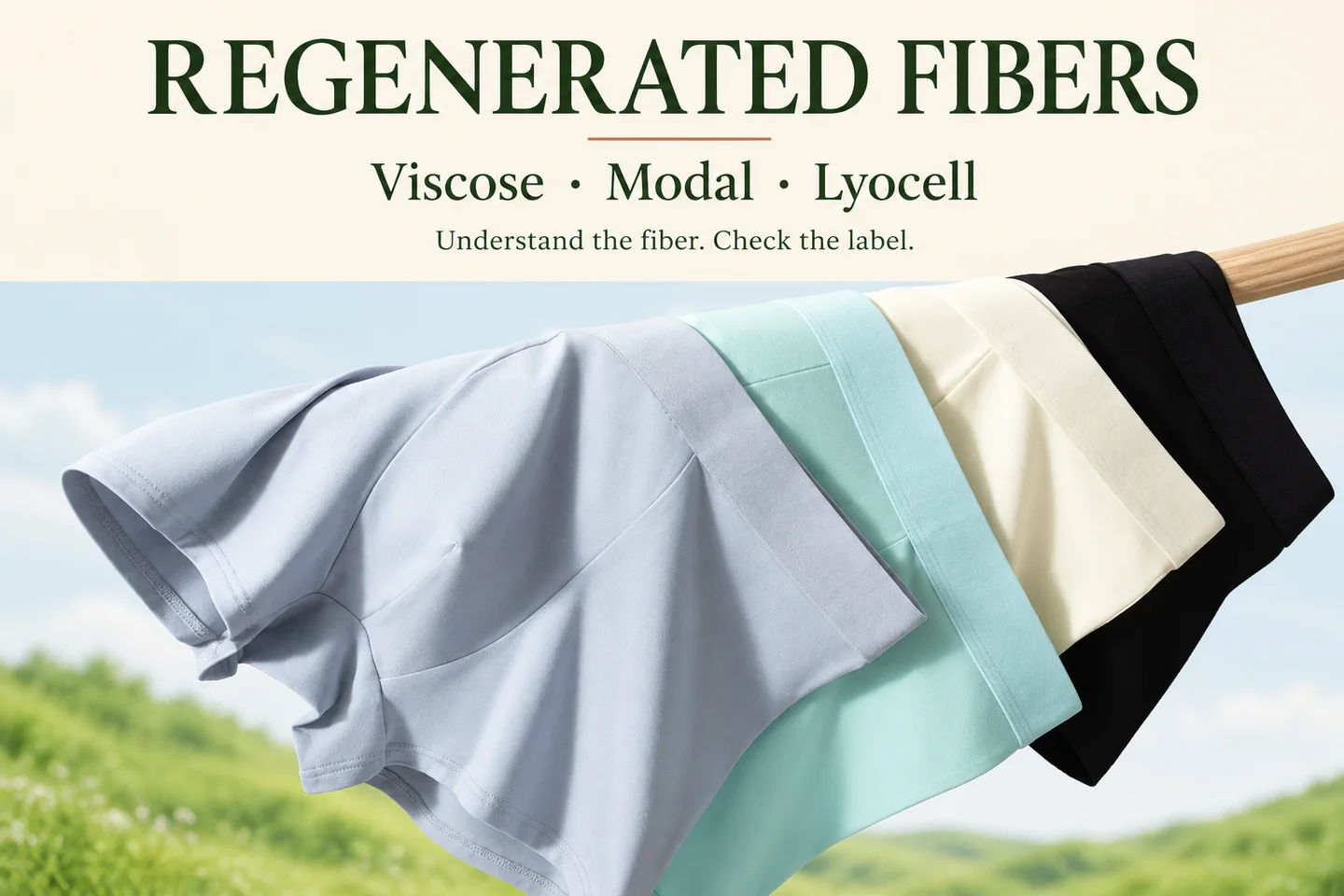
Modal and lyocell are generic regenerated cellulosic fiber types. TENCEL™ is Lenzing’s brand covering both modal and lyocell; it is not another name exclusively for lyocell. Modal uses a modified viscose production route, while lyocell uses a different solvent-spinning route. Neither a universal brand ranking nor a single softness hierarchy tells you how a finished garment will perform.
For the broader classification and comparison, continue with our existing guide linked below. It explains the relationship between viscose, modal, lyocell and TENCEL™ before you compare supplier quotations.
Why Can Modal Feel Softer Than Cotton?
The smooth surface and flexibility of modal fibers can contribute to a soft fabric handle. Fine-fiber variants, yarn choice and finishing can accentuate that feeling. However, modal is not always finer or softer than every cotton fabric: cotton quality, yarn twist and fabric construction vary enormously. Compare equivalent swatches, ideally before and after laundering. A soft feel is also not evidence that a garment treats eczema or is suitable for every person with sensitive skin.
Moisture, Drape and Color: Benefits With Conditions
Modal’s cellulosic composition supports moisture absorption, and many modal fabrics have a fluid drape. Neither property guarantees fast drying, unrestricted airflow or a cool garment in every climate. Dense, heavy knits can feel warm; a light, open construction may behave very differently.
Rich colors and softness after washing are attractive possibilities, but dye selection, fixation, finishing and laundering determine colorfastness and appearance retention. Wrinkles do not always disappear overnight, and absorbing moisture is not the same as transporting liquid sweat away from the skin.
Why Do Some Modal Garments Lose Their Shape?
It is misleading to describe all modal as exceptionally weak when wet. Modal was developed for improved wet performance compared with conventional viscose. Even so, a knitted garment can stretch, shrink or twist because of loop geometry, yarn quality, relaxation, finishing, seam construction or laundering.
A branded fiber does not compensate for poorly controlled fabric production. Compare dimensions before and after the intended wash cycle and assess recovery under realistic wear. Follow the garment label, support wet garments during handling, and avoid unnecessary twisting.
Pilling, Surface Fuzz and Finishing
Repeated rubbing can raise loose fibers and create pills. Fiber length, yarn twist, knit structure, blends and finishing all affect the outcome; neither a high price nor a branded hangtag guarantees a pill-free surface. Heavy softening may influence the initial touch, so assess samples after washing as well as when newly finished. For sourcing, request pilling and dimensional-stability results under agreed test methods.
Branded Modal Versus Generic Modal
Modal is a generic fiber designation, not proof of commodity quality or counterfeiting. TENCEL™ Modal identifies a branded fiber supply; a garment labeled simply “modal” may still be legitimately made and perform well. Conversely, a hangtag alone does not establish that every quality claim is true.
Where branded fiber is part of the purchase specification, ask for traceable supplier documentation and verification of authorized brand claims. Separately confirm composition, yarn, construction, finished weight and test results. Fiber provenance and finished-garment quality are related but distinct questions.
Modal vs. Lyocell, Cotton and Viscose
Choose by the desired handle, structure, care routine and finished-fabric evidence. Modal often suits soft next-to-skin knits; lyocell can also deliver softness and drape in knits or wovens. Cotton covers a wide spectrum from crisp to plush, while conventional viscose offers many economical, fluid options. None is automatically the best across softness, strength, breathability and price.
| Fiber type | Useful starting direction | Avoid assuming |
|---|---|---|
| Modal | Soft, fluid next-to-skin fabrics | All modal beats all cotton |
| Lyocell | Smooth, draped knits and wovens | TENCEL always means lyocell |
| Cotton | Versatile casual basics | Every cotton has the same handle |
| Viscose | Fluid fabrics across price tiers | All viscose products lack durability |
Where Modal Works Well
Underwear and briefs use modal for a smooth, close-to-skin handle, often with elastane for recovery. Loungewear, sleepwear, camisoles and base-layer tees benefit from its soft drape. For yoga or low-impact movement, assess stretch recovery and opacity as well as softness; this does not automatically make a fabric suitable for high-sweat sports.
For infant clothing, softness is only one requirement. Check applicable product-safety requirements and relevant chemical testing. A fiber brand alone does not certify that a finished garment is free from harmful residues. Likewise, “itch-free” and “static-free” are not universal guarantees.
Choosing a Modal Blend
A 95% modal / 5% elastane composition is a common development option, not a universal golden ratio. Recovery depends on the elastane yarn, knitting and finishing as well as its percentage. Modal-cotton can balance softness with a different handle and body. Modal-polyester may serve durability, drying, cost or other design goals; it is not automatically unsuitable for premium products.
Write down the performance requirement first, then approve the blend and construction against it. Composition tells you what is present, not whether the finished material meets your needs.
Modal Fabric Weight: Practical Starting Ranges
Use the following contributor-supplied weight bands to begin sample development, not as mandatory category boundaries. GSM is grams per square meter; it does not alone establish opacity, warmth or strength. Yarn, stitch density, color and finishing can make two fabrics at the same GSM feel very different.
| Starting GSM range | Possible application | Verify before ordering |
|---|---|---|
| 120–150 g/m² | Fine camisoles and light base layers | Opacity, seam behavior and recovery |
| 150–180 g/m² | Everyday tees and loungewear | Drape, wash stability and pilling |
| Above 180 g/m² | Heavier tops or sleepwear developments | Ventilation, bulk and the required silhouette |
What to Ask a Modal Fabric Supplier
Request the full fiber percentages, any verifiable branded-fiber requirement, yarn specification, knit or weave structure, finished GSM and usable width. Agree tolerances, intended end use and care instructions. Ask for wash shrinkage, twisting or spirality, pilling, colorfastness and recovery evidence appropriate to the product.
Approve a representative swatch and garment sample, not merely a soft showroom cutting. Record the approved handle and finish, and compare a washed sample with the original before committing to bulk production.
How to Wash and Care for Modal
Follow the finished garment’s care label first; blends, trims, dyes and construction may require different treatment. Where machine washing is permitted, a gentle cycle, mild detergent and a mesh bag can reduce handling stress. Do not prescribe one temperature or ironing setting for every modal garment.
Avoid aggressive wringing. Reshape after washing and support the garment while drying; dry flat when the label recommends it or the knit is prone to stretching. Use tumble drying and ironing only as permitted by the care symbols. Do not add salt as a universal dye-fixing treatment: it cannot repair inadequate dye fixation, and it is not a substitute for tested colorfastness.
From a “Second-Skin” Idea to the Right Swatch
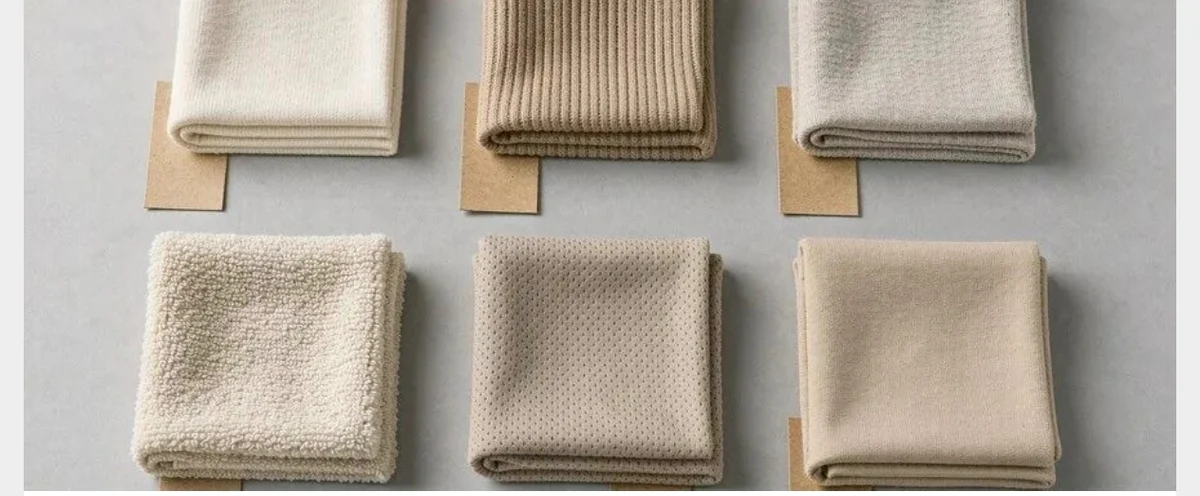
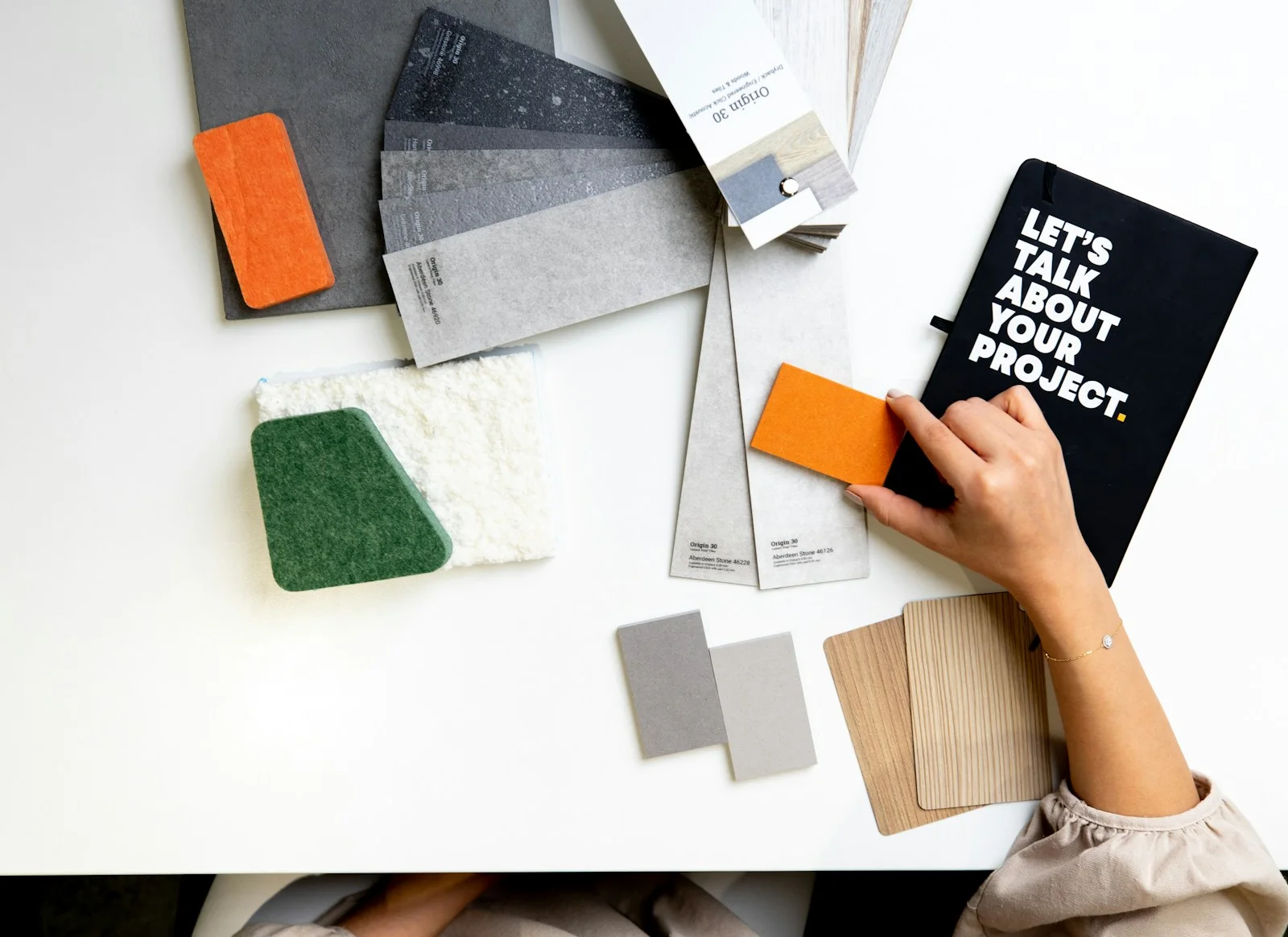
A soft hand-feel is easier to judge with a real reference. If you are developing modal underwear, loungewear or a base-layer tee, prepare your target composition, weight, color, hand-feel and approximate quantity, then compare candidate fabrics before ordering.
Our Keqiao fabric sample-search service can look for matching or similar available fabrics from your clear photographs or physical reference. The service is US$99, targeting 2–5 candidate swatches within 1–3 days after a complete brief and reference arrive. Exact matches depend on availability; courier charges are additional. Fabric testing, sample-yardage purchasing and garment sampling are outside that search scope.
Softness Worth Reaching For
Modal does not need to be a show-stopping statement piece. Its appeal is often the garment you reach for when the day slows down: soft, fluid and comfortable without demanding attention. Choose it for that experience, while checking the construction and care that keep it wearable. The best modal garment is the one whose softness, fit and performance survive your actual routine.
Edited from the contributor’s complete English manuscript. Brand/fiber names and modal wet-performance statements checked against producer references. Unsupported universal performance rankings, medical claims, authenticity guarantees and salt-fixing advice were removed or qualified.
No specific supplier, fabric or garment has been laboratory tested for this guide. Suggested GSM bands are sample-development references. Follow the finished product’s care label and verify performance against agreed methods.
Sources
Need help finding the right modal fabric?
Send a reference and clear material priorities to compare real candidate swatches before developing your product.
YOUR NEXT STEP
Put the details to work.
Estimate an order or turn your specifications into a supplier inquiry.