When the Silhouette Falls Flat
You bought a skirt, tried it on, and realized it completely collapses—lacking the effortless, fluid drape shown in the commercial.
Your first reaction: “The pattern designer failed.”
However, the pattern maker might not be at fault. The fabric may be a poor match for the intended silhouette. Take the exact same pattern and execute it in a different material, and the way it hangs can change entirely. A sourcing decision about drape, body and recovery can undermine a well-developed pattern.
There is an important distinction: a collapsed skirt does not automatically mean too little drapability. It may have too little structural body for a design that needs to stand away from the legs. A flowing dress and a sculptural A-line skirt can require different material behavior.
Understanding Fabric Drape: What the Coefficient Measures
Fabric drape describes how a textile deforms under its own weight, forming three-dimensional folds when supported. Circular-specimen projection methods are used to quantify it. ISO 9073-9 describes determination of drapability including the drape coefficient, and its published scope includes nonwovens, woven and knitted fabrics. GB/T 23329 is the Chinese standard for determining fabric drapability. [1] [2]
Drape coefficient F (%) = [(A₂ − A₁) ÷ (A₃ − A₁)] × 100
A₁: Area of the supporting disk.
A₂: Horizontal projected area of the draped specimen, including the supported central area.
A₃: Original area of the flat circular specimen.
A lower F generally means the unsupported fabric drops more readily, leaving a smaller horizontal projected footprint. A higher F indicates that more of the specimen remains spread out. Under the same test conditions, this helps compare drapability.
Do not interpret “lower” as universally “better.” A low coefficient can suit fluid folds; a garment that needs a more supported shape may require greater resistance to bending. The coefficient also does not capture the complete fold pattern, recovery or movement of a finished garment. Record the method, specimen/support geometry, conditioning and reporting convention when comparing results.
Bending Rigidity: A Physical Contributor to Drape
Fabric drape is not simply a subjective hand-feel judgment. Bending rigidity describes resistance to bending and is an important contributor to how a material hangs. Greater bending resistance often makes a fabric less willing to fold under its own weight, but there is no universal one-to-one conversion from bending rigidity to the drape coefficient. Fabric mass, shear behavior, directionality and construction also contribute.
Fiber composition, yarn structure, weave or knit construction, and finishing all matter. Many fine silk constructions hang fluidly; crisp cotton poplin has more body; conventional heavy denim and canvas tend to resist bending. These are tendencies of particular constructions, not rules assigning every fiber to a fixed drape grade.
Increasing thickness can strongly increase bending resistance when other conditions are comparable. Increasing GSM alone does not necessarily reduce drapability: additional self-weight can also encourage a fabric to fall, while a light, tightly constructed or heavily finished fabric may remain crisp. Compare real samples rather than treating weight as a drape specification.
Drape Performance Classifications for Common Fabrics
The following comparison translates the contributor’s table into English. It describes typical design directions rather than laboratory grades. “High drapability” means a more fluid fall, normally associated with a lower coefficient under comparable testing; “low drapability” means a more supported, structured fall.
| Typical drape behavior | Example fabrics | Common garment uses |
|---|---|---|
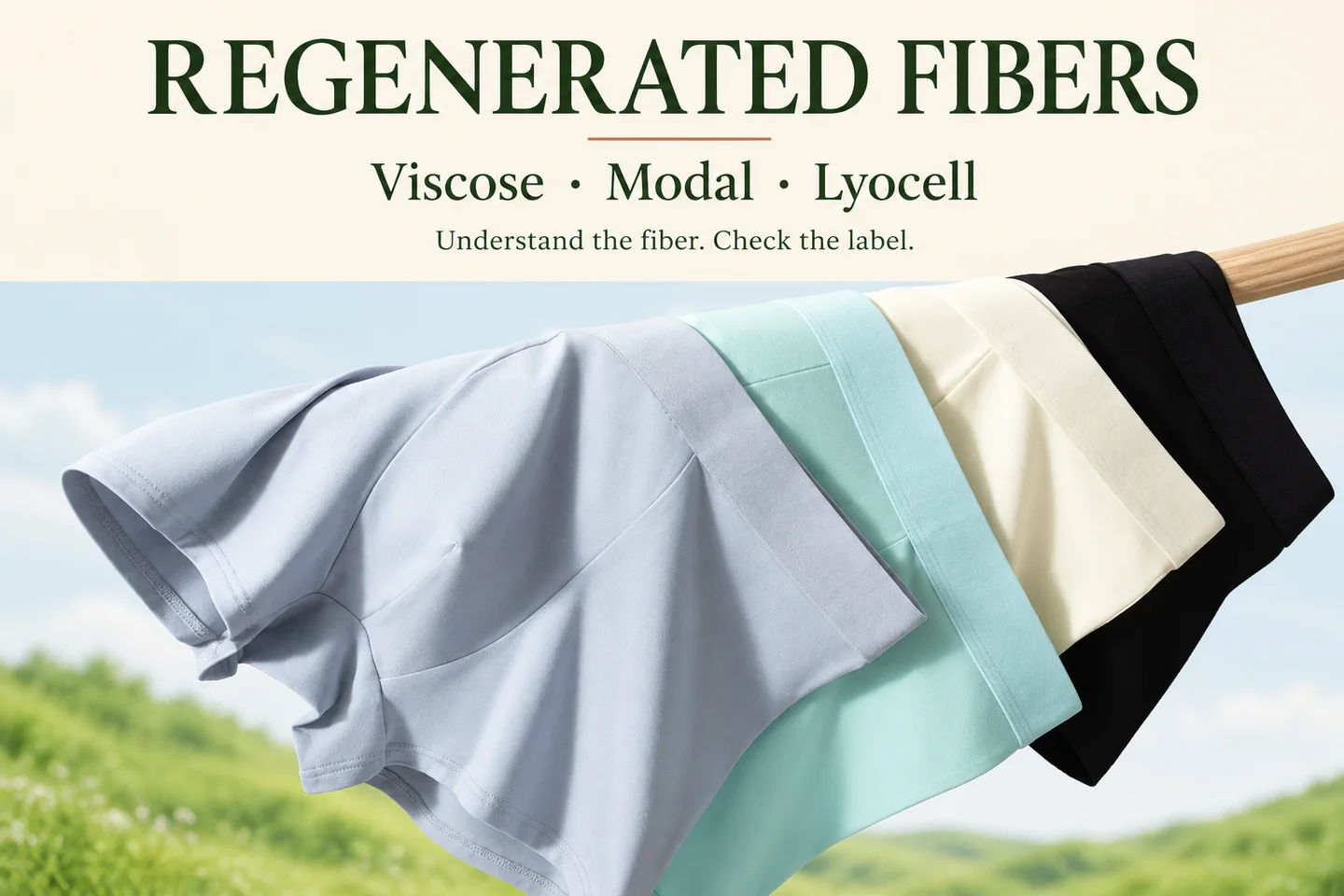
| High drapability / fluid fall | Fine silk constructions, lyocell (including TENCEL™ Lyocell), viscose, chiffon and polyester satin | Flowing dresses, eveningwear and scarves |
| Medium drapability / balanced body | Cotton poplin, some spun-silk fabrics and wool fabrics | Shirts, selected A-line skirts and tailored trousers |
| Low drapability / structured body | Conventional denim, canvas and coarse woolen cloth | Jackets, workwear and structured garments |
Why Drape Specifications Are Missing from Sourcing Contracts
Fabric drape helps shape the final silhouette, yet it can receive less attention in purchase agreements than GSM, cuttable width, construction or colorfastness. The pattern and fabric must work together; neither should be judged in isolation.
GSM and width are relatively straightforward to check with appropriate weighing and measuring equipment. Quantifying drape requires a defined setup, such as a projection-based drape tester or an optical image-analysis system, and the conditions specified by the test method. A named machine model alone does not establish compliance with that method.
Without comparative test data, buyers may rely on touching and hanging a swatch. That is useful screening, but softness does not equal drapability. Surface smoothness, compressibility, bending, shear and recovery describe different aspects of handle.
Finishing can alter those properties. A softener may change friction and bending behavior, but it does not inevitably worsen drape. The sourcing risk is approving a pleasant surface feel while overlooking the loss of body or recovery needed by the design. Compare the approved finish and post-wash behavior with the intended garment shape.
Beyond Skirts: How Drape Affects Garment Development and Production
Garment Silhouette and Structure
A fluid fabric can fall into cascading curves. A more rigid fabric can support a boxier or sculptural silhouette. Both can be appropriate; the issue is whether the material produces the shape the designer intended.
Seam Flatness and Distortion
Seam puckering and bubbling need a broader diagnosis than “poor drape.” Thread tension, feeding, seam construction, fabric instability, pattern matching and pressing can all contribute. A rigid or unsuitable material may increase the challenge, but a drape coefficient alone cannot identify the cause.
Pleat and Flare Definition
The fabric’s fold formation and recovery affect the appearance of pleats and flare. Permanent pleat retention also depends on fiber behavior, setting and finish. Do not use drape as a substitute for checking the actual pleated sample.
The draft suggested a coefficient of 0.6–0.8 for an A-line skirt. If expressed as a dimensionless fraction, that corresponds to 60–80% in the percentage formula above, not 0.6–0.8%. It is not a universal acceptance range for all A-line skirts. Establish a target from the approved fabric and garment sample under the same test conditions, then agree a practical tolerance.
Sourcing Risk Mitigation: How to Verify Fabric Drape
1. Request Comparable Drape Data
Ask for a report referencing the agreed method, such as ISO 9073-9 or GB/T 23329, with sample identification, test conditions and results. A supplier without an in-house tester can still arrange competent third-party testing. Inability to produce a report immediately does not prove that the fabric is unsuitable; it means the property has not yet been demonstrated for your order. [1] [2]
2. Ask for Bending and Shear Information When the Product Warrants It
The Kawabata Evaluation System includes instruments for tensile/shear behavior and pure bending. Relevant report symbols commonly include bending rigidity B and shear rigidity G. Do not label shear stiffness as “2G”; quantities such as 2HG describe hysteresis and answer a different question. Confirm the meaning and units used in the actual laboratory report. [3]
FAST (Fabric Assurance by Simple Testing) is another approach used to assess properties relevant to fabric handling and garment making, including bending and formability. It does not make every measurement interchangeable with KES or the drape coefficient. Ask the lab which result addresses your product problem.
3. Do Not Rely Solely on Hand-Feel
Compare a hanging swatch, a sample made from the intended pattern, and its behavior after the specified care procedure. Examine how the hem stands or falls, how seams behave, and whether the fabric recovers after handling. Check both principal directions where relevant.
4. Write the Approved Reference into the Order
Identify the fabric and sample revision, finishing condition and test procedure. Agree whether the acceptance decision concerns coefficient, fold appearance, garment silhouette or a combination. A supplier can only be held to a clear, relevant requirement; a vague promise of “good drape” leaves both sides room to disagree.
Conclusion
When a skirt fails to hold its intended shape, do not rush to blame the pattern designer. Check whether the fabric’s drape, body and recovery match the approved design, and examine construction and finishing alongside the pattern.
Understanding the drape coefficient and bending behavior will not eliminate every sourcing risk. It gives you a more useful technical basis for selecting material, comparing samples and agreeing accountability when the delivered fabric falls short of the specification.
Compiled from the contributor’s two-part manuscript. The supplied Chinese comparison was translated into an English table in the requested position. ISO, SAMR and instrument-manufacturer references were checked. Coefficient units, suitability versus drapability, and KES notation were clarified. The supplied draped-fabric reference inspired a newly generated editorial cover.
Drape behavior depends on the actual construction, mass, finishing and test conditions. The table is a design-oriented comparison, not a universal fiber ranking; no single coefficient range is prescribed for every skirt. Confirm requirements with the approved fabric and garment sample.
Sources
YOUR NEXT STEP
Put the details to work.
Estimate an order or turn your specifications into a supplier inquiry.