1. Dye Lot Variations: The Textile Industry’s Chronic Headache
Dye lot variation (or shade lot variation) refers to the color discrepancy that occurs when the same fabric color is processed in different dyeing vats. It remains one of the most persistent, long-standing challenges in the dyeing and finishing industry. Completely eliminating dye lot differences is virtually impossible; the goal is to manage and contain them within an acceptable tolerance range.
Root Causes of Dye Lot Variations
• Raw Material Batch Inconsistencies: Even within the same yarn specification, fibers sourced from different origins or harvested/produced at different times vary in natural impurity levels and chemical properties—directly altering dye uptake rates.
• Temperature Deviations Between Dye Vats: Even with an identical dye recipe, a temperature discrepancy as small as 1–2°C between vats can cause a visible color shift in sensitive dye/substrate systems. The effect depends on the fiber, dyestuff and process.
• Dyestuff Batch Variations: Minor variations exist across different production batches of dyestuffs, even when sourced from the same manufacturer under the same product model.
• Operator Technique & Experience Gaps: Dosing timing, heating rates and hold times can vary with technician practice and process control on the shift.
Industry Benchmarks & Practical Guidelines
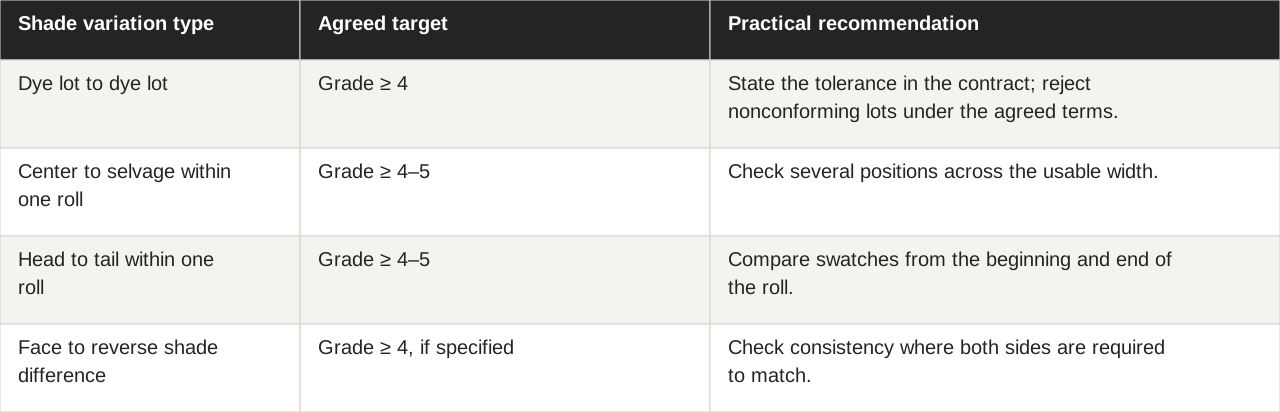
For the purchase specification proposed in this guide, bulk production should match the approved lab dip or approval sample at a minimum Grade 4, with center-to-selvage and head-to-tail consistency at Grade 4–5. Agree the assessment method, lighting and exact acceptance conditions in writing. These are proposed procurement targets, not blanket acceptance limits imposed on every textile by ISO or AATCC.
Grey-scale grading uses higher grades for a closer match; Grade 4–5 denotes the intermediate grade between 4 and 5. A face/reverse matching requirement is relevant only where the product specification requires both surfaces to match.
2. Colorfastness: Looking Beyond Aesthetic Appeal
Colorfastness is a fabric’s ability to retain its original color when subjected to laundering, friction, sunlight exposure and perspiration. Many buyers focus solely on whether a color looks vibrant and appealing, overlooking colorfastness—a far more critical benchmark for garment performance and product longevity.
The 5 Core Types of Colorfastness
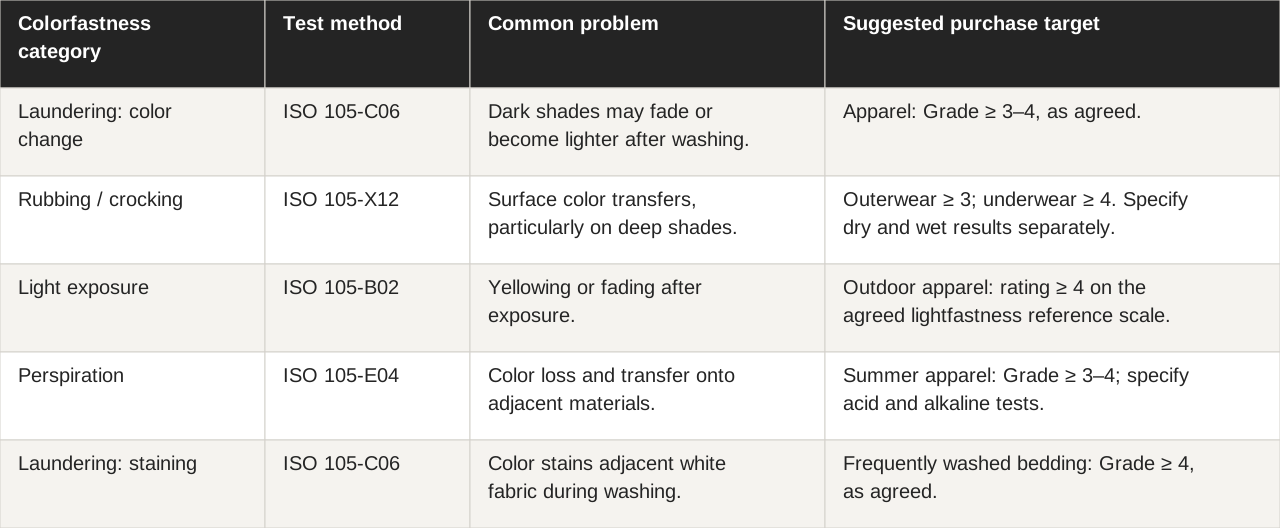
The table distinguishes color change and adjacent-fabric staining under laundering as separate purchasing checks. Both can be assessed under ISO 105-C06, so they are not two unrelated test methods. ISO 105-B02 assesses artificial-light exposure using blue-wool references; its rating scale must not be confused with the grey scale used for many color-change and staining assessments. [1] [2]
Set the required grade, test conditions and intended use in the PO. For rubbing, request separate dry and wet results; for perspiration, specify the required acid and alkaline conditions. The example grades below are sourcing recommendations, not universal statutory requirements. [3] [4]
3. Over-Dyeing & Re-Dyeing: The Hidden Costs of Color Correction
In this guide, over-dyeing, color topping and re-dyeing refer to corrective color work when a dye batch fails to match the targeted shade and the fabric returns for adjustment. These operations are not identical in every mill: topping may add a small amount of color, whereas a more extensive correction can require a different route. Planned over-dyeing can also be an intentional design process rather than a defect correction.
While dye mills may be reluctant to discuss corrective processing, it can affect lead times, fabric hand-feel and production costs.
Common Causes of Re-Dyeing
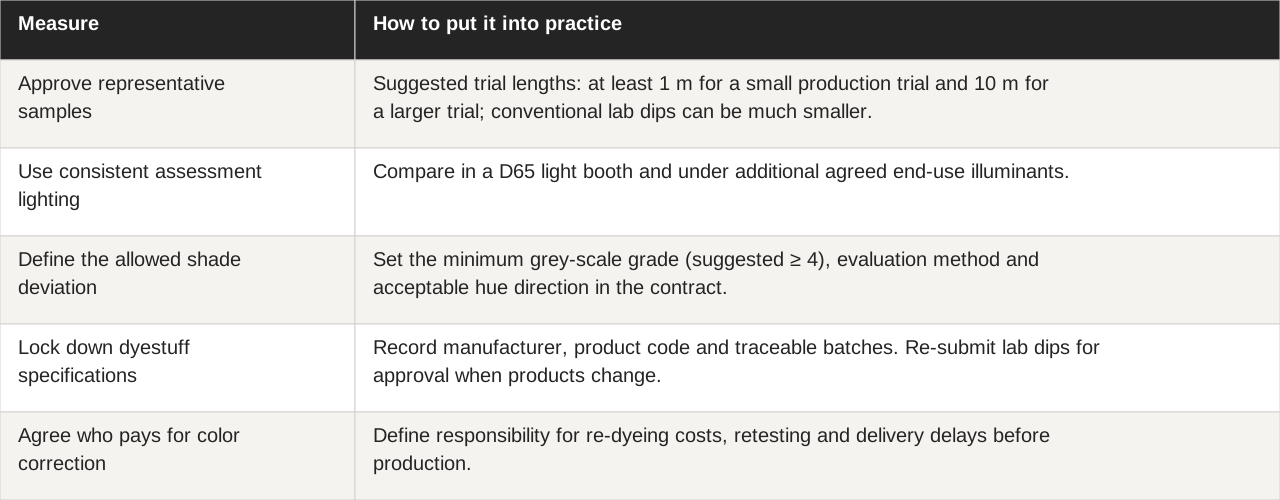
• Insufficient Approval of Lab Dips: Approving a lab dip that is merely “close enough” often leads to significant shade discrepancies when scaled up to bulk production.
• Inconsistent Light Sources (Metamerism): A buyer and mill assessing color under different lighting can reach different conclusions. A pair of samples that match under one illuminant may differ under another; a shared D65 assessment is useful, but additional agreed illuminants are needed to check metamerism.
• Greige Fabric Lot Inconsistencies: Variations in dye absorbency between head and tail or center and selvage of a greige roll can contribute to unlevel dyeing, mottling or patchiness.
• Dyestuff Substitution: Switching dyestuffs or suppliers to reduce costs without re-striking lab dips for buyer sign-off can change the match and performance.
Mitigating the Risks of Re-Dyeing
Use the following measures to agree the approval route before bulk production. The suggested 1 m and 10 m trial lengths refer to representative production trials, not mandatory minimum sizes for conventional laboratory dip swatches.
4. Common “Cost-Cutting Shortcuts” Used by Dye Mills
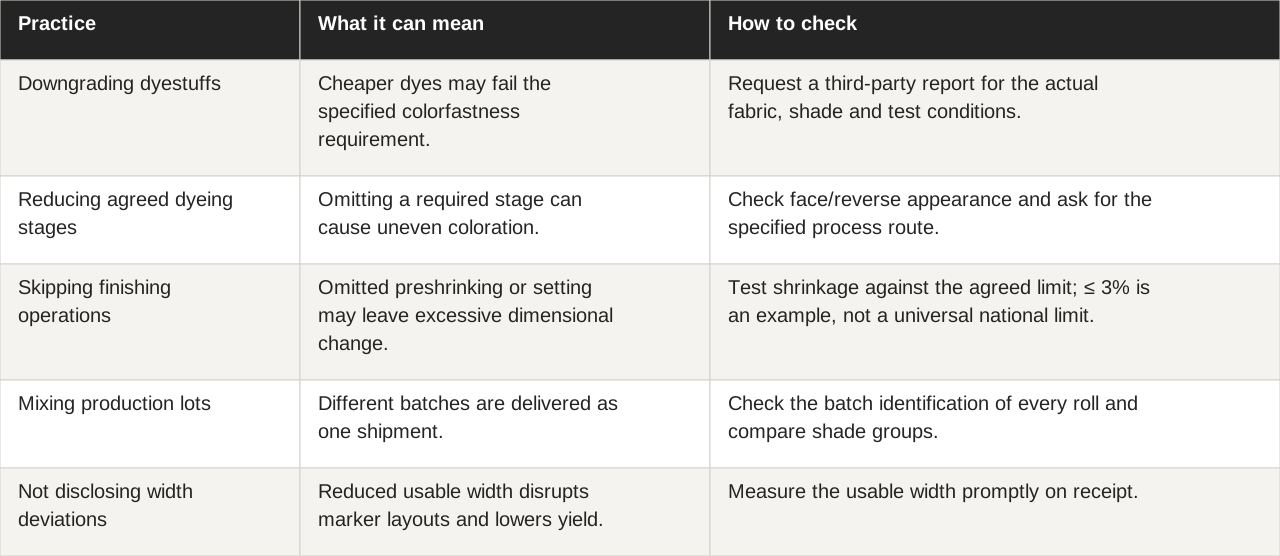
The following practices are familiar risks in textile manufacturing. Knowing them will help you stay vigilant and protect your quality standards during fabric sourcing. They are warning signs to investigate, rather than evidence that every mill or trader uses these shortcuts.
The correct processing route depends on the fiber, construction and required performance; two dyeing stages are not inherently required for every fabric. Similarly, a 3% shrinkage limit is a purchase-specification example, not a universal national requirement for all textiles. Compare the delivered material with the agreed process and acceptance terms.
5. The Fabric Sourcing Checklist
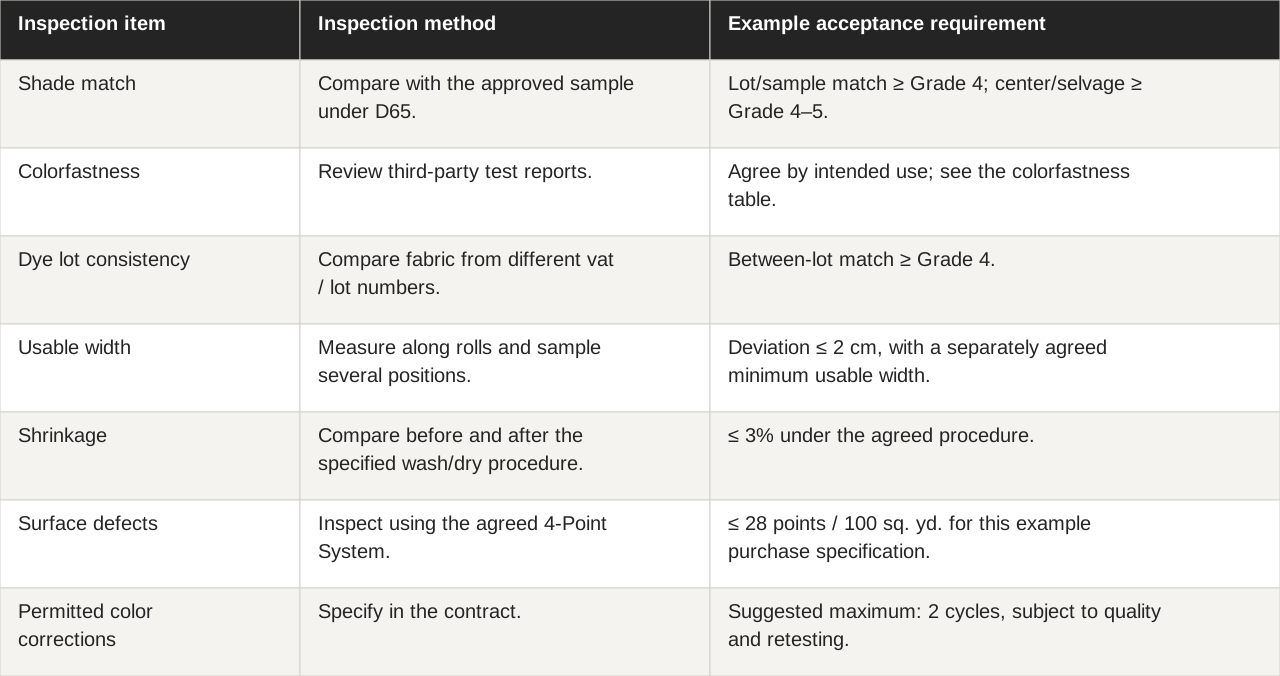
We’ve condensed the key insights above into a practical sourcing checklist. Use this to audit every order before placing your final purchase order (PO).
The values below form an example buying specification. In particular, the 28-point limit is specific to this proposed agreement; it is not a universal 4-Point System threshold. Record whether the limit applies to each roll, the shipment average or both. For dimensional change, define the wash/dry procedure, and for width, state the minimum usable width in addition to any tolerance. Agree the consequences of nonconformance and who authorizes corrective processing.
Protect Your Business Before the Dyeing Starts
The dyeing and finishing stage represents one of the largest variables in fabric quality—and a high-risk zone for procurement disputes. While mastering these industry rules won’t eliminate every potential pitfall, it equips you with the leverage and knowledge needed to protect your business and enforce accountability when issues arise.
Compiled from the contributor’s five-part manuscript and concluding paragraph. Five supplied Chinese tables were translated and redrawn in English. Test-method references were checked against ISO descriptions. Acceptance targets are contributor-proposed purchasing terms; the article does not present them as universal ISO, AATCC or national pass/fail limits. No individual dispute, laboratory report or customer case is invented.
For procurement planning and incoming quality agreements. Use the specified test method and buyer-approved requirements for the actual fiber, shade, construction and end use. Grey-scale ratings, lightfastness reference ratings and instrumental color differences are not interchangeable.
Sources
YOUR NEXT STEP
Put the details to work.
Estimate an order or turn your specifications into a supplier inquiry.