Seeing Red: An Independent Approach to Deadstock Fabric
In recent years, niche labels have drawn attention through distinctive design languages and changing fashion trends. Seeing Red, a London-based project by Fred Redman, offers a particularly useful case study for brands interested in deadstock fabric: its materials are part of the design proposition, rather than simply a substitute for newly ordered cloth. [1]
Instead of framing the label solely through celebrity exposure or visual branding, this article looks at its experimental use of surplus textiles, modular construction and functional garment forms. Its appeal is close to that of an independent studio discovered through images of garments and the work behind them.
Deadstock fabric means material left over from its originally intended use—for example, surplus production or unused stock. It does not automatically mean secondhand, defective, recycled or inexpensive fabric. Those distinctions matter as much for sourcing as they do for the story a brand tells.
Beyond Gorpcore: Transforming Deadstock Fabrics, Modular Architecture, and Artisanal Craftsmanship into a Unique Outdoor Aesthetic
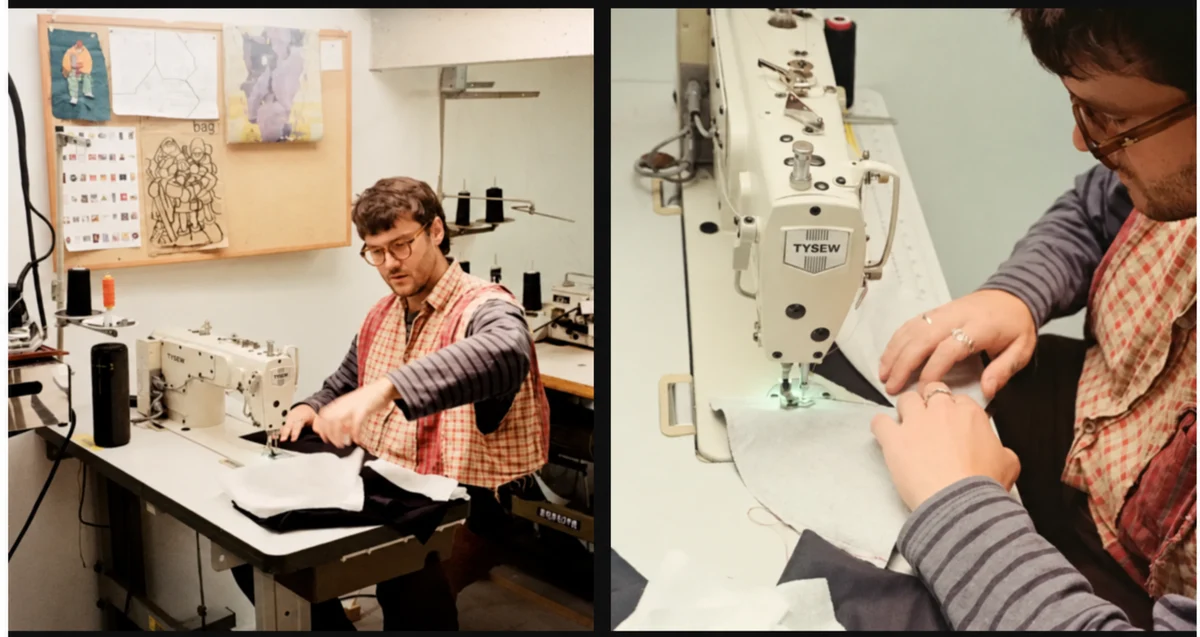
The contributor’s account places the label’s beginnings in 2020, during the pandemic, when Fred Redman was still studying fashion. Rather than treating rapid commercialization as the starting point, it describes a studio practice concerned with rethinking how clothing is made. [4]
Modular construction, adjustable details and contrasting materials provide the working vocabulary. The objective is clothing that can change with its wearer and setting, rather than a single fixed silhouette. In this reading of Seeing Red, garment construction is the central creative question.
When the Fabric Comes Before the Sketch
Fashion development is often described as beginning with sketches, patterns and mood boards, followed by the search for matching fabric. Material-led design can reverse that sequence: an available piece of cloth becomes the starting constraint. Its weight, texture, color and usable quantity influence the eventual silhouette.
Seeing Red illustrates the possibilities of that approach. Surplus and upcycled textiles give the studio an existing set of properties to work with. Variation is not simply something to eliminate; it can become a recognizable part of the design language. This does not mean all deadstock has structural imperfections, or that every design must begin in the same way.
An Outdoor Vocabulary, with a Different Starting Point
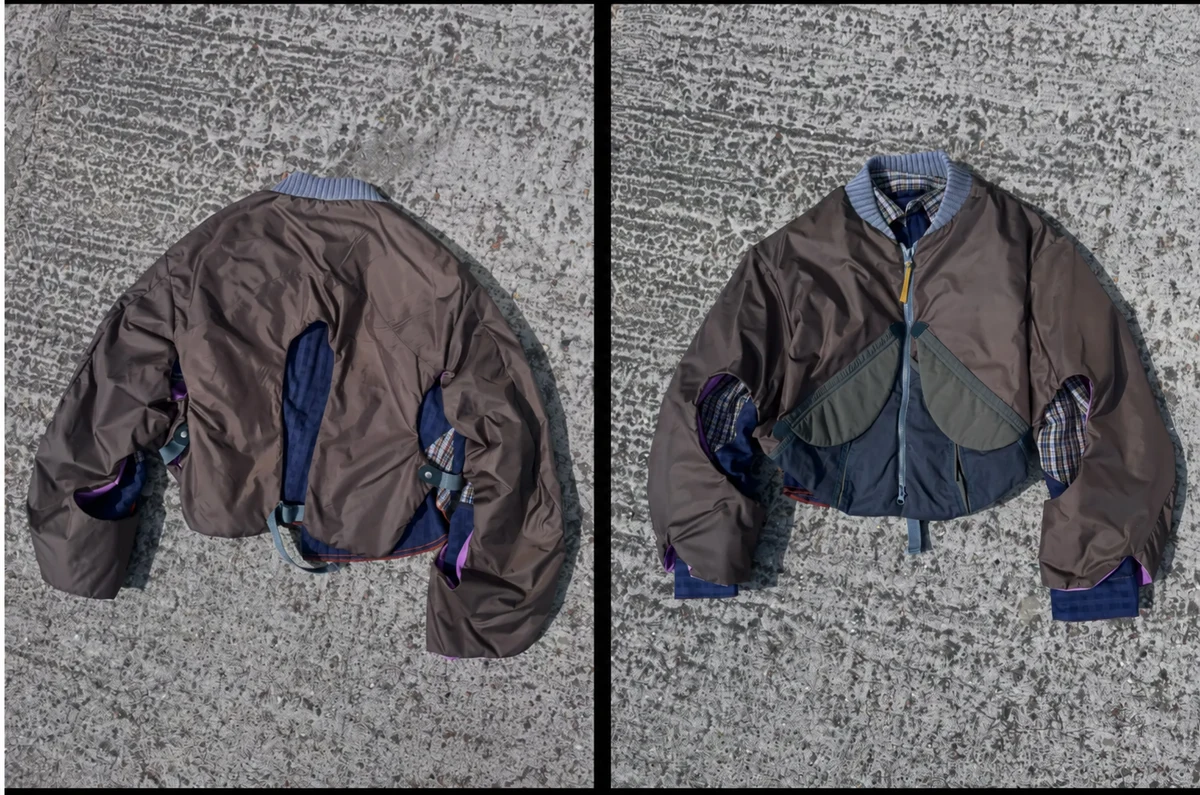
The brand’s output centers on functional apparel, workwear and outerwear. Visually, the layered silhouettes and utilitarian details can be read alongside the Gorpcore movement. The contributor also sees echoes of Kiko Kostadinov in certain structural ideas.
That is an editorial comparison, not evidence of a collaboration, direct influence or shared construction method. The more useful question is how contrasting fabrics and adjustable components change otherwise familiar garment types.
Construction as a Form of Craft
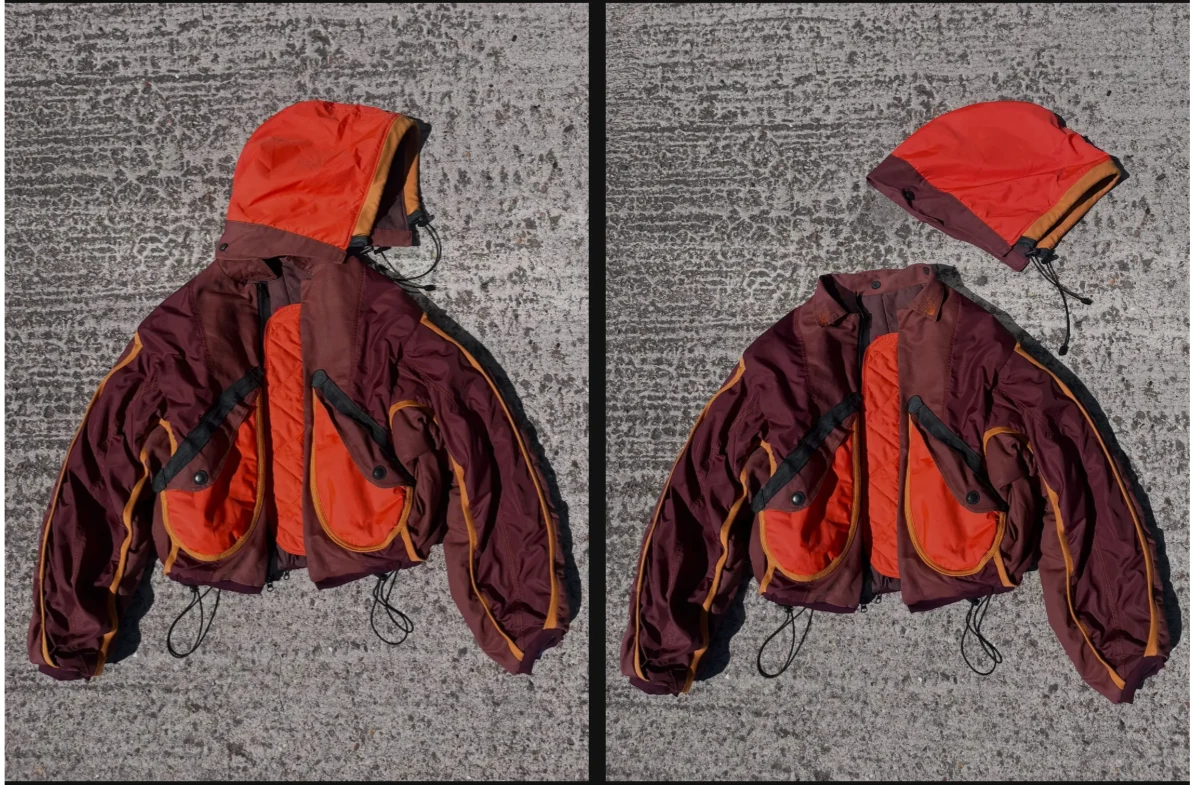
Fundamentally, the interest here is not just the visual shorthand of outdoor style. It is the logic of how garments are constructed. Familiar jackets, vests and shirts become opportunities to explore segmented panels, exposed stitching and contrasting edges.
Those details give the garments a tactile, visibly assembled character. Color blocking follows seam lines, panels interrupt expected proportions, and functional components become part of the composition. The photographs show design decisions; they should not be read as laboratory evidence of weather protection or durability.
BioPuff, Material Experimentation and the Adapt Collection
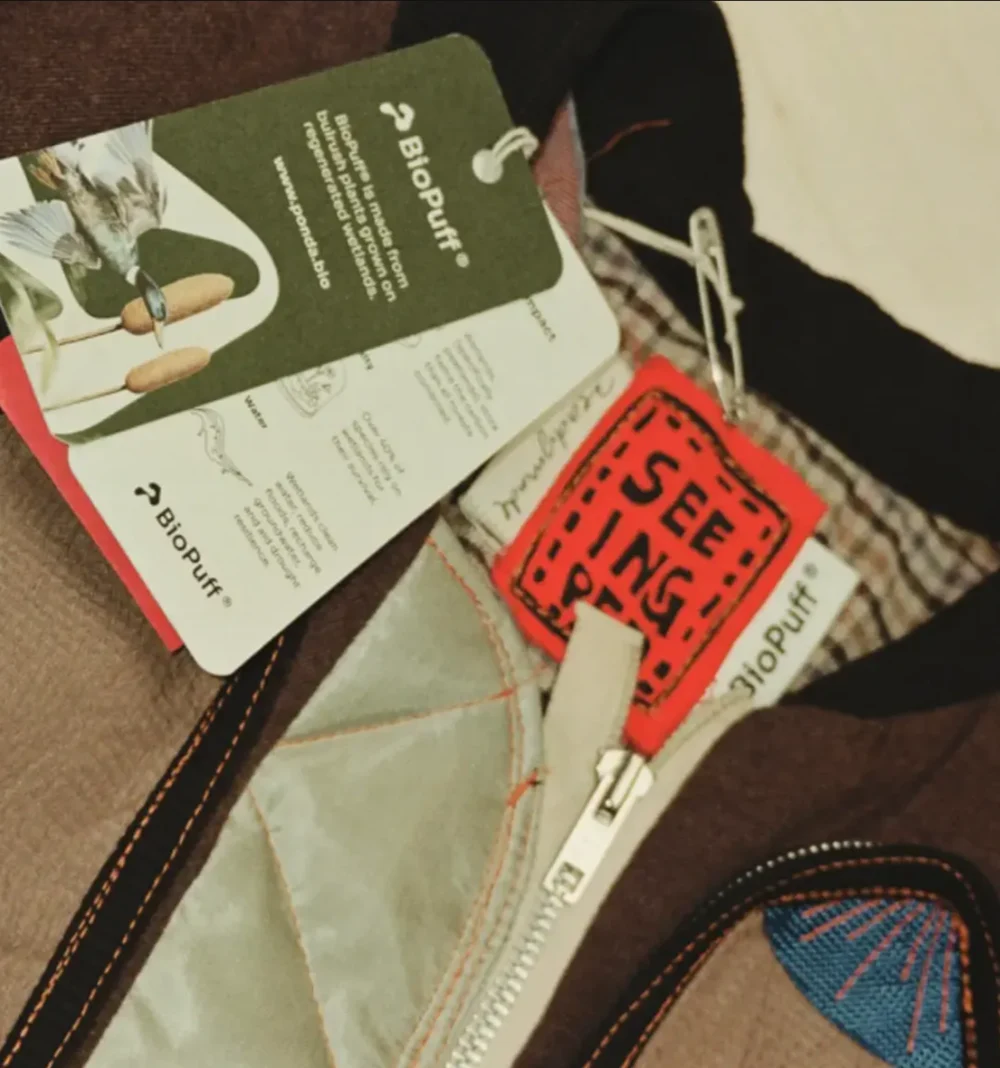
Seeing Red’s experimentation also extends beyond surplus outer fabrics. Its work with UK materials company Ponda incorporates BioPuff®, which Ponda describes as insulation made from bulrush fibers associated with regenerated wetlands. This is a distinct material input; it should not be confused with the deadstock fabrics used elsewhere in a garment. Environmental performance claims belong to the specific product and supply chain, rather than the brand name alone. [2]
In Ponda’s interview, Fred names the Fly-Wing Vest and Skyreacher Jacket as examples where the filling contributes a loftier feel. The relevant design lesson is that a fill material can influence volume and silhouette, not merely occupy space between shell and lining. [1]
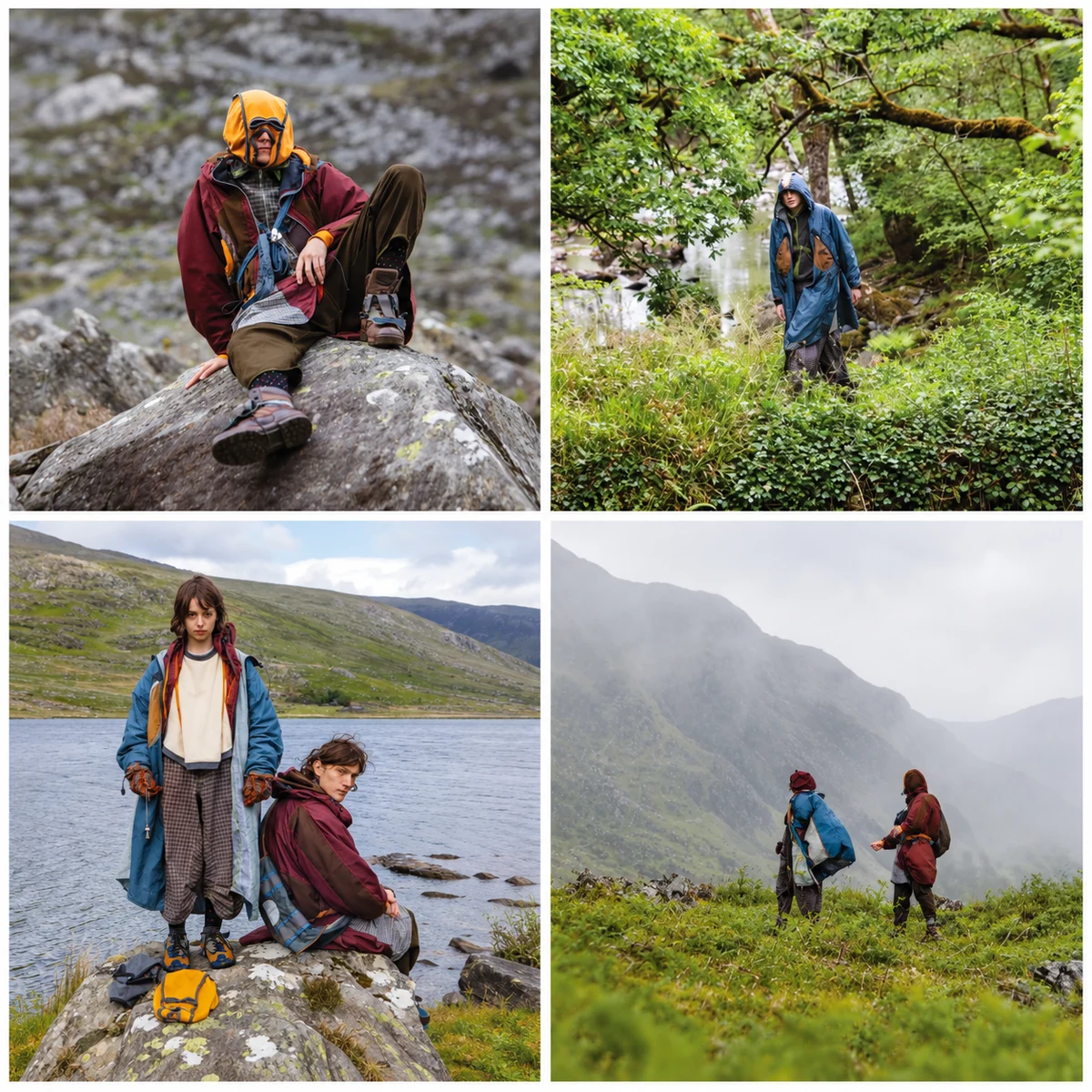
The same interview describes a move from imagining garments mainly in London’s urban setting toward rural environments through the Adapt collection. This connects modular layering and material selection with landscape and use. It does not establish certified performance in hostile weather; buyers should request product-specific evidence for such claims. [1]
Finite Materials, Small Runs and Independent Design
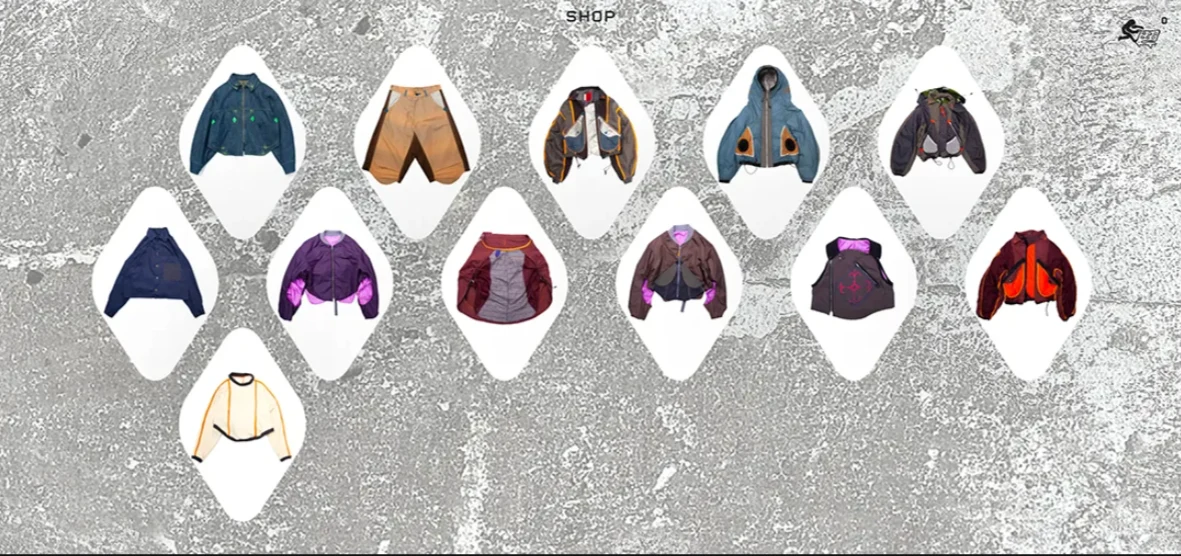
In the Ponda interview, Fred identifies limited quantities of each material and color as a practical constraint. The account also suggests that customers understand variations between pieces. For an independent label, a finite material can therefore influence both production volume and the relationship with the wearer. [1]
This approach connects with the renewed interest in craft-based fashion. An editorial comparison with BODE is useful at the level of turning existing textiles into a design resource. It should not flatten the differences between antique textiles, previously used garments and unused industrial surplus: their histories and technical challenges are different.
Seeing Red’s visual language, in the contributor’s reading, sits closer to experimentation with contemporary materials and construction than to reproducing an antique textile narrative. Its website and Instagram remain public places to explore that work. [3]
Small batches can make availability uneven, but limited supply does not prove that every release sells out immediately. Without sales records, a shop screenshot cannot establish demand or commercial success. The stronger conclusion is that this is a material-constrained design practice whose possibilities—and limits—differ from a repeatable bulk program.
Seen this way, the label resembles a continuing studio experiment. Attention stays on materials, structure and making, rather than assuming that scale is the only measure of progress.
Deadstock Fabric: The “Hidden Dividend” for Emerging Brands
Seeing Red’s design language is not easily copied, but the wider sourcing question is relevant to smaller labels: can deadstock fabric lower the cost of trying a new product? Sometimes it can. A supplier may accept a lower price to release warehouse space and recover value from material left after a completed or canceled order. That incentive is an opportunity to investigate, not proof that every remaining roll is a distressed asset.
Price is only part of the calculation. Premium surplus can command high prices, and some lots are sold only as complete rolls or whole lots. Low MOQ is a commercial term to confirm, not an inherent property of deadstock. Conversely, a genuinely small available quantity may suit a limited first drop and reduce the cash committed before demand is understood.
In a trading and manufacturing cluster such as Keqiao, enquiries can include fabric traders, weaving suppliers and dyeing or finishing businesses. Their surplus may come from different stages: greige fabric, finished yardage, trial runs or order balances. Confirm which stage the goods have reached before comparing prices; unfinished stock may still need development, processing and testing.
A productive match can help a supplier clear stock while giving a new brand an affordable starting point. But buy against a specification and an actual lot, not a generic sustainability story. Deadstock is a sourcing route, not a quality grade or a guarantee of lower environmental impact.
What to Verify Before Buying Deadstock Fabric
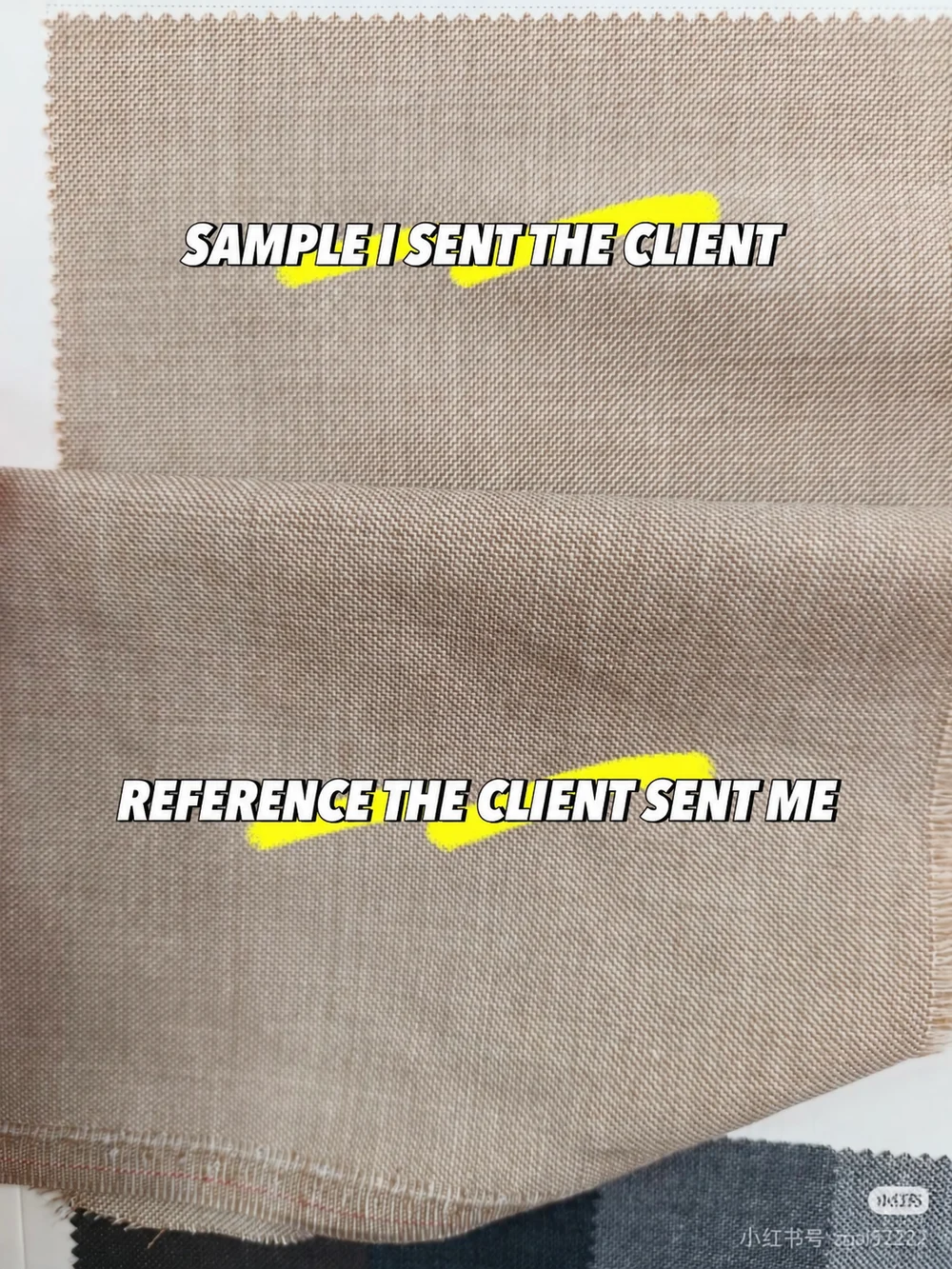
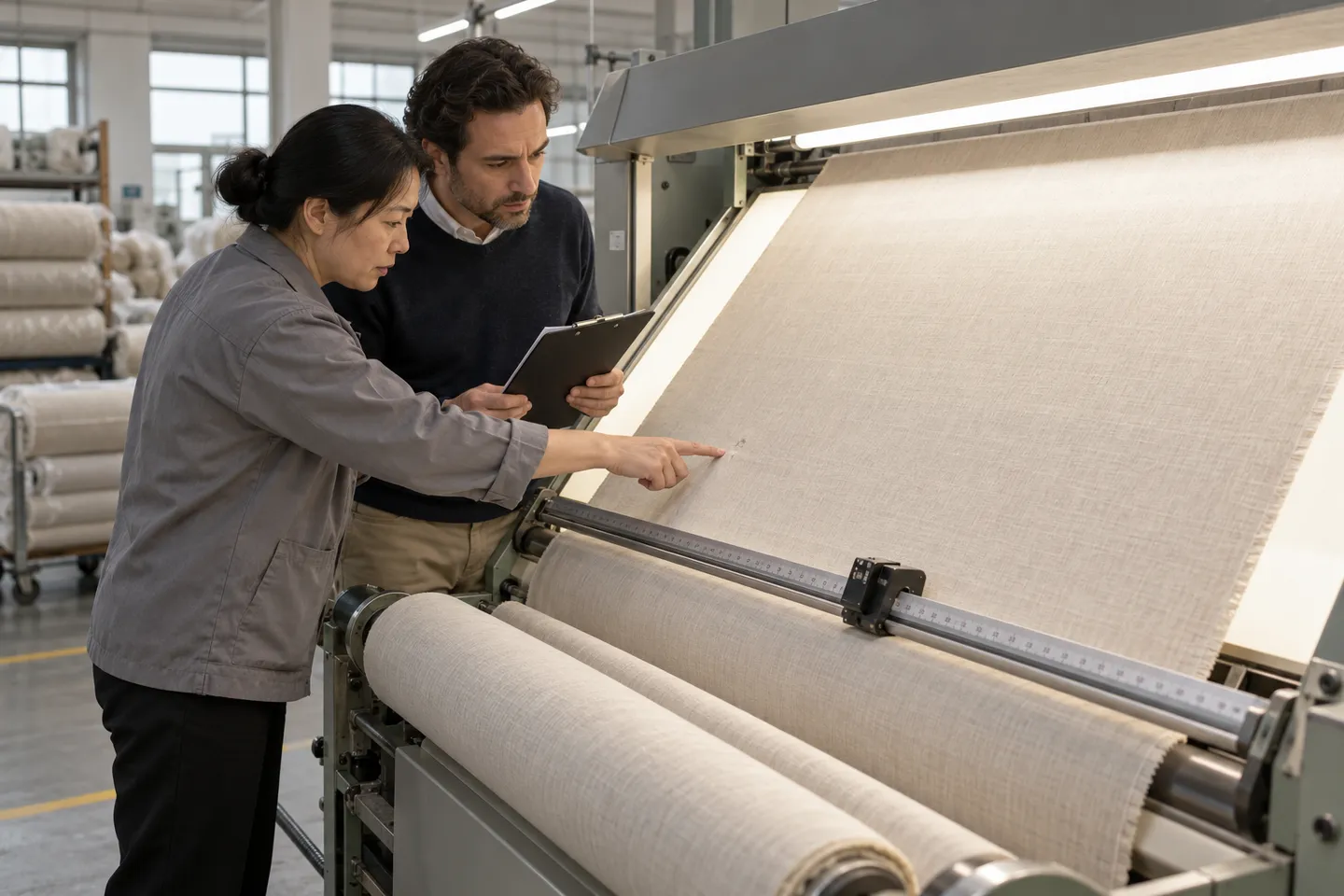
Ask why the stock is available, who owns it and what records support its description. Confirm fiber percentages, construction, measured GSM, usable width, finishing state and storage condition. Inspect the actual lot for shade variation, stains, odors and defects, and test the properties relevant to the intended garment.
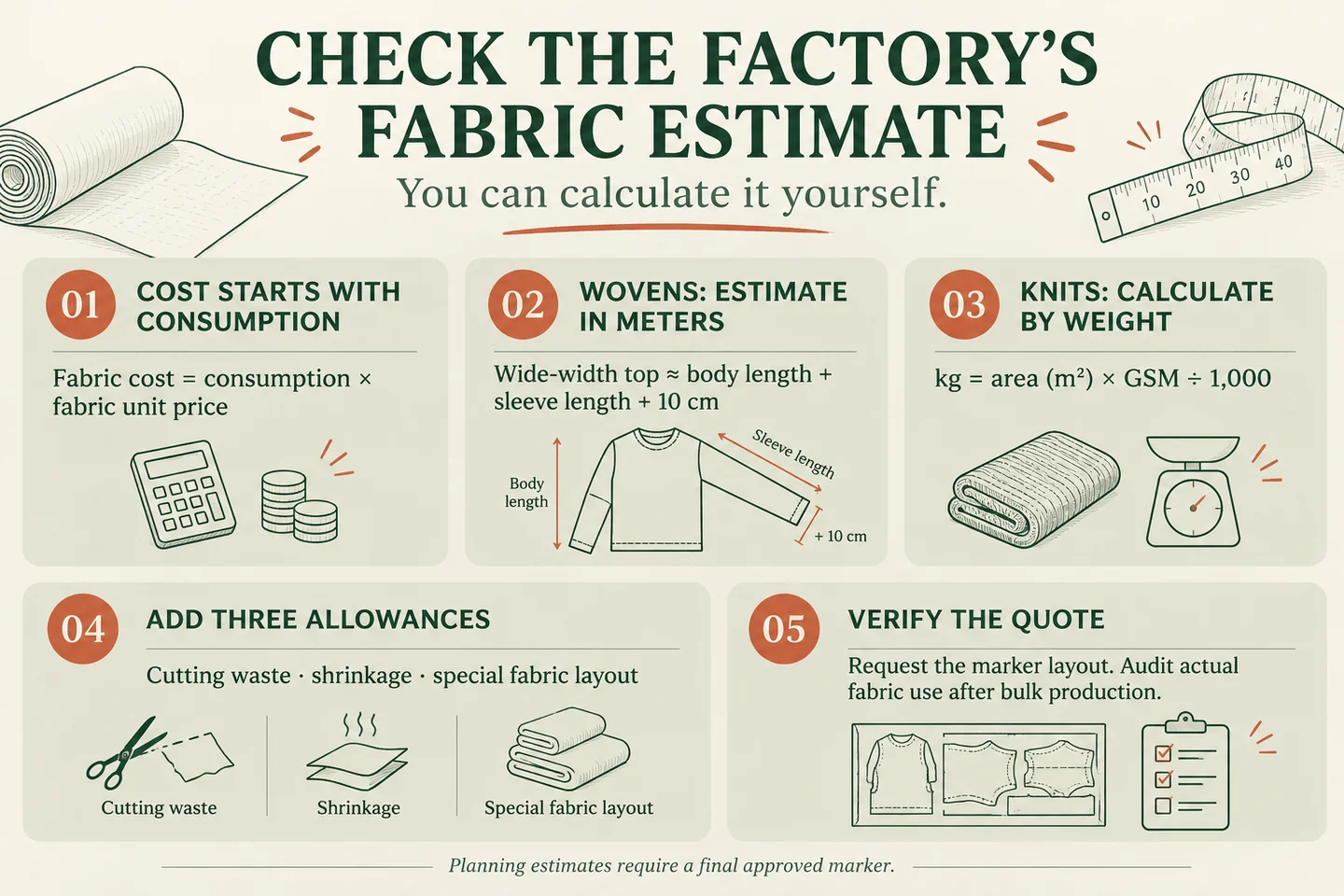
Record the usable quantity by color and dye lot, the selling unit, MOQ and whether the material can be reserved. Plan any size range around usable stock rather than nominal roll length. Include sampling, wastage, testing and transport in the fabric budget.
Discuss repeat availability explicitly. Fabworks, for example, warns that much of its limited-stock assortment cannot be restocked after sale. That is a concrete supplier example of the replenishment issue, not a universal rule for all sellers. A successful first drop can create a second problem if the original fabric is no longer available. [5]
For small brands, the practical lesson is to let the material inform the product while keeping the commercial constraints visible. Approve the sample, verify the lot and decide in advance whether the style is a one-off edition or needs a repeatable replacement.
Adapted from the contributor’s supplied manuscript and screenshots, with additional sourcing context. Brand and material details were checked against Ponda’s direct interview and material description and the brand website. Style comparisons are editorial interpretation. Images retain source attribution in captions; selected screenshots were cleaned or composed with AI, and the cover typography was redesigned.
This is an independent brand case study and sourcing commentary, not an interview conducted by this website, a product test or an endorsement. Deadstock provenance, availability, quality and environmental benefits require order-specific evidence. No supplier affiliation with Seeing Red or Ponda is implied.
Sources
Need help finding a suitable fabric?
Prepare a reference-based search brief with required composition, weight, quantity and acceptable alternatives.
YOUR NEXT STEP
Put the details to work.
Estimate an order or turn your specifications into a supplier inquiry.