What Is Cotton Poplin Fabric—and Is It Silk?
The Chinese name for poplin includes a character associated with silk, which can cause confusion. Modern cotton poplin is woven from cotton; a silky touch does not mean silk has been added. However, the wider word “poplin” describes a fabric construction and is not restricted to pure cotton. Always check the declared fiber composition.
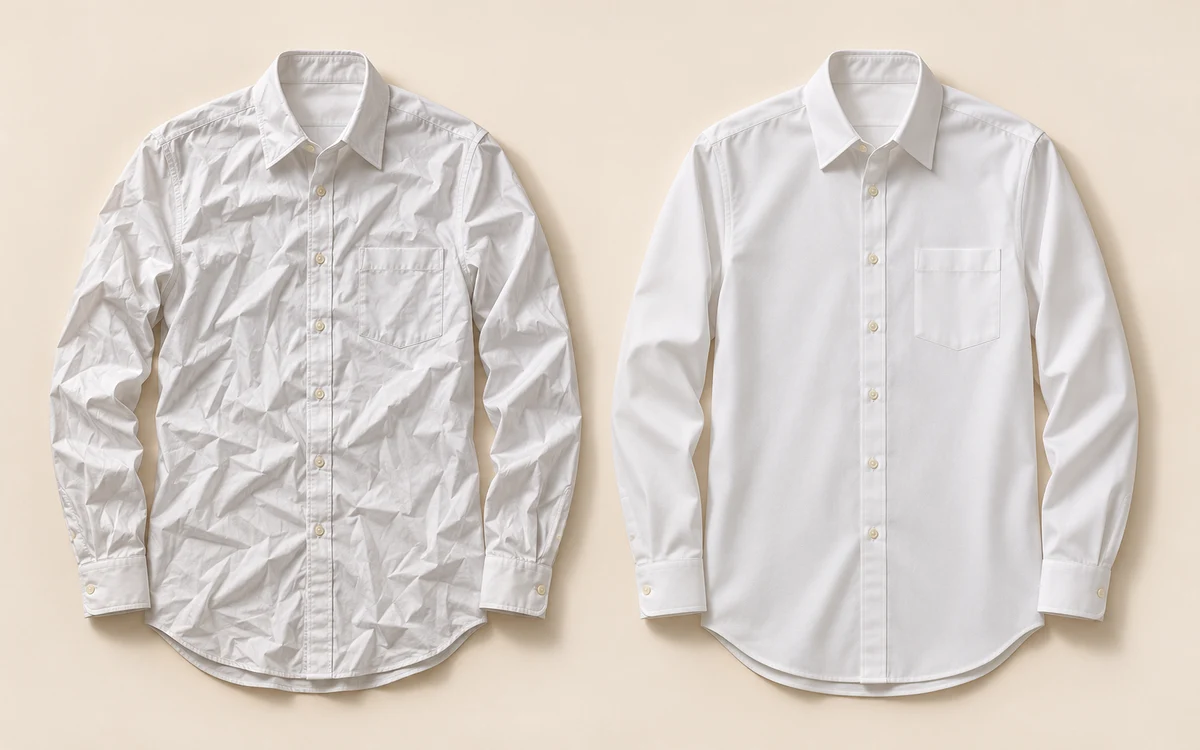
For shirt buyers, the appeal is familiar: a clean surface, a crisp yet smooth handle and a neat appearance. These qualities come from the combination of yarn selection, fabric construction and finishing. They do not come from the fabric name alone.
Why Is the Warp Often About Twice as Dense as the Weft?
Poplin uses a plain weave: each warp yarn passes over and under successive weft yarns. In many cotton poplins, the warp ends are packed more closely together than the weft picks. The supplied notes describe a warp-to-weft density ratio of roughly 1.8–2.2:1; about 2:1 is a useful construction example, not a compulsory ratio for every product sold as poplin. [1]
When finer, closely spaced warp yarns interlace with a somewhat coarser weft, they can create a subtle crosswise rib. That fine horizontal rib—not a pronounced diamond pattern—is the more useful technical description. In very fine shirting, the effect may be difficult to see without magnification. [2]
Balanced plain cotton and poplin therefore share the same basic over-one, under-one interlacing. Their yarn sizes and densities can differ. “Plain cotton” is a broad description, so it should not be treated as one fixed specification or a lower quality grade.
Fine Warp, Coarser Weft: How to Read a Poplin Specification
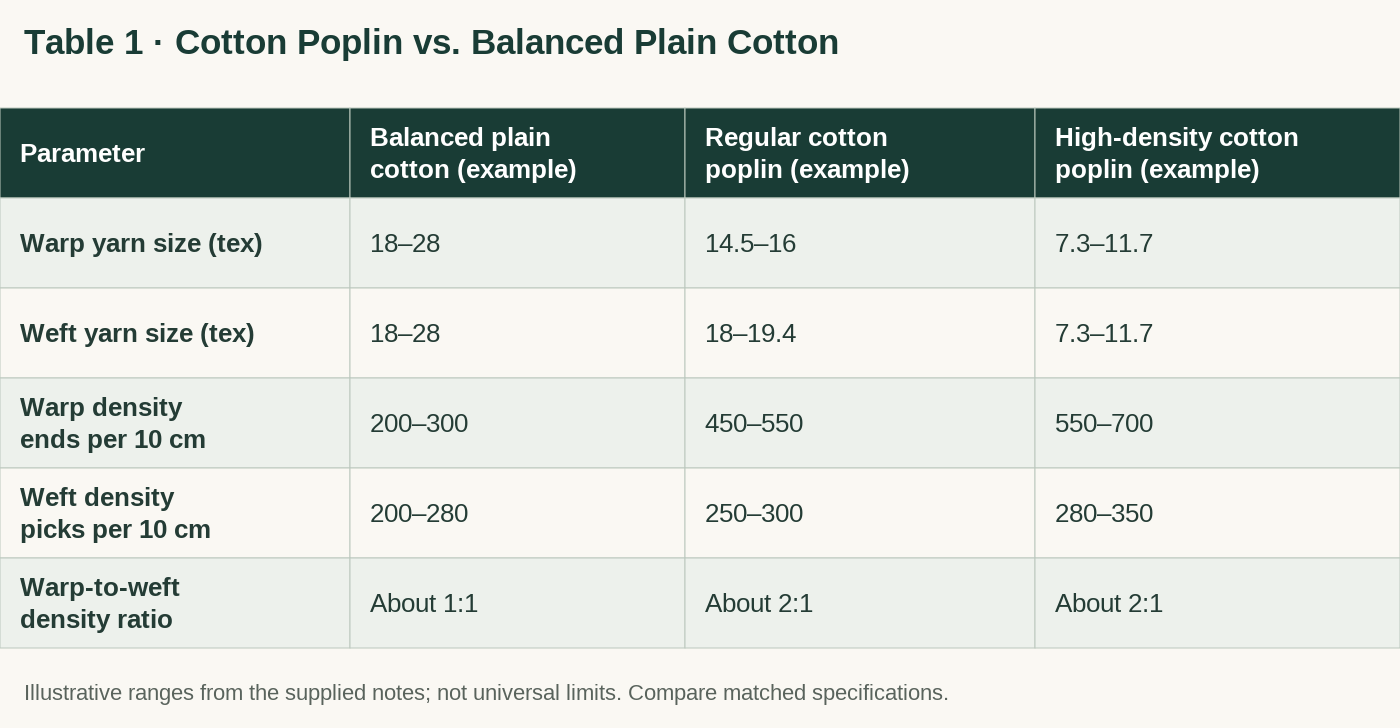
A relatively fine warp allows many yarns to fit across the fabric width; a coarser weft can help produce the small rib effect. Some poplins instead use similar yarn sizes in both directions. The first table includes both approaches.
A specification written as 16 × 18 × 530 × 290 can mean a 16 tex warp, an 18 tex weft, 530 warp ends per 10 cm and 290 weft picks per 10 cm—provided those units have been explicitly agreed. The warp-to-weft density ratio is 530 ÷ 290, or approximately 1.83:1.
Tex measures grams per 1,000 meters of yarn, so a lower tex number means a finer yarn. This is the reverse of English cotton count, Ne, where a higher number means a finer yarn. Do not compare a tex number directly with a supplier’s “40s” or “60s” quote. [3]
The following table translates the first supplied image. Its ranges illustrate different constructions; they are not universal acceptance limits, and endpoints should not be mixed to invent a new specification.
What Does High-Density Poplin Mean?
The contrast in the first table is the main point: the example balanced cotton has similar warp and weft densities, while the poplin examples have roughly twice as many warp ends as weft picks. In the supplied high-density range, the warp density reaches 700 ends per 10 cm.
To compare thread-count descriptions, convert both directional densities to the same unit. For the 530 × 290 example, multiplying each by 0.254 gives about 135 ends per inch and 74 picks per inch. Their conventional combined count is approximately 208, calculated before rounding. The complete directional construction is more informative than that total alone.
The supplied high-density ranges produce combined counts of approximately 211–267 when their matching low and high endpoints are used. But “over 200” is not presented here as a universal legal or technical threshold for high-density poplin. Ask the mill what its term means, whether the figures describe greige or finished fabric, and what tolerance applies.
Higher density can support a fine, clean shirt fabric, but it does not independently establish softness, breathability, opacity or durability. Yarn quality, finished weight, color and finishing still need to be evaluated.
Single-Yarn, Warp-Plied, Two-Ply and Combed Poplin
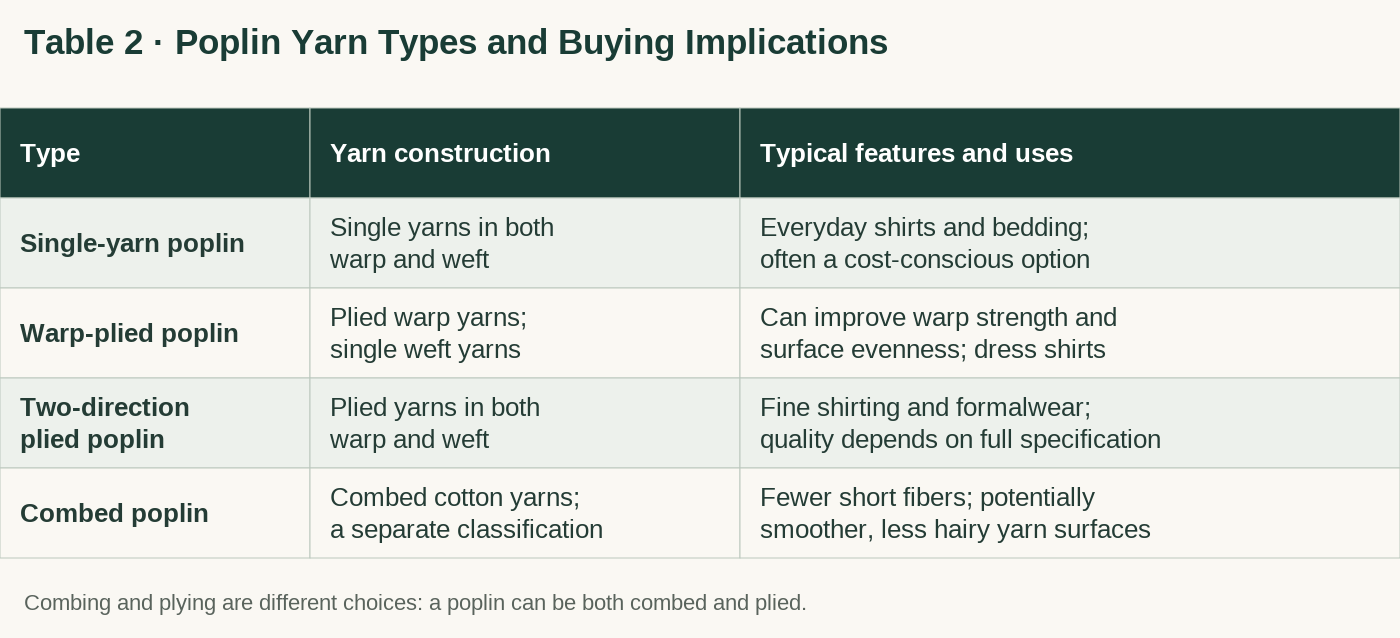
Poplin is also classified by yarn construction. Single-yarn poplin uses single yarns in both directions. A warp-plied construction uses plied yarns in the warp and singles in the weft. Another option uses plied yarns in both directions.
Combed versus carded is a separate choice about cotton fiber preparation. It is not an alternative to those three construction categories: a fabric may use combed yarns and also have a plied warp. Ask for both the yarn count and the number of plies instead of relying on a label such as “premium poplin.”
The next image translates the second supplied table, in the original sequence. Its buying descriptions are qualified because plying or combing alone does not create an automatic quality ranking.
Does Plied or Combed Poplin Always Make a Better Shirt?
Single-yarn poplin is common in everyday shirting and can be a practical budget choice. Plied warp yarns can improve evenness and warp-direction strength when yarn size, fiber quality and construction are suitably controlled. Plied yarns in both directions are also used in fine dress shirting.
Those categories do not prove that every single-yarn shirt is basic or that every fabric with plied yarns is the highest grade. A well-made single-yarn poplin can outperform a poorly specified plied construction. Retail price alone cannot reveal what a shirt is made from.
Combing removes short fibers during preparation for spinning and helps produce a more uniform fiber supply. It can support smoother, less hairy yarns, although the final fabric handle also depends on twist, yarn size, weaving and finishing. Compare matched specifications and washed swatches rather than a combed claim in isolation. [4]
Why Can Cotton Poplin Feel Smooth or Silky?
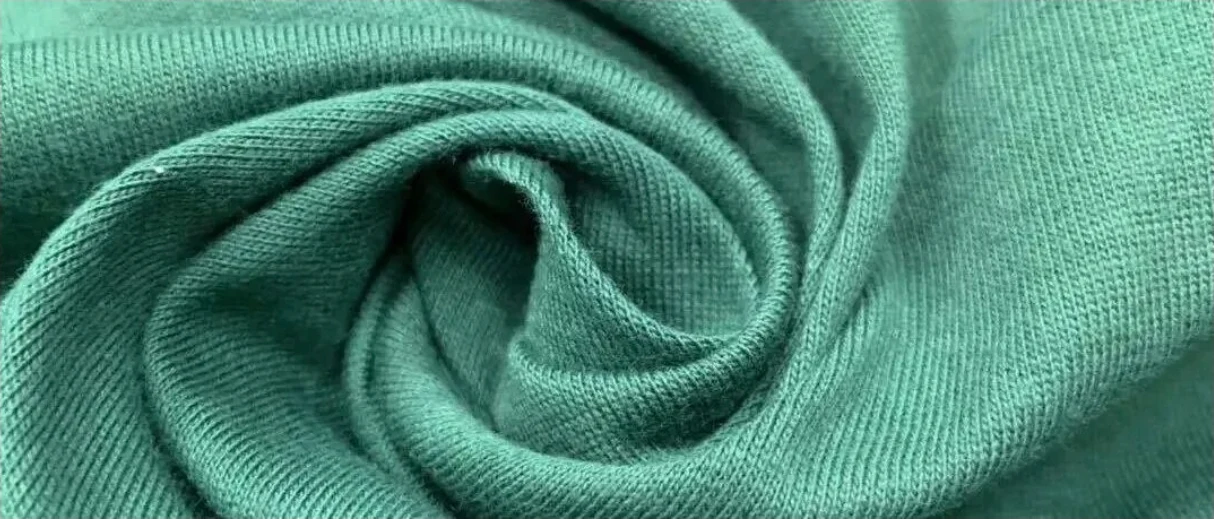
Three effects help explain the feel. First, a fine rib can give the surface a subtle texture while the cloth remains visually clean. The rib is often understated in fine cotton poplin; obvious diamond-shaped grains are not a requirement. [5]
Second, fine, even yarns and a well-controlled surface can give a gentle sheen. Cotton poplin is not automatically glossy, and ordinary cotton fabrics are not necessarily dull. Mercerizing, calendering and other finishing choices can change the appearance.
Third, a smooth, low-hairiness yarn surface can feel clean and pleasant under the fingers. The finished handle may be crisp, soft or slightly slick depending on the specification. It is therefore too strong to say that all of its smoothness comes from weave structure or that finishing plays no part. Ask to handle the fabric again after the intended wash process.
How to Compare Cotton Poplin with Other Plain Cotton Fabrics
Start with construction. Under magnification, look for plain-weave interlacing and, where visible, a fine crosswise rib. Count warp ends and weft picks rather than trying to judge their ratio from a photograph. Fine cotton poplin may appear almost smooth.
Then compare the handle under similar conditions. Is the fabric crisp or limp? Does it feel smooth after washing? Compare fabrics of a similar finished weight and finish; otherwise you may be comparing treatments or thickness rather than construction.
Check sheen under the same light, but do not use gloss as proof of poplin or pure cotton. For shirts, also examine opacity in the chosen color, seam appearance, shrinkage, creasing and colorfastness. A clean-looking white swatch can behave differently from a dark or heavily finished version.
A Cotton Poplin Sourcing Checklist for Shirt Buyers
Your inquiry should identify fiber composition, warp and weft yarn counts with units and ply, ends and picks with their measurement unit, finished GSM, usable width, color, finishing, order quantity and acceptable tolerances. Specify whether the construction figures refer to greige or finished fabric.
Approve a physical swatch and a sewn shirt sample. Check the intended care cycle before bulk approval, especially handle, opacity, dimensional change and seam performance. If a mill offers a higher-density or combed upgrade, ask what measurable change you are paying for.
The useful takeaway is straightforward: cotton poplin gets its characteristic shirt feel from a coordinated construction, yarn and finish—not from silk content or a magic thread-count number. Buy the complete specification and the tested result.
Adapted and translated from contributor-supplied Chinese notes and two comparison tables. Construction terminology was checked against textile references; table ranges are illustrative supplied values, not laboratory results or mandatory market standards.
This guide focuses on cotton shirting poplin. Poplin naming varies by market, and neither a fabric name nor touch alone confirms fiber composition. Inspect the finished fabric and agree measurable specifications and tolerances before bulk purchase.
Sources
- Tanzania Bureau of Standards — Draft Tanzania Standard, Textiles: Poplin varieties — Specification (draft reference, not a universal current standard)
- Nicola Redmore, University of Huddersfield — Woven Apparel Fabrics (2012), poplin construction and cross-rib effect
- CottonWorks — Yarn Ply, Counts and Treatments
- CottonWorks — Fiber Preparation for Spinning
- SILKNOW textile thesaurus — Poplin, a plain weave with fine horizontal ribs
Need to Compare Shirt Fabrics?
Use a reference swatch and a clear specification to compare cotton poplin, blends and alternative shirting constructions.
YOUR NEXT STEP
Put the details to work.
Estimate an order or turn your specifications into a supplier inquiry.