A red-carpet brand meets Keqiao fabric development
Marchesa’s Spring 2027 presentation at the opening of Keqiao Fashion Week on November 5, 2026 brought international eveningwear design into a local fabric-development setting. COSMO’s event report identifies Georgina Chapman’s involvement and describes the brand’s established Oscar and Cannes red-carpet presence. [1]
Global Textile Network names four collaborating Keqiao businesses: Dashu Textile, Yuhua Holdings, Zhixu Textile and Huace Textile. The latter two are transliterations of 志旭纺织 and 花册纺织; buyers should confirm legal and trading names when contacting any supplier. [2]
This is evidence of a collection collaboration with a red-carpet brand. It does not establish that fabric from this particular project has already appeared in a specific Oscar or Cannes gown. Nor should the use of “couture” in event coverage be read as verification of formal French haute couture accreditation.
For people buying and developing fabric, the interesting shift is the relationship: a textile supplier can contribute to a design brief, rather than simply quote against a finished specification. The practical question is how to recognize that capability in a supplier you might actually use.
What does a demanding eveningwear brief ask of a mill?
The presentation’s translated theme, “Whispers of Flowers in the Wind,” suggests a useful development problem: how can a textile carry lightness, floral structure and visual drama together? [1]
The sourcing analysis that follows is not a disclosure of Marchesa’s confidential specifications. Consider a comparable eveningwear brief. A three-dimensional flower needs enough structure to hold its intended shape without adding unwanted weight. A sheer base must balance transparency, support and drape. Embroidery needs to remain secure while the base fabric moves and while seams are constructed.
Those requirements cross the boundary between fabric design and garment engineering. An attractive swatch is only a starting point. The buyer and mill need to agree the base, embellishment method, placement, finishing route and how the material will behave in the intended garment.
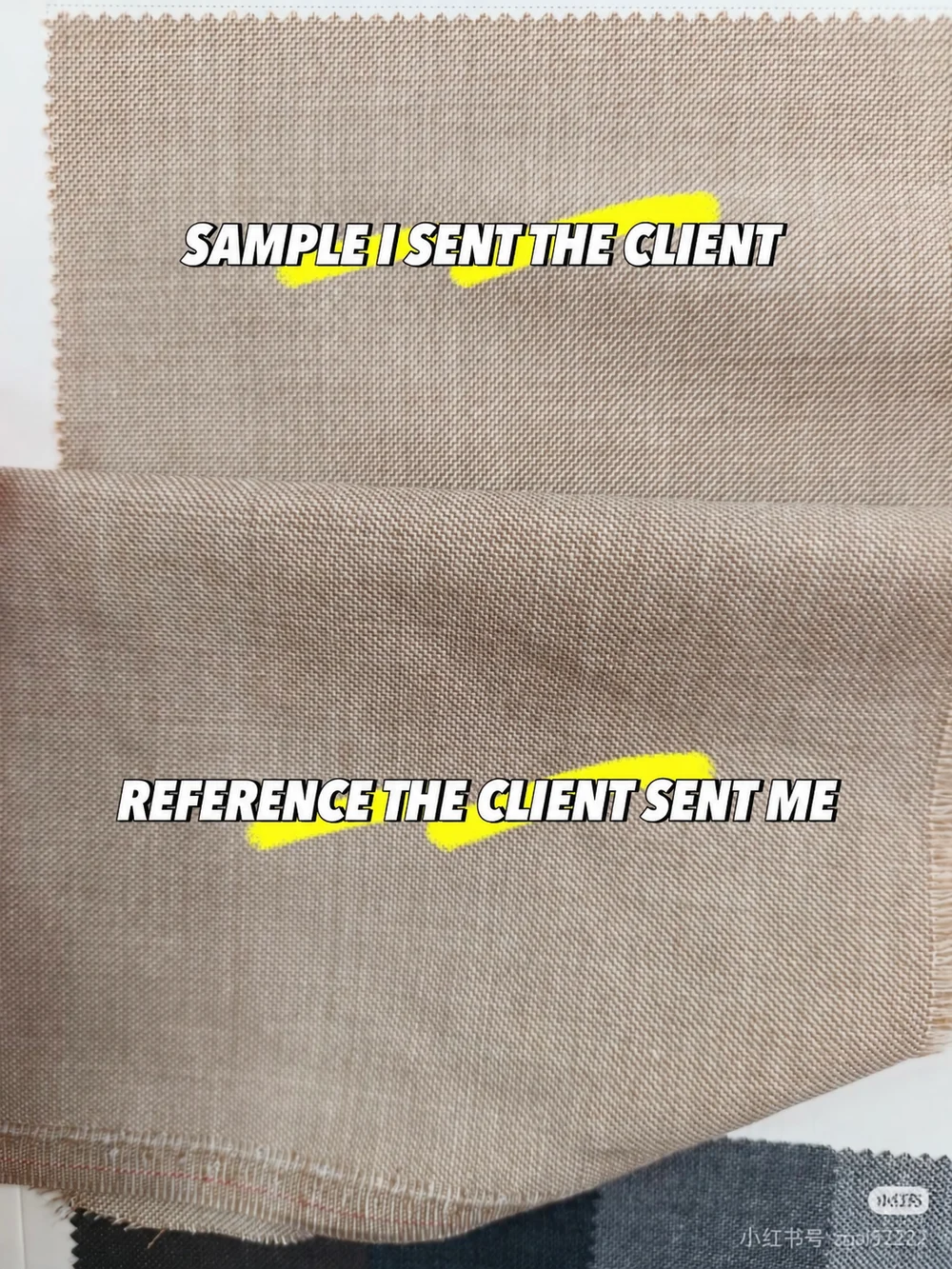
That is what co-development can mean in practice: repeated samples against a shared brief, with an approved reference and a clear record of what changed. Price matters, but a low quote cannot compensate for a material that cannot deliver the design.
Quick response depends on the actual development route
Keqiao’s concentration of textile businesses can make it easier to coordinate samples, sourcing and processing. It does not mean every step from spinning to finishing happens on one street, or that every specialist treatment can be completed in a week.
Before agreeing a sampling deadline, ask what the mill does in-house and which operations are subcontracted. A stock base with an existing finish follows a different route from a new weave, custom embroidery or a shade that needs repeated approval.
Request a development schedule with concrete stages: first swatch, color submission, trial finish, garment test and final sign-off. Confirm what is required from you at each stage. A supplier that explains dependencies is giving you more useful information than one that promises the fastest possible delivery without conditions.
The value of a cluster lies in the options and coordination it can offer. The capability that matters to your order is still the specific supplier’s ability to deliver the agreed sample and repeat it.
Consistency is tested through repeatability
A single standout sample does not prove bulk consistency. For a special-occasion garment, a shade mismatch, an unstable embellishment or a change in usable width can disrupt cutting, assembly and the finished appearance.
Specify the checks relevant to the material: shade consistency within and between rolls, colorfastness for the intended use, usable width, dimensional stability, appearance after the agreed care process and security of decorative work. Keep an approved sample and an agreed way to judge differences.
The sampling room can offer useful clues, but a waste bin is not a reliable quality score. Experimental development can generate many rejected trials for good reasons. Instead, ask for sample-revision records, evidence of how a problem was corrected and a repeat sample made through the proposed production route.
The useful question is not simply whether a mill has ever produced an impressive fabric. It is whether it can reproduce the fabric you approve, at the quantity and tolerance your order requires.
Technology, fashion, green and health: translate the agenda into buying questions
The next day, November 6, the 2026 Textile Innovation Conference took place in Keqiao. Its theme connected a decade of innovation with future brand development. In CNTAC’s account, district leader Jing Yao referred to technology, fashion, green and health, while CNTAC president Sun Ruizhe emphasized quality, efficiency and the supporting industry ecosystem. [3]
For a buyer, those directions are useful when translated into evidence requests.
Technology: ask which fiber, construction or finish creates the claimed effect. Moisture management, a cool-touch surface or insulation should be defined through a specification and appropriate testing, rather than inferred from a product name.
Fashion: evaluate whether the supplier can interpret a design intention and offer technically feasible alternatives. A development conversation should produce a sample plan, not just a large showroom selection.
Green: establish what a claim covers, which records support it and whether the evidence follows the material you are purchasing.
Health: distinguish measurable textile properties from promises about the wearer’s health. Antibacterial, UV-protective and other functional claims require a suitable method, stated conditions and evidence relevant to the finished product. A marketing label is not a test report.
Certification is specific evidence, not a universal export pass
For recycled-content sourcing, Textile Exchange’s GRS and RCS frameworks address verification and chain of custody. When a certified claim is part of your brief, check the supplier’s certification scope and the transaction documentation applicable to the shipment; a certificate displayed in a showroom does not, by itself, identify the material in your order. [4]
OEKO-TEX STANDARD 100 concerns testing textile products for harmful substances. It should not be treated as proof of every environmental attribute or of every performance claim. Other programs, including bluesign, serve different purposes; ask exactly which certificate, product or facility scope is being offered. [6]
GRS, OEKO-TEX and bluesign are not a single set of mandatory entry tickets for every shipment to Europe or the United States. Legal requirements depend on the product, market and intended use, while a customer may impose additional private specifications.
The EU’s Carbon Border Adjustment Mechanism is also not a blanket textile-import certification rule. Its stated sector coverage focuses on carbon-intensive goods such as cement, iron and steel, aluminium, fertilisers, electricity and hydrogen. Do not assume ordinary fabric is covered merely because it is manufactured, or that a recycled-content certificate settles a CBAM question. Check the actual goods classification and current requirements for the shipment. [5]
What the opportunity means for smaller clothing brands
An international collaboration is a reason to investigate a supplier, not a guarantee that the supplier fits every buyer. A company able to support a complex showpiece may have a minimum, development fee or schedule that does not suit your first collection.
Start by comparing the sample against your product rather than the country-of-origin label. Look at hand, drape, repeatability, usable width, care and the tests your garment needs. Neither an imported fabric nor a Chinese-made fabric is automatically the better choice.
Small-batch work can be a useful area to explore, but “quick response” and “low minimum” need to be defined separately. Ask about sample-yardage quantities, stock availability, color minimums, custom-finish minimums, development charges and repeat-order terms. A supplier may accept a short cut from stock while requiring a much larger custom production lot.
No supplier’s willingness to accept a few dozen meters should be assumed from this article. Confirm it against a written quotation and the actual material you want.
A practical checklist before you place an order
First, write the material brief. Define the garment, target appearance, fiber or construction constraints, quantity, color, care expectations, budget and delivery window. Explain which features are essential and where you can accept alternatives.
Second, request comparable samples and a development proposal. Ask which processes are in-house, who manages subcontracted work, what each sampling stage costs and how revisions are approved.
Third, match every performance or certification claim to evidence. For antibacterial effects, ask for the method and performance after relevant wash cycles. For water repellency, establish the test rating and durability conditions. Water repellency and waterproofness are different claims.
Fourth, approve the repeatable production reference. Confirm shade tolerances, usable width, inspection arrangements and what happens if a lot does not meet the agreed specification. Retain the approvals in writing.
Finally, build the commercial terms around those approvals. Confirm minimums, cutting charges, lead times, payment milestones and responsibility for corrections before committing to bulk. A named-brand collaboration cannot replace these checks.
The bigger shift is from selling fabric to solving a brief
The meaningful story is not that Chinese textiles were absent from high-end fashion until this event, or that all mills now offer the same capability. Both would flatten a diverse industry into an easy slogan.
Marchesa’s Keqiao collaboration is a concrete example of a brand and textile businesses working together on a collection. The opportunity for buyers is to look more closely at development capability, not to replace one country-of-origin assumption with another.
Ask how a supplier turns an idea into an approved sample, and how that sample becomes a consistent delivery. That is where a showroom story becomes a sourcing decision.
Made in China can describe sophisticated materials and demanding development work. Your own order still needs the sample, documentation and production controls that demonstrate it.
Sources
- COSMO — Keqiao Autumn Fashion Week opening and Marchesa Spring 2027 (November 10, 2026)
- Global Textile Network — opening show and four collaborating fabric businesses (November 6, 2026)
- CNTAC — 2026 Textile Innovation Conference report (November 10, 2026)
- Textile Exchange — Recycled Claim Standard and Global Recycled Standard
- European Commission — Carbon Border Adjustment Mechanism
- OEKO-TEX — STANDARD 100 scope
YOUR NEXT STEP
Put the details to work.
Estimate an order or turn your specifications into a supplier inquiry.