What does a runway show actually release?
I often wonder: what do the clothes shown at Fashion Week actually have to do with ordinary people?
Probably nothing at all.
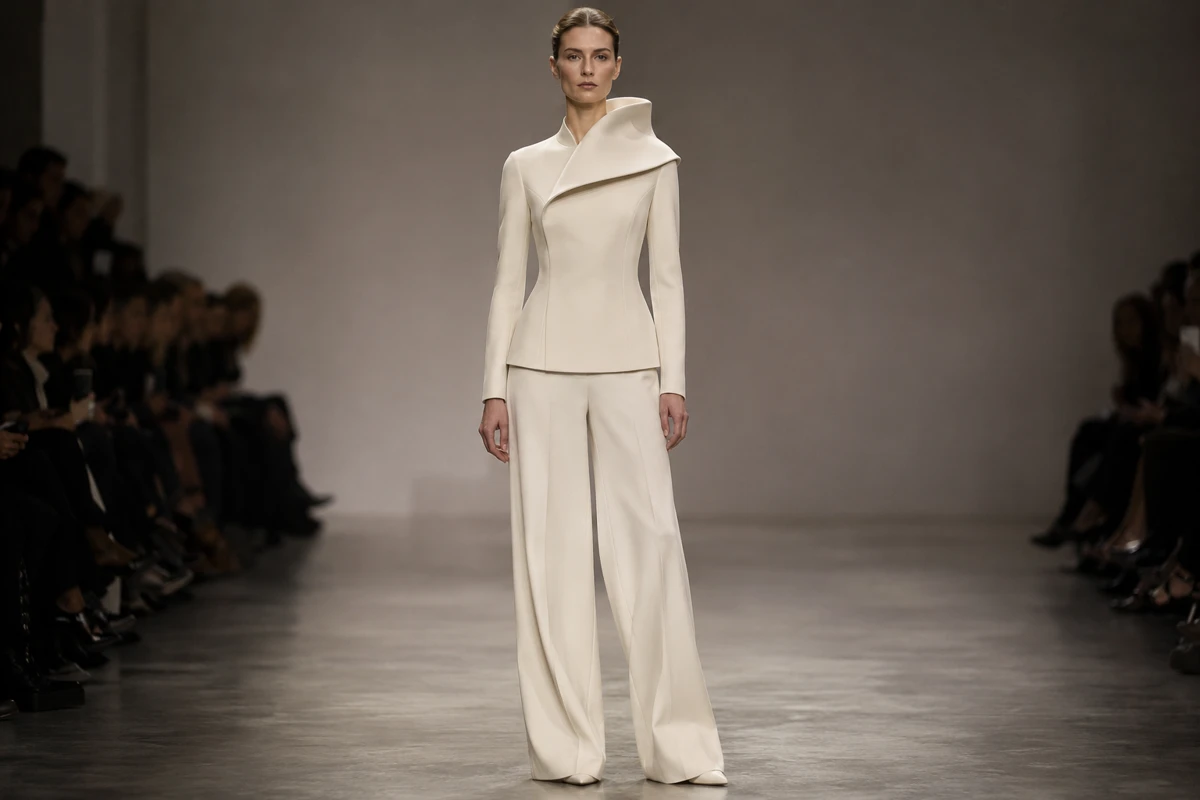
What Fashion Week really releases are concepts, signals, direction, and attitude.
Brands are telling the market and their peers: “I think this direction will be interesting next year. Are you going to follow?”
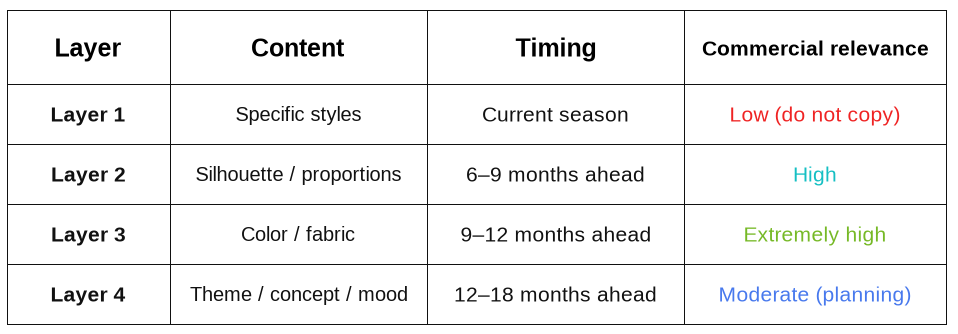
More specifically, the information released by a single show can be divided into four layers:
Focus on the layers that reach your customer
Your actual work sits mainly in the second and third layers: silhouette and proportion, then color and fabric. For a commercial designer, the first layer is something to look at rather than copy. The fourth can help with concept proposals and collection presentations.
The timing ranges in the table are a planning framework, not a fixed timetable for every brand, season or market. A signal still needs to be checked against what your suppliers can offer and what your customers want.
That is why I believe the value of the Big Four Fashion Weeks is severely overrated for many designers making volume styles. The premise matters: I am talking about commercially repeatable styles intended to sell in quantity. The “90%” in the title expresses my opinion; it is not a measured industry statistic.
Consider the questions a clothing-wholesale operator might ask when reviewing runway images. What color is gaining ground? Where does the hem fall? How wide is the cut? This is an illustration of a commercial way of looking, not a report of a particular interview.
The operator does not need to start with Prada’s seasonal theme, Loewe’s most elaborate craftsmanship or a grand conceptual statement. The useful questions are more concrete: ankle-length skirts or mid-thigh? Wide-leg trousers or a narrower cut? Warm colors or cool ones? Those are signals that can help frame a product decision.
1. Color: look for a shared palette
For this kind of commercial work, I consider color one of Fashion Week’s most useful outputs. When several brands converge on related color families, that is a direction worth discussing with fabric suppliers. It is a signal to investigate, not a guarantee that the same shades will appear on every supplier’s card next year.
Knowing the direction early can give you more time to request swatches, develop samples and plan a launch. It should not, by itself, be a reason to commit to a large fabric purchase.
My suggested routine is to revisit the latest shows after two to three months and ask upstream suppliers for their trend-color cards and available stock shades. Within roughly three months of the shows, compare those cards with the color updates appearing at fast-fashion retailers serving a similar customer. Treat that as a working review window, rather than a universal industry deadline.
Look for overlap between runway repetition, supplier availability and actual retail adoption. Then test the colors against your own customer and sales history.
2. Length: track where the hem is moving
Skirt length, trouser length and jacket length are easy signals to overlook. Will coats finish around the hip or move toward the knee? Will trousers skim the floor or sit above the ankle?
You do not need to watch every show. Start with a small, relevant reference set—perhaps five influential brands whose customers, product categories or price positioning help you make useful comparisons. Their relevance matters more than the number.
Review the styles that sold well for you last year. If your short styles performed well but the references you are studying move toward a mid-length proportion, use that change as a sampling question. Adding 5–8 cm could be one development trial; it is not an instruction to lengthen every garment by the same amount.
Check the resulting proportion on the body, then review movement, fabric consumption and the size range. A familiar seller with a considered length change can be a more practical development starting point than a completely new style.
3. Width and fit: adjust the proportions of a proven block
Shoulder width, trouser-leg width and overall ease give you another set of practical signals. Are the references oversized or fitted? Are shoulders broader or narrower? Where is the volume concentrated?
These ideas can sometimes be explored through changes to an existing pattern rather than a new fabric purchase. That makes them useful to test, but it does not make every fit change simple or guarantee that this direction will reach your market fastest.
Start with a basic block that already works for your customer. For a looser direction, a 2–3 cm adjustment around the underarm or bust might be one sample-development experiment. Before changing the pattern, define exactly which measurement you mean: a circumference, a flat measurement or an individual pattern-piece adjustment. Those are not interchangeable.
For a closer fit, revisit ease instead of simply reversing an arbitrary number. Check the armhole, sleeve relationship, balance, comfort and grading in a fitting. The point is to revise a proven foundation thoughtfully, rather than develop from scratch for every new reference.
4. Material direction: translate the effect into your price point
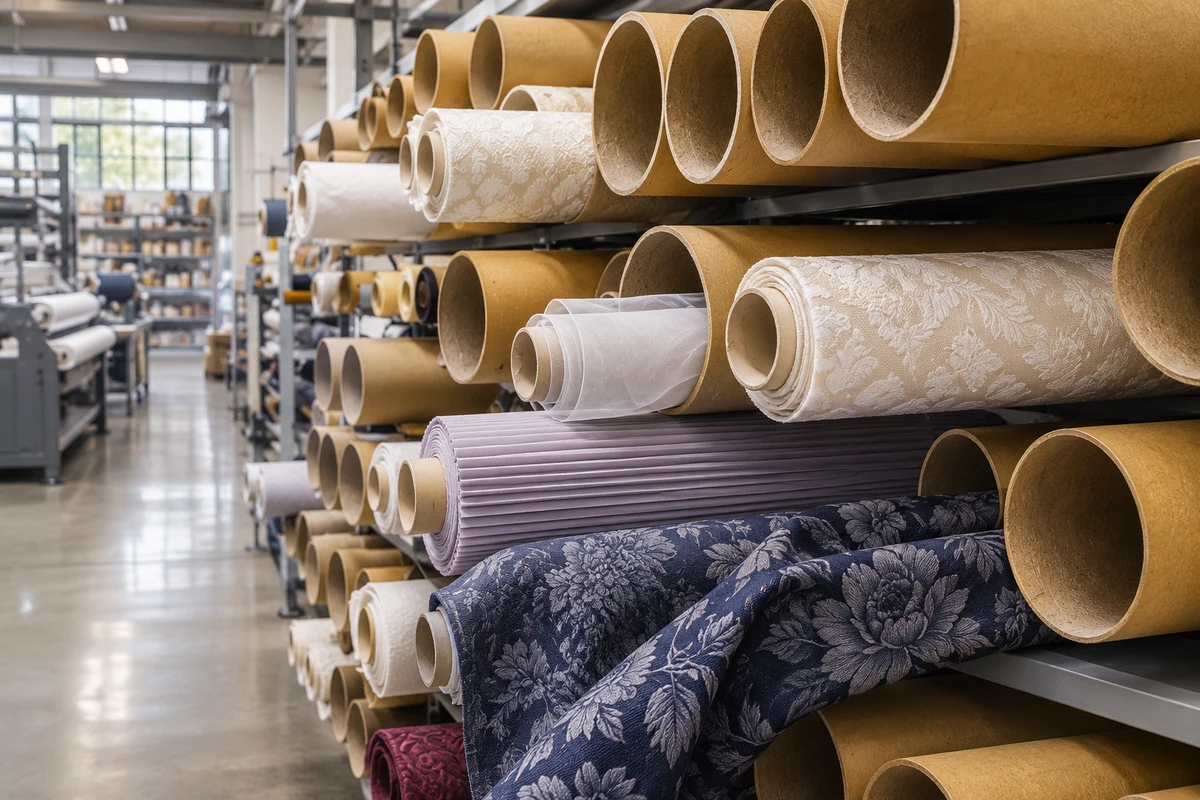
Pay attention to the direction of materials, rather than assuming you need the exact fabric shown on a runway. A runway fabric belongs to a particular brand position, construction and price point. Copying the material choice may make little sense for your product.
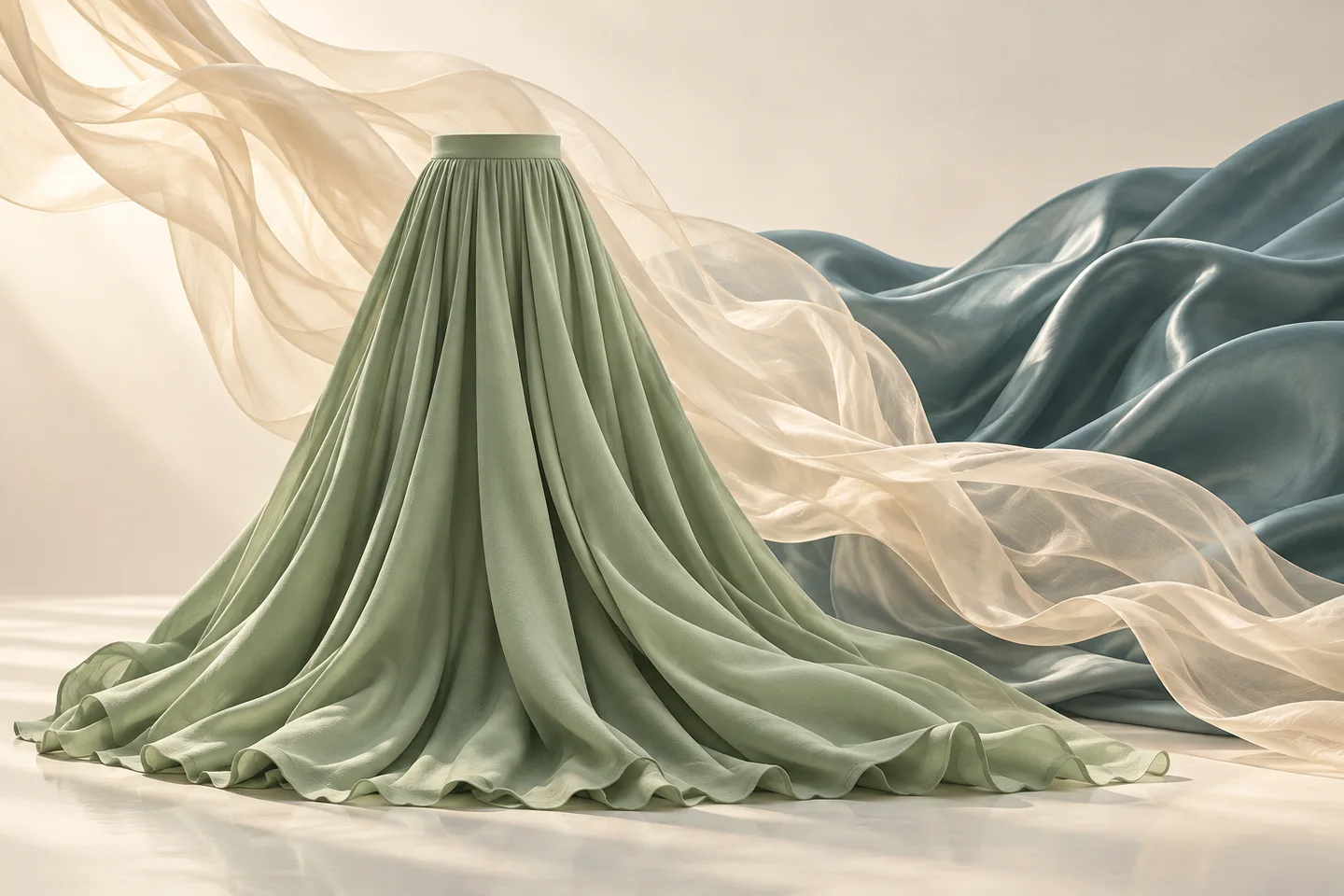
Suppose glossy surfaces recur across the shows you are reviewing. That gives you a reason to investigate silk-like hand, satin surfaces or coated finishes. These are possible development directions, not proof that any particular finish will dominate next year.
A volume-priced style may not need heavyweight silk to explore that idea. A suitable polyester satin or another commercially available fabric could capture part of the sheen and drape at a different cost. Satin describes a construction, while silk and polyester describe fibers; a coated surface is another treatment again.
Compare the attributes that matter to the garment: appearance, hand, weight, drape, care and performance. Ask for samples and test them. Translate the effect into a viable material brief instead of treating one fiber as an automatic substitute for another.
Deconstruct the reference: color families, not isolated looks
Do not stop at which brand used which shade. Look across the overall palette of the shows in your reference set.
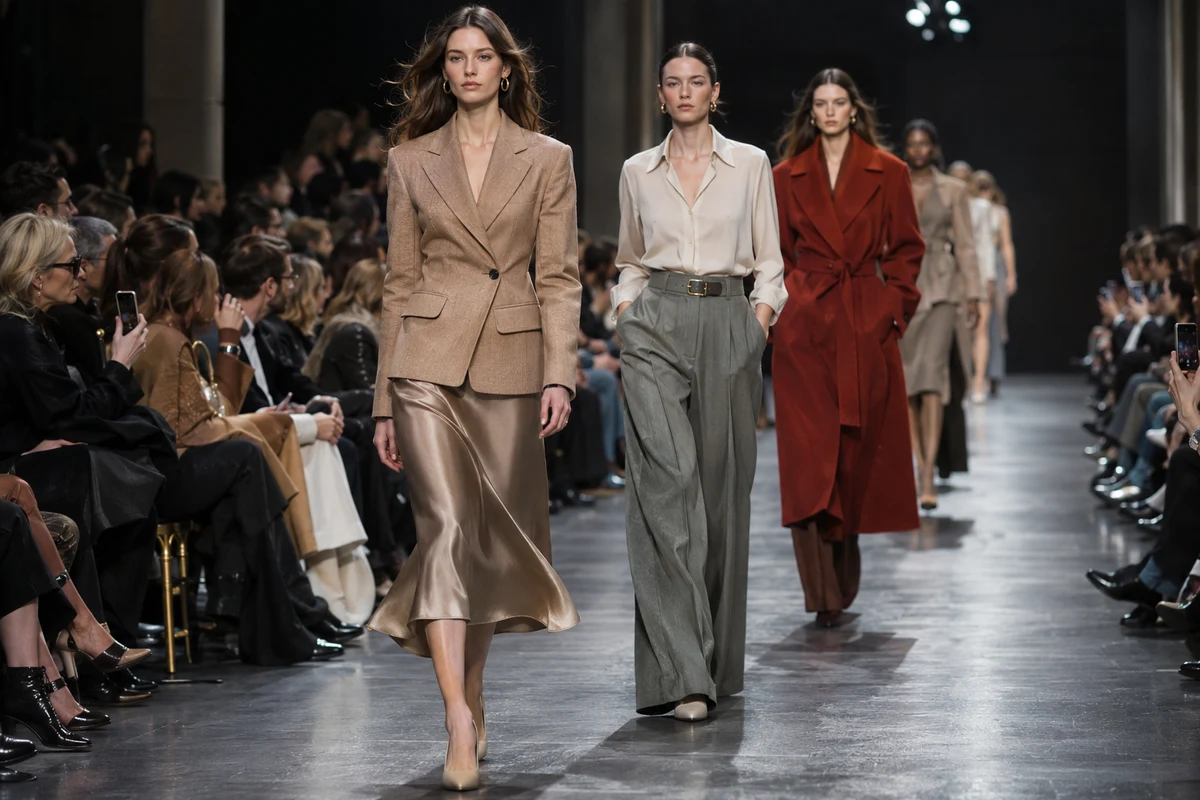
Warm sand, gray-green and lava red are examples of color families you might record, not claims about a particular current season. Build a palette from the recurring directions you actually observe, then compare it with supplier cards and retail products.
You do not need to adopt every conceptual explanation behind a color to use it commercially. You do need to establish whether it fits your customer, selling season and available fabrics. The useful output is a short, testable color brief.
Deconstruct the reference: proportions, not whole garments
Look past the complete outfit and record the proportional changes. Are the shoulders wider or narrower? Is the waistline moving up or down? Where does the skirt hem fall? How wide are the trouser legs?
These observations turn a runway image into questions a patternmaker can work with. They are hypotheses to test in your own range, rather than a prediction that every market will adopt the same block next year.
Keep a record of the original reference, the proportion you want to explore and the commercial reason for trying it. That helps the development team discuss a specific change without drifting into a copy of the complete look.
Build a detail library before development
When development begins, details do matter. Study how collars are handled, how cuffs close, whether pocket placement changes and which embroidery or surface techniques contribute to the effect.
Collect a broad reference reserve before deciding what to use. Do not worry about having a large library at this stage; collecting ideas and putting them all on one garment are different activities.
Tag each reference with the design principle or construction question that interests you. Adapt the principle to your own product, materials and manufacturing process. A distinctive motif, logo or complete branded design is not something to reproduce simply because it appeared on a runway.
Let your sales data make the final style decision
I am not arguing that Fashion Week is useless. It has value. My view is that much of its spectacle and conceptual language does not translate directly into the day-to-day decisions of a designer making volume styles.
Exaggerated shapes, dramatic accessories and conceptual styling can serve media imagery, brand storytelling and buying conversations. Mid-to-high-end brands, designer labels and custom businesses may need a much closer reading of those elements than the workflow described here.
For volume-style development, keep four lines in view: where color is shifting, where length is moving, how width and fit are changing, and where materials are heading. You can extract those observations without watching every minute of every show.
Before approving a new style, ask four questions. Does the color work for your customer? Does the new length improve a relevant proportion? Does the revised fit survive a real fitting? Can the material effect be delivered at the required cost and quality?
Fashion Week can give you a direction. Your own sales data and customers should tell you which specific styles to make.
YOUR NEXT STEP
Put the details to work.
Estimate an order or turn your specifications into a supplier inquiry.