How much detail can one garment carry?
Many design beginners instinctively add things: a seam here, a pocket there, a different collar, a slit at the hem, a graphic on the back. With each revision, the design gets fuller and more crowded.
But a garment can carry only a limited amount of visual information. As the details multiply, visual noise increases and the design becomes harder to read.
I see subtraction as a necessary part of designing. Remove the extra ideas so the intended expression comes through clearly. There is one test for whether a detail should stay: if you remove it, does the original design intent survive?
1. Edit structural lines
Starting with the garment itself, I use four approaches to subtraction. The first is to remove dividing lines that have no clear purpose.
Many visible lines contribute little to the silhouette. They begin as dart manipulation or pattern adjustments and end up as extra seams on the outside. Beginners who are still thinking in two dimensions often fill a flat sketch with unusual lines without asking what those lines do in a three-dimensional garment.
A useful first test is to ask whether deleting a line changes the shaping. If it does not, consider whether it earns its place visually. Pattern adjustments do not all need to become visible seam lines.
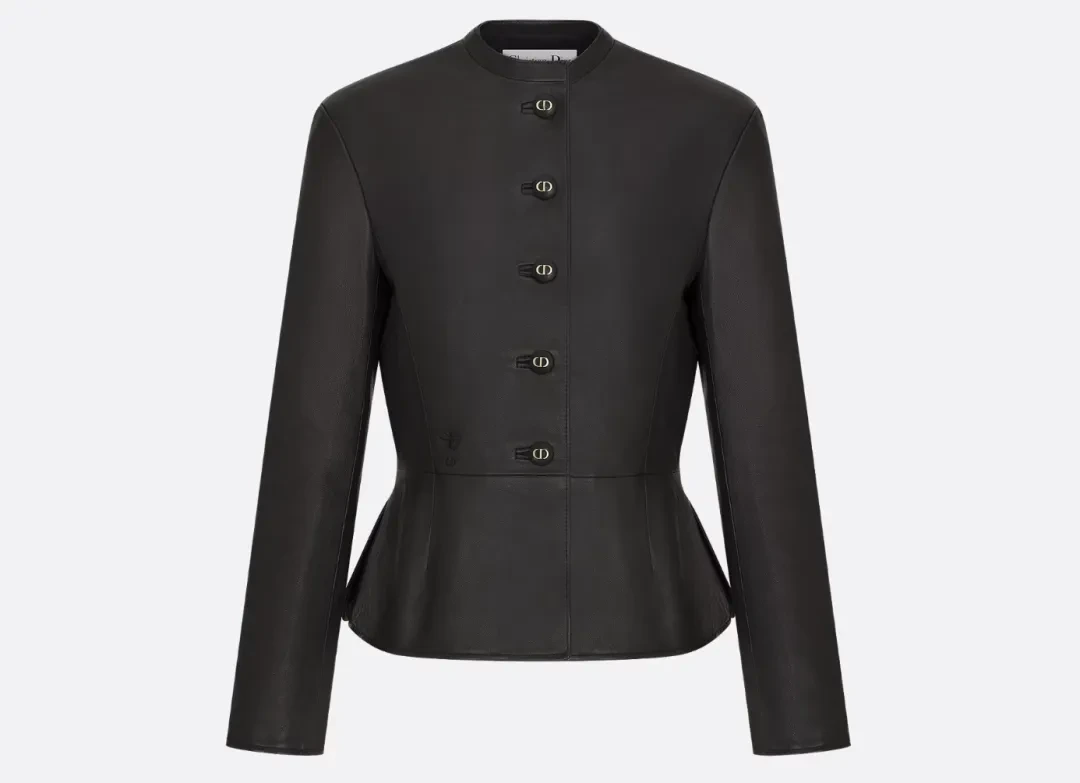
Keep the structural lines that establish the proportions or support the silhouette. If removing one disrupts the shape or fit, it has a job to do. Classic Dior tailoring is a useful reference for studying how shaping lines contribute to a defined waist and balanced silhouette.
2. Keep one main focal point
Structural lines and decorative lines serve different purposes. Decorative lines allow more freedom, provided they support the overall design.
When a garment has a feature at the collar, the sleeves, the body and the hem all at once, those areas compete for attention. The wearer may remember none of them.
Ask where the eye lands at first glance. If it keeps moving between several equally strong elements, the focus is getting lost. Choose one main area and let the others take a quieter role. A statement collar can work with simple sleeves. A distinctive hem can work with a clean neckline.
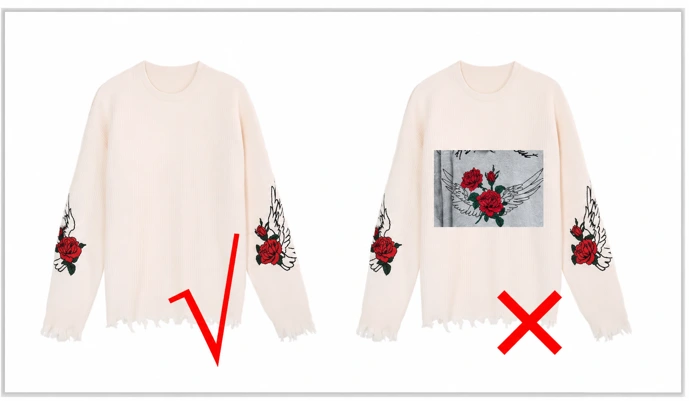
One focal point makes the garment easier to remember. In the comparison below, the sleeve motifs already establish the focus. Adding a graphic to the chest creates another demand for attention.
3. Choose one leading decorative technique
Print, embroidery, hot-fix crystals, pleating, piecing and contrast binding can each carry a design. Putting all of them into one garment makes it harder to understand the intent.
Remove one decoration and ask whether the style is still recognizable. If it is, that detail may be doing work the garment no longer needs. Let one technique lead, with other treatments taking a supporting role or echoing it through related materials.
As decorations accumulate, the design can become difficult to read. What remains is an impression of how much work went into making it.
The two examples below already have a clear use of pleating. Adding another chest decoration to the first, or embroidery over the pleated surface of the second, would introduce more information without necessarily strengthening the idea.

4. Limit competing fabrics and layers
Beyond the main fabric, aim for one or two supporting materials. Some beginners combine four or five fabrics with different textures and colors in a single design. The result can feel chaotic, unless that mix is a deliberate part of the intended style.
Let the main fabric carry the silhouette and texture. Give each supporting fabric a clear role, whether it provides an accent or serves a different function. Simplify the remaining areas into a more consistent material choice.
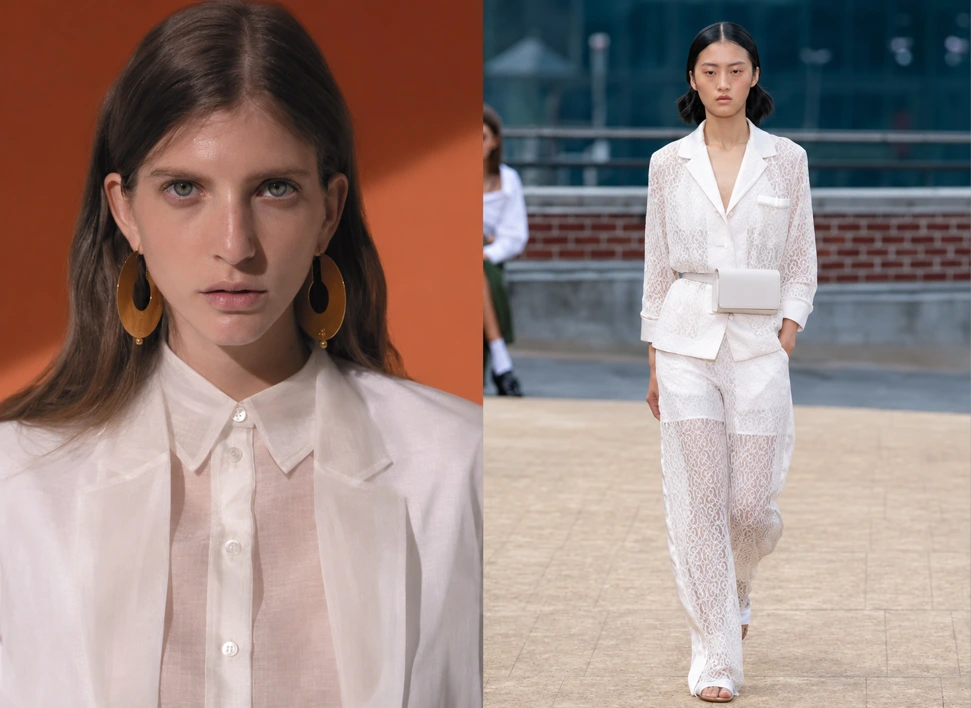
Two checks before you remove a detail
For me, subtraction has two limits.
First, the design intent must survive. The focal point should still hold, and the style should remain recognizable.
Second, protect the pattern and fit. The silhouette and the way the garment sits on the body should remain right. If removing a detail throws off the proportions or makes the garment look wrong when worn, reconsider the edit.
A complete design comes from choosing its details carefully. What you save extends beyond cost: you create visual breathing room. One focal point can hold attention, the silhouette can be remembered at a glance, and the style can be expressed in a single clear sentence.
YOUR NEXT STEP
Put the details to work.
Estimate an order or turn your specifications into a supplier inquiry.