Part 2: both factories quote CNY 30 — which should you choose?
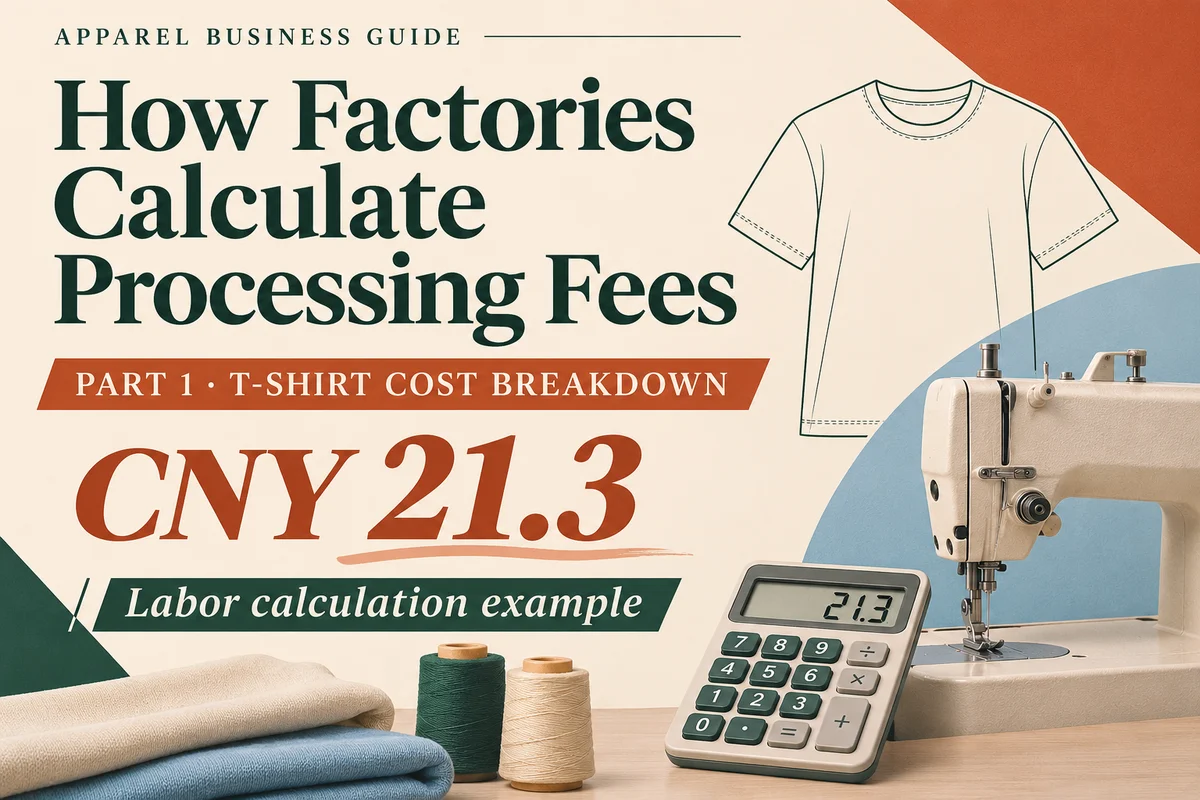
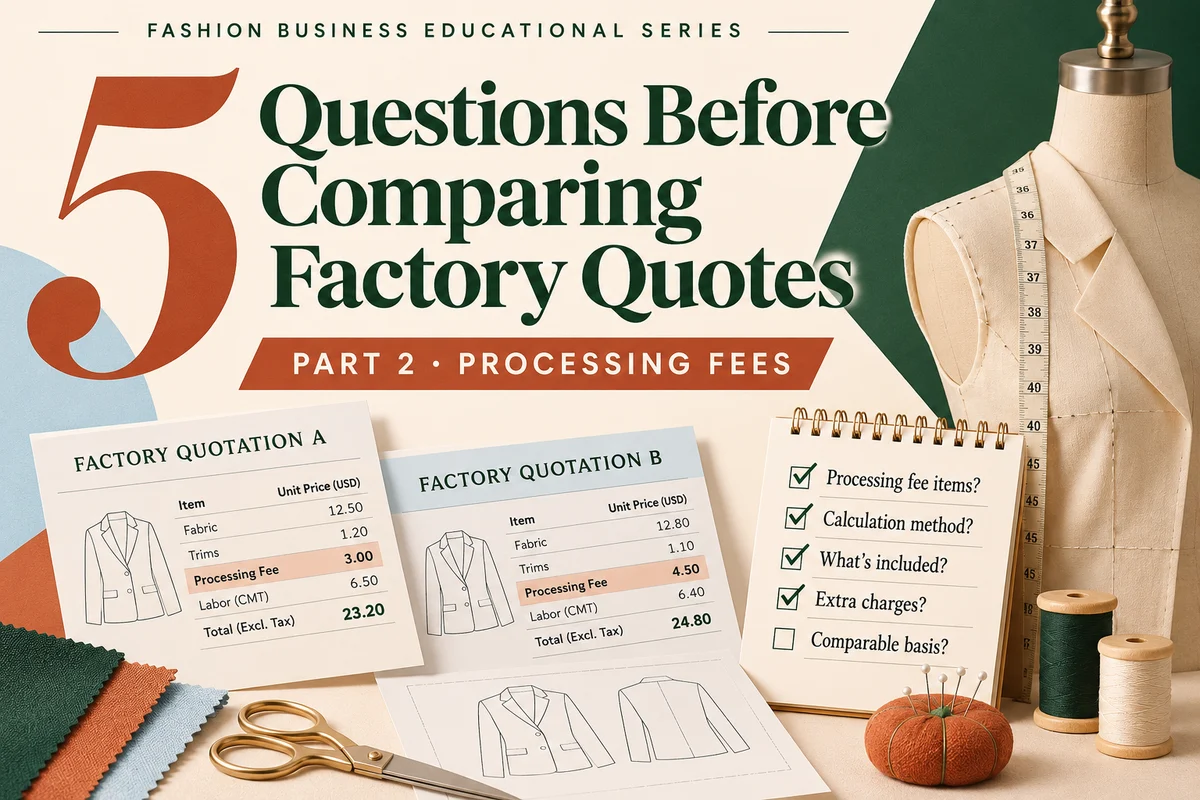
After understanding how a processing fee can be calculated, the next question is practical: if two factories both quote CNY 30, which offer should you choose? This second article organizes the comparison into five questions.
The goal is to clarify assumptions, not to pressure a supplier into revealing every confidential internal figure. These questions can start a short conversation, but a reliable comparison may require samples, revised specifications and written follow-up. Read Part 1 first if you need the labor-cost calculation.
Why the same total does not mean the same offer
Labor time and rate are important, but a quotation can also include overhead, subcontracting, materials, setup and profit. Two CNY 30 offers may assign these items differently. One may include cutting, inspection and packing while another excludes some of them.
Subcontracting also changes the production arrangement, but it is not automatically evidence of inferior quality. Ask where the work will be performed, who controls quality and who remains responsible for delivery. Start with an identical specification and scope before comparing totals.
Question 1: what work, time basis and rate are included?
Ask: “Could you provide the processing fee by operation group, with time and rate where available, and identify inclusions and exclusions?”
Request the units: minutes per garment, rate per minute, quantity basis and any efficiency assumption. Clarify whether cutting and development costs are allocated across the batch and whether rates already include overhead.
A prepared table is helpful, but it is not proof that the estimates are accurate or capacity is available. If internal rates are confidential, request an itemized scope, sample-based explanation and separately priced changes. Judge the consistency of the answer rather than how quickly a spreadsheet arrives.
Question 2: when do pattern and sample revisions become chargeable?
Ask: “Which revisions are included, when do additional charges begin, and what does each charge cover?”
Distinguish a buyer-requested design change from correction of a supplier error against the approved specification. Ask whether the fee covers pattern adjustment, a new pattern, grading, sample sewing, materials and shipping.
“It depends” can be reasonable before the change is defined. The important point is to agree on a pricing basis and require approval of extra costs before work starts. A stated revision count alone does not settle who caused the change or what a new sample includes.
Question 3: what is the embroidery unit and approved design basis?
Ask: “Is this per piece, per thousand stitches or another unit? Does it include digitizing, setup, backing, thread and placement?”
Record finished artwork size, colors, location, estimated or finalized stitch count, quantity breaks and the approved sample. Stitch counts estimated from artwork may change after digitizing. A factory using a specialist subcontractor may need time to confirm them.
A per-piece price does not mean a 2,000-stitch and an 8,000-stitch design cost the same. It can be a fixed offer for one defined design at an agreed quantity. What matters is that the quoted design and change rules are clear. Setup, quantity and placement can affect cost as well as stitches. [2]
Question 4: what is the basis for fabric consumption and waste?
Ask: “What usable width, size ratio, marker and allowance underlie the consumption? Who owns and pays for surplus, remnants and excess loss?”
Separate cutting-marker efficiency from shrinkage, end losses, defects, shade segregation and other agreed allowances. State whether quantities are measured in meters or kilograms and whether the fabric is buyer-supplied or included in the garment price.
Do not compare two percentages without their denominator. An offer to absorb excess loss is useful only when the baseline, permitted allowance and responsibility for defects are defined. It does not independently prove that consumption is realistic.
Question 5: what milestones support the delivery date and rush fee?
Ask: “What must be approved before timing starts, when will cutting and sewing occur, and what changes if we request a rush order?”
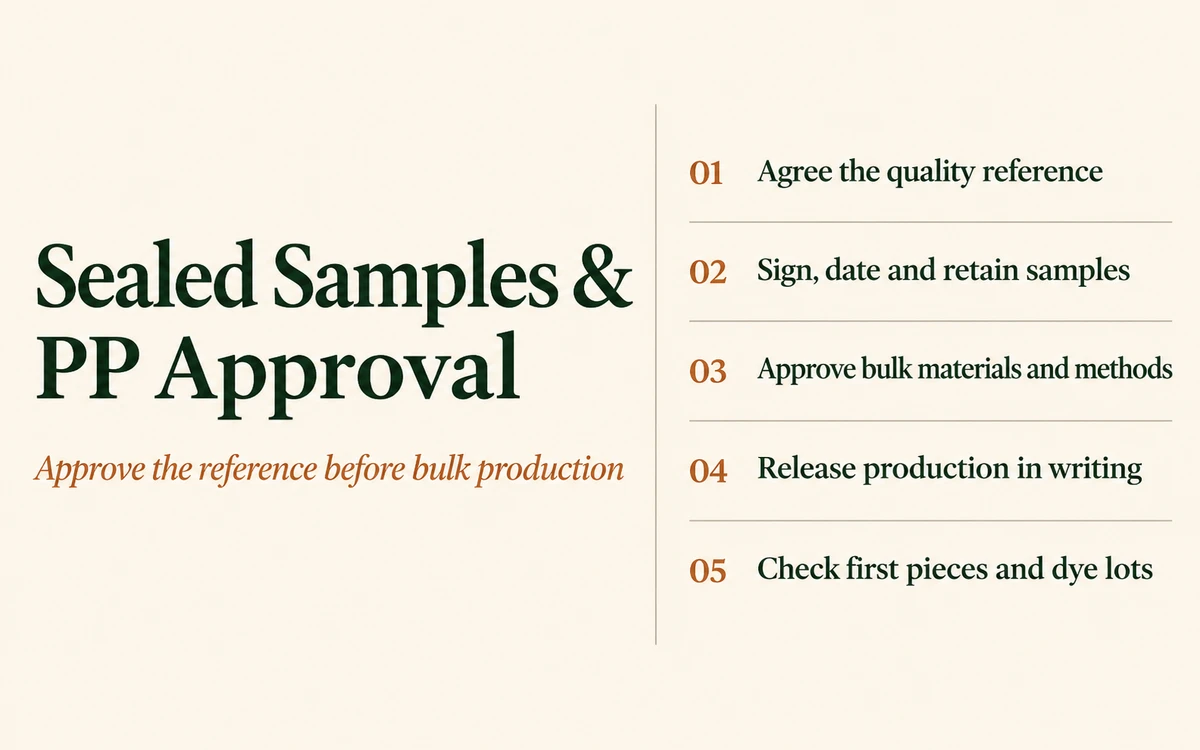
Clarify material arrival, sample approval, decoration, inspection and packing milestones. Distinguish ex-factory readiness from dispatch and delivery to your destination. Identify who must act when an approval is delayed.
A rush order may involve overtime, an alternative line, split production or specialist scheduling; it need not always displace another customer. Request a written premium, scope and revised plan. A confident promise alone is less useful than a schedule tied to actual dependencies.
A better judgment standard: clear, consistent and verifiable answers
After asking these questions, compare scope, assumptions and responsibilities alongside price. Use the same revision of the tech pack, quantity, materials and delivery requirement for both suppliers.
Good documentation makes an offer easier to assess. It does not replace sample review, capability checks or an agreed quality requirement. A supplier who cannot disclose every internal number may still provide a sound offer; an elaborate cost sheet may still contain unrealistic assumptions.
Ask further questions when exclusions remain unclear, extra charges lack approval rules or milestones contradict the promised date. Resolve those points before committing.
Read the two articles together
Part 1 explains the labor calculation and the difference between a labor subtotal and a selling price. Part 2 explains what to ask when quotations arrive.
Before comparing the next two totals, request the same five items in writing: scope and costing basis, revision fees, decoration pricing, material-loss responsibility and delivery milestones. Keep the answers with the approved specification.
The aim is a quotation you can understand and an agreement both sides can execute, rather than simply the lowest number.
Edited from user-supplied manuscripts. Arithmetic checked; time and rate inputs remain illustrative. Unsupported embroidery tariff and 76-fold comparison removed. Judgment rules qualified to avoid inferring capability or honesty from a quotation format.
General sourcing guidance, not verified factory time-study results, a regional wage schedule or a current market quotation. Author biography supplied by the author.
Sources
YOUR NEXT STEP
Put the details to work.
Estimate an order or turn your specifications into a supplier inquiry.