Why the Final Setting Pass Deserves Attention
When finished fabrics suffer from batch-level defects such as excessive washing shrinkage, substandard GSM (grams per square meter), wavy surfaces, center-to-selvedge shade variation or unstable widths, investigate the final setting process alongside weaving, knitting, dyeing and other finishing stages. These symptoms can have several causes; they should not automatically be attributed to one machine.
Inappropriate draw, mismatched temperature and speed, and poorly controlled tension can compromise dimensional stability and trigger post-delivery complaints and claims. Stenter heat setting is an important control point because overfeed regulation, temperature–time–tension balance and equipment condition affect finished shrinkage, weight, smoothness and appearance.
This guide explains overfeed mechanics, marking prevention, edge-guiding control and the process logic behind practical production tuning, quality inspection and technical training.
Stentering and Heat Setting Perform Different Jobs
During wet processing such as dyeing and printing, fabric can experience longitudinal tension, lengthwise elongation and widthwise constriction. The resulting geometry may remain unstable until the fabric is allowed to relax and is finished under suitable conditions.
Stentering controls the fabric in open width. Combined with suitable straightening and guiding equipment, it helps correct uneven selvedges, width variation and some forms of bow or skew. Heat setting stabilizes thermoplastic components through an appropriate thermal cycle and controlled cooling. Drying or chemical curing on a stenter is not necessarily the same process as thermoplastic heat setting.
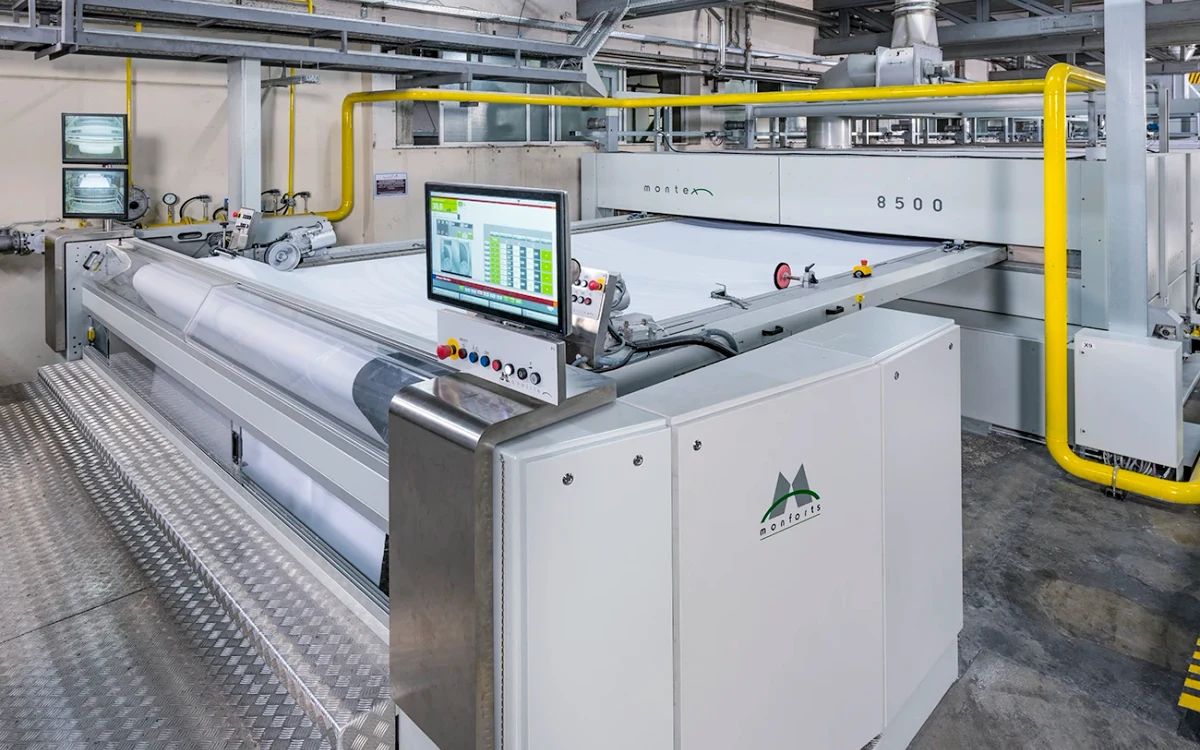
These operations can improve smoothness, hand and dimensional behavior, but they cannot guarantee the removal of every crease or eliminate all subsequent laundering shrinkage. Some damage or creasing introduced upstream may already be permanent. Monforts describes chamber airflow, temperature distribution and configurable equipment as important features of its stenter systems. [1]
Positive and Negative Overfeed Explained
Overfeed regulates the relationship between the fabric feeding speed and the chain or transport speed. This differential helps control lengthwise relaxation, fabric weight and dimensional behavior. The term also appears in other textile operations, although the relevant mechanism and settings differ.
Positive overfeed means the feed delivers more fabric length than the transport advances over the same period. The surplus allows lengthwise relaxation rather than additional stretching. Depending on construction and width control, this can increase the number of courses or picks per unit length, raise GSM and reduce residual lengthwise washing shrinkage. Excessive overfeed can create ripples, folds or an uneven surface.
Negative overfeed, or underfeed/draw, means the feed delivers less length than the transport demands. The fabric is extended lengthwise. Excessive or inappropriate draw can lower GSM and leave poor relaxation behavior, but negative overfeed is a process setting, not automatically evidence of fraud. Judge the result against the approved construction, performance and purchase specification.
| Setting | Speed relationship | Typical concern |
|---|---|---|
| Positive overfeed | Feed speed greater than chain speed | Supports relaxation; too much can cause waves or folds. |
| Nominal zero overfeed | Feed and chain speeds are equal | Does not necessarily mean the fabric is tension-free. |
| Negative overfeed / draw | Feed speed below chain speed | Extends the fabric; excessive draw may reduce GSM and worsen residual shrinkage. |
Worked Example: What +20% Overfeed Actually Means
Using chain speed as the denominator, overfeed (%) = (feeding speed − chain speed) ÷ chain speed × 100. If the feeding speed is 120 m/min and the chain speed is 100 m/min, the nominal overfeed is (120 − 100) ÷ 100 × 100 = +20%.
In the idealized length balance, 120 meters delivered at the feed corresponds to 100 meters advanced by the chain. The reduction relative to the incoming length is therefore 20 ÷ 120 = 16.7%, not 20%. This distinction matters when comparing overfeed percentages with actual shrinkage or yield measurements.
The speed ratio alone does not establish that all internal stress has been removed or that washing shrinkage will meet specification. Fabric slippage, tension elsewhere in the line, width, moisture, heat penetration and construction affect the outcome. Check the actual feed and chain speeds, then verify the cooled and conditioned fabric rather than relying solely on a control-screen number.
Fabric-Specific Parameters Need Trial Approval
A setting plan must connect fabric preparation, width control, thermal exposure and cooling. Different fibers, blends and constructions require different processing routes. An oven setpoint is not the same as the temperature reached throughout the fabric.
For elastane blends, pre-setting before wet processing can be useful for controlling geometry and reducing later problems, but it is not universally mandatory. Cotton Incorporated discusses heat setting after preparation or dyeing as possible routes for cotton/spandex fabrics, depending on the desired result. Width, stretch and subsequent shrinkage still require control. [2]
For nylon, monitor shade sensitivity and filament snagging. Burrs, damaged contact surfaces or abnormal marking require a controlled stop and maintenance under the mill’s safe procedure; do not attempt adjustment while hazardous parts are moving.
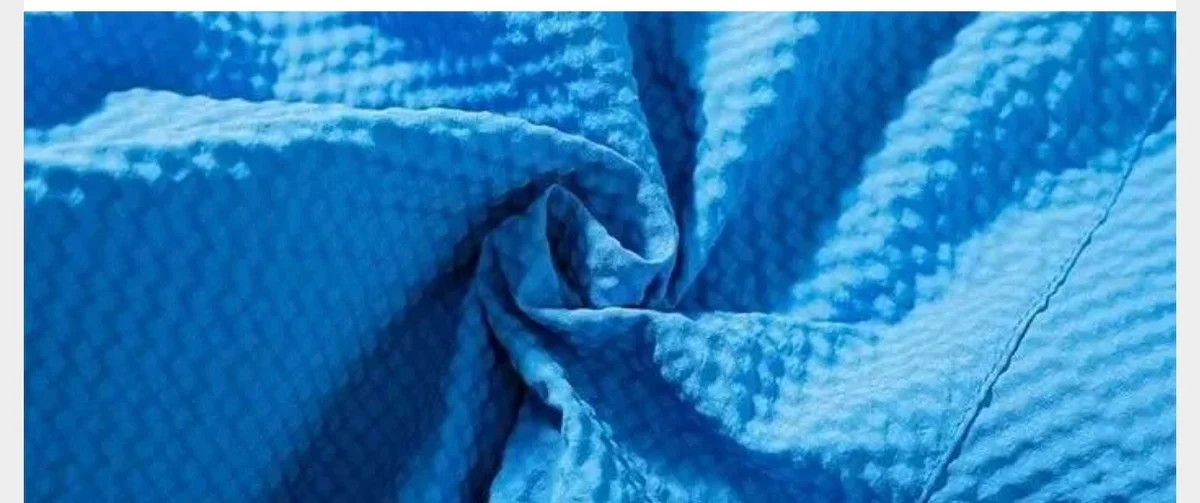
For puckered, seersucker or uneven-thickness fabrics, reducing speed or considering a second pass may improve thermal uniformity in a validated process. Extra heat can also flatten an intended texture, alter shade or damage a component. Do not assume every specialty fabric needs two passes.
| Fabric group | Manuscript reference | What must be confirmed |
|---|---|---|
| Elastane / spandex blends | Evaluate pre-setting and final-setting sequence | Elastane grade, companion fiber, oil removal, stretch/recovery, width and dyeing route. |
| Nylon fabrics | Illustrative oven range: 160–180°C; line speed: 20–25 m/min | Actual fabric temperature and dwell time, shade change, construction and equipment configuration. |
| Standard polyester fabrics | Illustrative oven range: 170–200°C; line speed: 20–28 m/min | Fiber and blend limits, prior thermal history, finish, target dimensions and exposure time. |
| Puckered / seersucker or variable-thickness fabrics | Evaluate slower running or a validated second pass | Through-thickness heating, intended pucker retention, shade and cumulative thermal exposure. |
Preventing Edge Loss and Pinning Failures
Edge loss occurs when the selvedge is not held correctly or slips off the pins or clips. It can cause frayed edges, width defects and avoidable waste. Investigate feeding stability, selvedge condition, gripping and tension together.
1. Stack or present incoming fabric methodically so it feeds smoothly without avoidable lateral sway.
2. Adjust uncurlers, spreaders and guiding devices to the fabric and approved entry setup. The uncurler position alone does not define the finished width.
3. Screen incoming goods for damaged or frayed edges before loading. A weak selvedge may fail even with otherwise appropriate settings.
4. Check entry guides, edge sensors and pinning or clipping arrangements so fabric reaches the holding system in a stable position.
5. Match longitudinal tension and overfeed to the construction. Excessive tension or width stretch can contribute to edge slippage.
6. Where relevant, address disruptive drafts and maintain brushes, pins, clips, sensors and other wear parts on a planned schedule. Use the machine manufacturer’s maintenance and guarding requirements.
The Temperature–Time–Tension Balance
Temperature determines whether a suitable thermal treatment can occur, while excessive exposure can cause yellowing, shade change, hand changes or damage. Uniformity across the fabric and through its thickness matters as much as the nominal oven setting.
Time includes heating and thermal penetration as well as the effective exposure at the required fabric temperature. Approximate heated-zone residence time in seconds = effective heated length in meters ÷ line speed in m/min × 60. This is not automatically the same as time at the target material temperature; the fabric first has to heat up. Cooling then helps retain the intended geometry.
Tension controls the dimensions imposed during the treatment. Appropriate lengthwise relaxation may improve longitudinal stability, while excessive width stretching can increase residual widthwise shrinkage or affect stretch and recovery. Balance both directions against the construction, GSM and end-use. UNIDO’s finishing guidance likewise discusses controlled overfeed and uniform air delivery as parts of finishing control. [3]
A Practical Troubleshooting Checklist
Do not diagnose a batch from a single symptom. Compare the incoming material, approved trial, machine log and conditioned output, then change one controlled variable at a time where practicable. Record the resulting effect on both appearance and performance.
Brand buyers should use warp/weft or course/wale shrinkage, GSM and usable width as acceptance checks. For stretch fabrics, include the agreed stretch and recovery requirements. These measurements can reveal nonconformity but cannot, without process evidence, prove a particular setting or supplier intent.
| Observed issue | Checks to investigate | Evidence to retain |
|---|---|---|
| High washing shrinkage | Relaxation, width stretch, thermal history, effective exposure, compaction and the agreed wash procedure | Conditioned before/after dimensions, wash method and machine settings. |
| Low GSM | Incoming construction, final width, draw, overfeed and finish add-on | GSM results from multiple positions, usable width and roll identity. |
| Wavy surface or ripples | Excess overfeed, uneven feeding, guiding, drying and tension balance | Full-width photos and the corresponding line conditions. |
| Center-to-selvedge shade difference | Earlier dyeing uniformity, airflow, temperature distribution, moisture and finish application | Shade assessment across the width and before/after the setting pass. |
| Unstable width or edge loss | Entry presentation, selvedge strength, gripping, sensors and transverse stretch | Width map, edge-condition photos and maintenance findings. |
| Snags or contact marks | Burrs, damaged contact surfaces, contamination and fabric routing | Defect location and equipment inspection record. |
The Final Line of Defense Is a Verified Process
Overfeed is a major lever for finished weight, dimensions and relaxation behavior. Positive overfeed can support the right result, but excessive overfeed also creates problems. Draw must be judged in context rather than treated as an automatic indicator of malpractice.
Elastane blends and specialty fabrics need an approved thermal route. Feeding controls, machine calibration and planned maintenance help prevent edge loss and marking. The temperature–time–tension balance must be evaluated against the actual fabric and equipment.
Heat setting may appear to be a finishing touch, yet errors at this stage can undo earlier production work. Understanding the mechanics and verifying the cooled, conditioned fabric help reduce scrap and disputes while protecting dimensional stability and finish quality.
Whether you work in apparel manufacturing or textile trading, you do not need to be a stenter engineer. A clear grasp of the process, its limitations and the evidence needed to approve a batch is a practical business competency.
Adapted from the contributor’s English manuscript and organized into process explanations, a parameter-reference table and troubleshooting checks. Absolute claims about defect causation, mandatory pre-setting and negative overfeed were qualified. The overfeed example states its percentage convention. The lead photograph comes from the equipment manufacturer’s cited product page.
A process guide rather than a machine operating recipe. Temperature and speed ranges supplied in the manuscript are illustrative and require trials for the actual fiber, construction, finish and stenter. Use the equipment manual and approved mill procedure. Washing shrinkage and GSM are outcome checks, not independent proof of a particular overfeed setting or supplier intent.
Sources
YOUR NEXT STEP
Put the details to work.
Estimate an order or turn your specifications into a supplier inquiry.