What Is Seersucker—and Will It Lose Its Bumps?
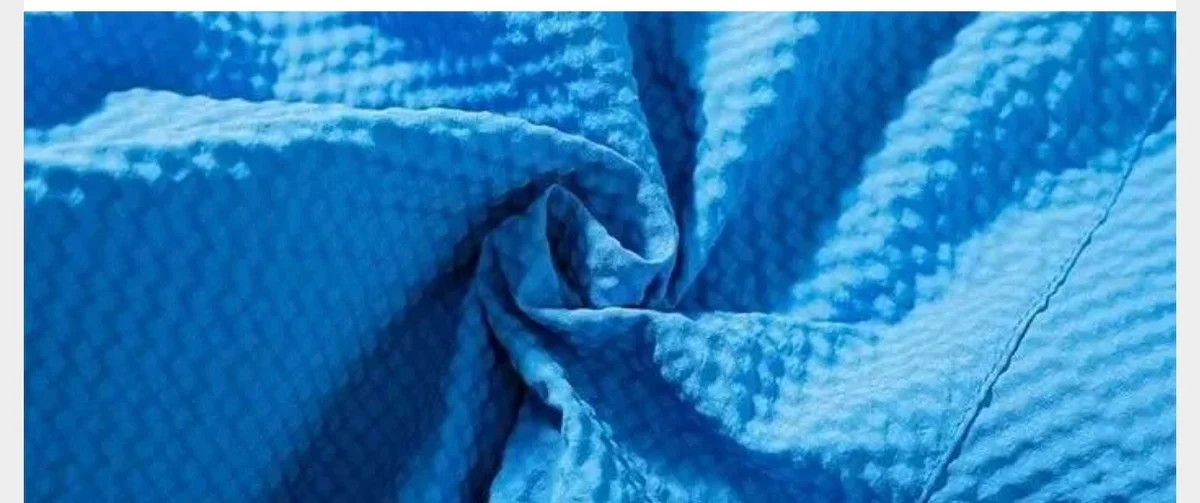
Seersucker takes its name from a Persian expression meaning “milk and sugar,” reflecting the contrast between smooth and puckered surfaces. Its textured appearance makes it a familiar choice for summer clothing.
Will the bumps disappear after washing? In woven seersucker, the texture is built into the construction rather than merely pressed onto the surface. That does not mean it is immune to flattening, dimensional change or damage. Yarn, finishing, laundering and pressing all affect the final appearance. Approve the actual fabric after an agreed wash-and-dry procedure rather than relying on a promise that it will never change.
1. How Dual-Beam Seersucker Weaving Works
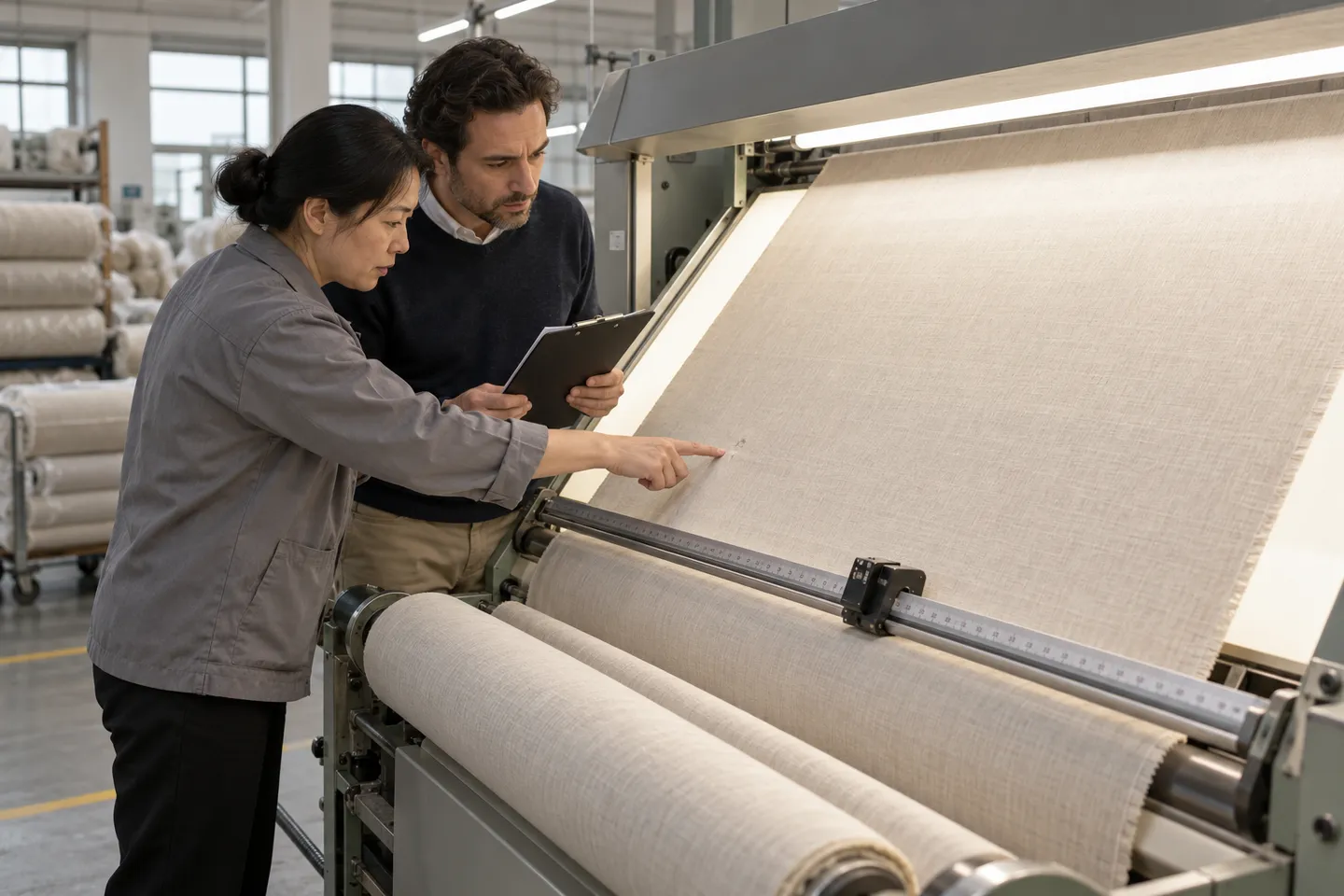
Classic woven seersucker uses separately controlled groups of warp yarns. The warp forming the puckered bands is delivered with greater take-up allowance or a higher feed rate than the warp forming the flatter ground. Separate beams allow these groups to be controlled independently.
The extra warp length forms raised areas as the cloth relaxes. The result is an alternating surface structure, rather than a wrinkle simply stamped onto finished fabric. Beam tension and delivery need to be considered together; describing the process only as slack yarn “contracting” misses the importance of differential yarn length.
Exact settings depend on yarn count, fiber, density, loom and finish. There is no universal cN-per-end setting or tension ratio that guarantees a particular pucker height. Ask the weaving mill for the settings validated for your approved construction.
| Parameter | Puckered warp bands | Flatter ground bands |
|---|---|---|
| Warp delivery | More yarn delivered relative to cloth length | Less yarn delivered relative to puckered bands |
| Control | Separately controlled warp group | Separately controlled warp group |
| Relaxed surface | Raised, puckered bands | Relatively smooth bands |
| Specification basis | Approved sample and mill trial | Approved sample and mill trial |
Controlling Pucker Height and Uniformity
Pucker appearance depends on differential warp delivery as well as yarn characteristics, weave density and finishing. A tension ratio alone cannot define the finished height. Electronic let-off can assist control, but a universal ±5% tolerance should not be assumed.
For purchasing, approve a physical reference sample. If pucker height is specified numerically, agree the measurement method, fabric conditioning, whether pressure is applied and where readings are taken. Check several locations across the width and along the roll. A summer-shirt sample with subtle texture and an exaggerated decorative fabric need different acceptance criteria.
2. Woven vs. Chemically Puckered Seersucker
A similar puckered appearance can also be produced by localized chemical treatment. In cotton, alkali processing can change fiber structure and induce shrinkage; the result depends on how the fabric is treated and restrained. CottonWorks describes these effects in its cotton-processing guidance. [1] [2]
Chemical puckering should not be confused with simple mechanical embossing. It is not automatically a temporary coating that washes off. Neither a fixed “2× durability gap” nor blanket wash-retention percentages can be assigned to the two categories without comparable testing.
Request the production method in writing and compare samples after identical care cycles. Construction, composition and finishing can matter as much as the category name.
| Comparison | Woven seersucker | Chemically puckered fabric |
|---|---|---|
| Main mechanism | Differential warp delivery during weaving | Localized treatment creates differential shrinkage |
| Production route | Separate warp control and suitable weaving setup | Base fabric followed by controlled finishing |
| Texture durability | Construction-based; still assess washing and pressing | Depends on chemistry, substrate and finish; test the sample |
| Hand feel | Varies with yarn, density and finishing | Varies with substrate and treatment |
| Cost comparison | Obtain a construction-specific quotation | Include finishing, testing and usable yield |
| Verification | Mill construction details plus wash-tested sample | Written finishing description plus wash-tested sample |
3. Material Selection: 100% Cotton vs. Poly-Cotton Blends
Cotton seersucker is often selected for its absorbent feel and natural appearance in shirts, dresses and relaxed summer clothing. Comfort also depends on weight, construction and fit. Confirm dimensional change and care requirements; cotton content alone does not establish a shrinkage allowance.
Polyester/cotton blends can offer useful crease resistance and dimensional stability, but their performance depends on the exact formulation and finishing. Write the fiber names and percentages explicitly: for example, 65% polyester / 35% cotton. Do not rely solely on an abbreviated “T/C 65/35” description.
For jackets, trousers or furnishings, evaluate the intended performance rather than assuming any blend is suitable for commercial laundering. For infantswear or sleepwear, separately confirm the safety requirements applicable to the destination and garment category.
| Selection factor | 100% cotton | Polyester/cotton blend |
|---|---|---|
| Buying priority | Absorbent feel and cotton appearance | Balance of cotton feel and polyester properties |
| Appearance | Often matte; confirm actual finish | Luster and feel vary by blend and finish |
| Care check | Shrinkage, drying and pressing response | Dimensional change, pilling and heat response |
| Required evidence | Actual sample and agreed testing | Exact percentages and agreed testing |
4. B2B Verification and Sourcing Best Practices
Confirm the method: ask whether the texture is woven into the fabric, chemically induced, mechanically embossed or created through another construction. Ask for a specification sheet and an approved bulk reference rather than rejecting a supplier simply for using one legitimate method.
Define the product: record fiber percentages, yarn count if relevant, GSM, usable width, color, pucker repeat and appearance criteria. Agree whether width and weight are measured before or after the specified finishing and relaxation process.
Verify washing performance: define the wash method, temperature, detergent, drying, number of cycles and assessment procedure. Use a competent laboratory where needed. Compare appearance, dimensional change, color and hand feel before and after treatment; do not impose an unsupported universal 90% pucker-retention requirement.
Check bulk consistency: inspect across the width and along multiple rolls, document flat spots and irregular bands, and confirm that the inspected fabric matches the approved production method. Include tolerances and remedies in the purchase agreement.
Quick Sample Checks: Useful Screening, Not Proof
Inspect both faces, gently extend and release the sample, and assess recovery after washing under the intended care conditions. These observations can reveal inconsistency or poor performance. They cannot reliably identify the manufacturing process on their own.
A textured reverse, springy hand or immediate recovery is not conclusive evidence of dual-beam weaving. Conversely, a chemically puckered fabric need not have a flat reverse or permanently collapse when gently stretched. Use supplier documentation and, if the distinction is commercially important, technical examination of the construction.
Do not flatten the sample with an iron and treat that as a universal authenticity test. Agree pressing conditions appropriate to the actual fibers and finish.
Conclusion: Buy the Specification, Not Just the Puckered Look
Seersucker describes a distinctive surface, but appearance alone does not tell you how it was made or how it will perform. Differential warp delivery explains classic woven puckering; controlled finishing offers another route to a similar effect.
For a dependable order, identify the method, approve the blend and construction, and test the actual sample under agreed care conditions. A documented specification and a retained wash-tested reference are more useful than a promise that the bumps will last forever.
Adapted from the contributor manuscript. Unsupported universal tension settings, pucker-height ratios and wash-retention figures were removed. Chemical shrinkage background was checked against Cotton Incorporated technical guidance. Comparison tables distinguish general process descriptions from product-specific guarantees.
This is a sourcing overview, not a universal loom recipe or acceptance standard. Confirm construction, test methods and tolerances for the actual order. The supplied image does not verify fiber content or production method.
Sources
YOUR NEXT STEP
Put the details to work.
Estimate an order or turn your specifications into a supplier inquiry.