Why the Same Spandex Content Can Age Differently
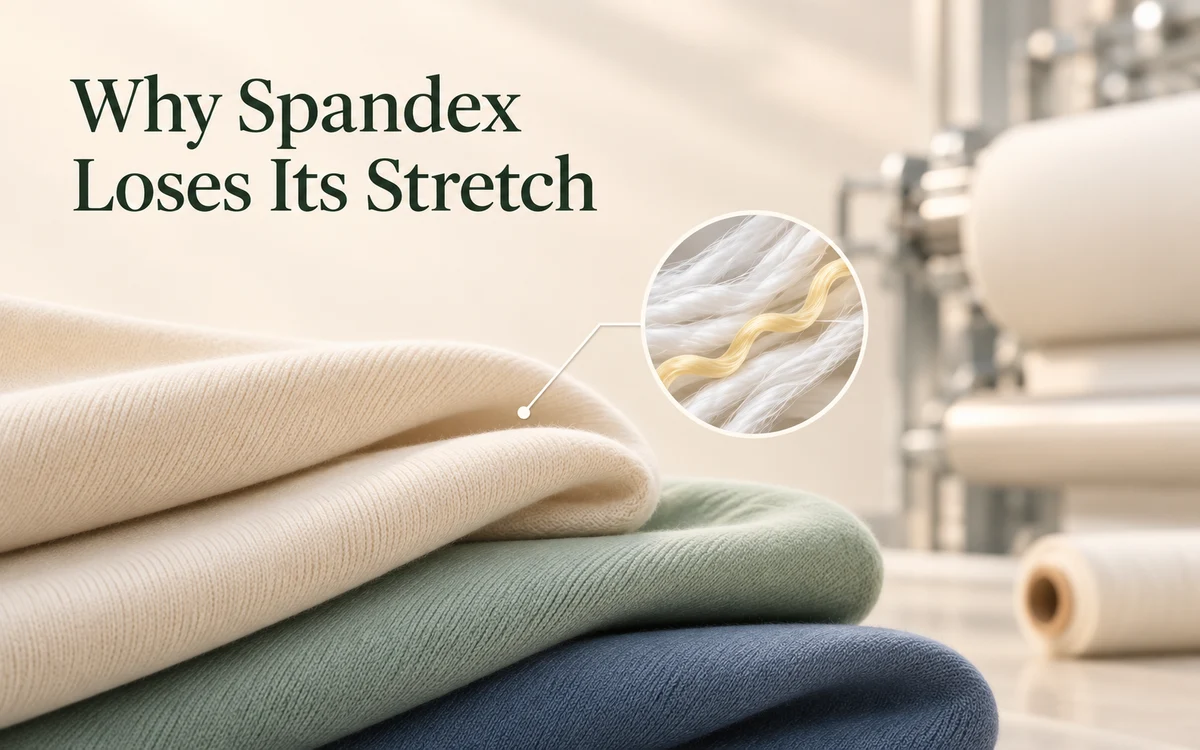
A cotton–spandex garment can still stretch easily even after it starts bagging at the knees or elbows. What it has lost is recovery: its ability to return to its original dimensions after the load is removed. Finishing that gives cotton a cleaner surface or a crisper hand can also expose elastane to heat, chemicals or tension. Two fabrics with the same fiber percentages can therefore behave very differently after wear and laundering.
What Spandex Adds to Cotton Fabric
Spandex, also called elastane, is a polyurethane-based elastic fiber. Lycra is a brand name. The supplied notes give 450–800% as an illustrative breaking elongation range for the fiber, and 3–10% as an example of how much can be blended into cotton, polyester or nylon. Breaking elongation measures extension at failure. Garment stretch and recovery depend on the fabric construction and the load applied.
Flexible polymer segments enable extension, while harder domains help the fiber recover. Polyether and polyester elastane grades respond differently to processing. Polyether grades generally resist hydrolysis better, while some polyester grades are more sensitive to hot, wet or strongly alkaline conditions. Check the actual yarn grade before selecting a process.
How Heat and Tension Affect Stretch Recovery
Excess heat, oxidation and sustained tension can reduce recovery. Heat exposure depends on both temperature and dwell time, as well as the temperature the fabric actually reaches. The contributor notes flag increased concern around 180°C and higher risk above 200°C. These are process observations and vary by elastane grade and exposure.
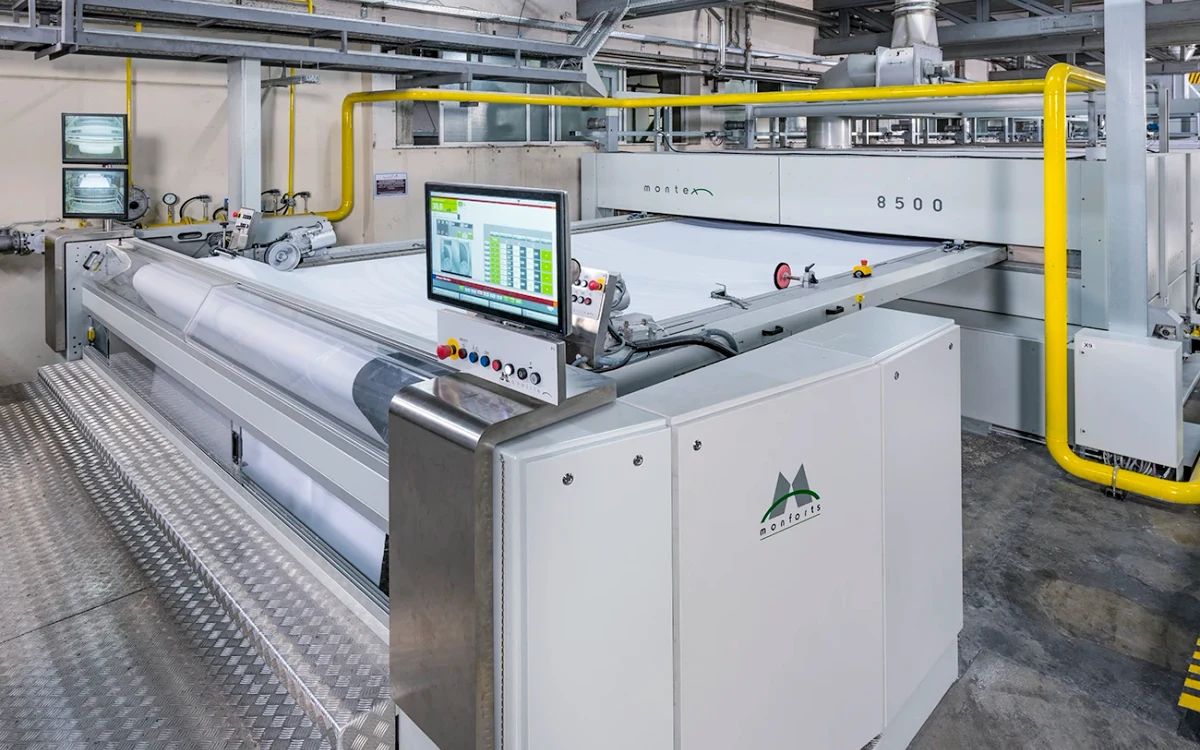
The notes cite 180–195°C for about 30–60 seconds as an example of a cotton–elastane heat-setting trial. Confirm the yarn supplier’s limits and run a mill trial before applying any settings to bulk. Fabric weight, construction, equipment, width and tension all affect the result. Too little setting can leave residual shrinkage, while too much exposure can reduce recovery, change the hand or weaken the material.
Alkali, Chlorine and Peroxide Bleaching
Mercerization exposes cotton to strong alkali. With cotton–elastane blends, the mill must balance the cotton effect with the yarn grade’s tolerance for alkali concentration, temperature and contact time. Some polyester-based elastane grades are particularly sensitive to hot alkali.
Chlorine-based bleaching and repeated exposure to chlorinated water can damage susceptible elastane. Reduced recovery, strength loss and yellowing are possible. Mills often choose a peroxide-based bleach for these blends, but temperature, concentration, pH and holding time still determine the severity of exposure. Check the finished fabric and follow the garment care label.
Where Cotton–Elastane Finishing Can Go Wrong
One possible route for woven cotton–elastane is opening and joining lengths, singeing, desizing, scouring and bleaching, mercerizing, heat setting and preshrinking. The sequence depends on construction, color and finish. Singeing removes surface hairs with brief exposure and controlled tension, followed by prompt extinguishing. Enzymatic desizing is an option when the size is starch-based. Cold pad-batch pretreatment can reduce high-temperature exposure in suitable routes.
Mercerization primarily changes the cotton component. In weft-stretch wovens, the mill often relies more on heat setting for widthwise dimensional stability. Trials should track finished width, hand, shrinkage and recovery together.
Balance Widthwise Shrinkage With Elastic Recovery
Heat setting allows the fabric to settle under controlled temperature, dwell time, width and tension. A fabric with substantial latent contraction can be difficult to stabilize. Forcing it to a wider setting or increasing temperature can trade better initial dimensions for weaker recovery or an undesirable hand. Measure both shrinkage and growth after washing and report the sign convention.
A second setting pass may be appropriate for some heavier or special constructions if trials justify it. Mechanical preshrinking can help control lengthwise change in suitable woven fabrics. Evaluate the full sequence on the same finished sample before bulk approval.
What to Ask the Mill to Test Before Bulk
Ask for stretch, residual growth and recovery before and after an agreed number of wash and dry cycles. Specify the direction, load, extension and recovery interval. ASTM D3107 describes these measurements for applicable woven stretch fabrics. Choose a suitable method for knits and agree the test conditions with the lab. [1]
Measure laundering dimensional change separately. AATCC TM135 covers length and width changes in fabrics suitable for home laundering. [2] Check a sewn garment at the knees, elbows or seat where repeated strain matters. The original two-wash versus three-year contrast illustrates the performance question. A credible comparison requires the same wash, wear and measurement conditions.
Adapted from contributor notes on cotton–elastane finishing. Numerical examples describe fiber properties or mill trials and require confirmation for the yarn, fabric and equipment used.
Sources
Compare Stretch Fabrics Before Bulk
Bring a reference swatch and your target stretch, recovery and wash requirements to a fabric sample search.
YOUR NEXT STEP
Put the details to work.
Estimate an order or turn your specifications into a supplier inquiry.