Alo’s Arrival in China
From June 17, 2026, when Alo officially announced its entry into China via a WeChat article titled "Hello, China," to October 1, when its first pop-up experience space in Mainland China opened at Zhangyuan in Shanghai, Alo has projected a clear impression: it is selling both faster and at a higher price point than Lululemon.
At midnight on August 12, Alo launched its Tmall flagship store and WeChat Mini Program simultaneously. Tmall data revealed that within just one minute of presale final payment opening, GMV exceeded RMB 10 million, shattering the opening sales record for new brands in Tmall's sports and outdoor category. According to third-party estimates, first-day sales surpassed RMB 56.87 million, gaining 375,000 followers in a single week.
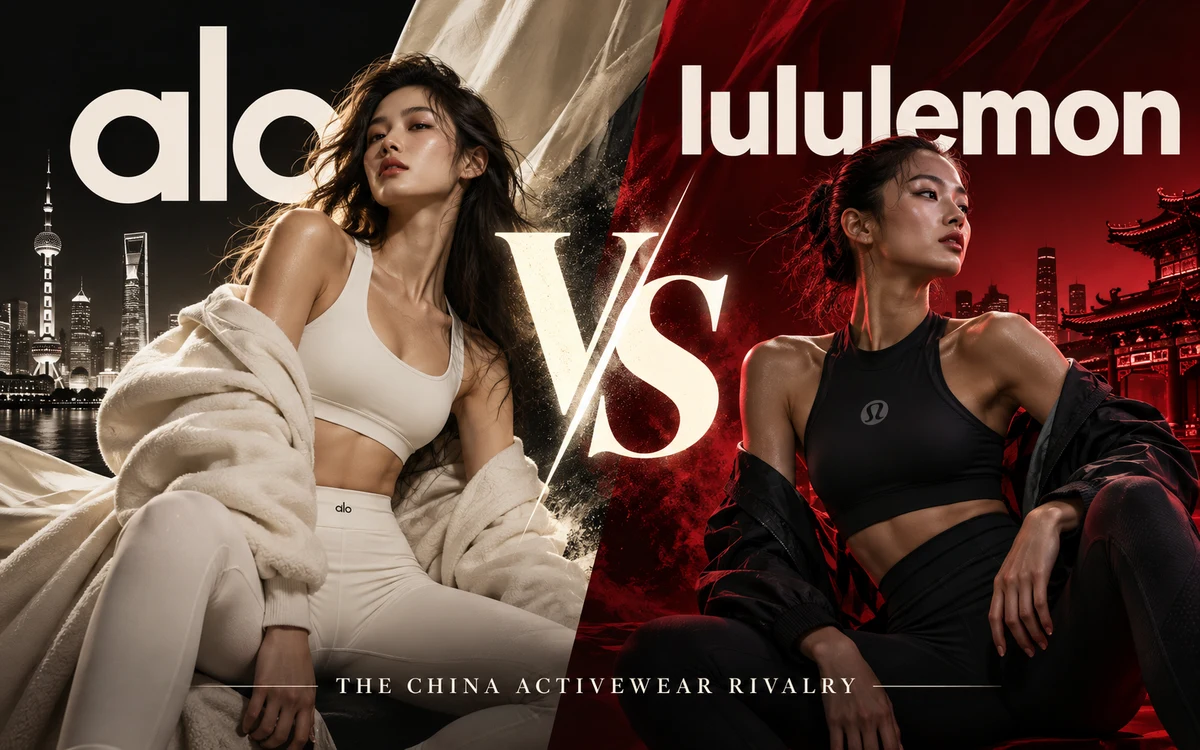
Over the past three months, the most frequent question from industry media has been: Will Alo become the next Lululemon? In reality, their product logic and category expansion directions are fundamentally different—one dives deeper, while the other spans wider.
Two Brands, Two Product Strategies
Lululemon continues to dig deeper into active performance scenarios. Beyond franchise hero items like Align, Define, and Scuba, as well as proprietary fabrics such as Luon, Nulu, Nulux, Luxtreme, and Everlux, the brand launched its Unrestricted Power collection in 2026 utilizing the all-new PowerLu fabric.
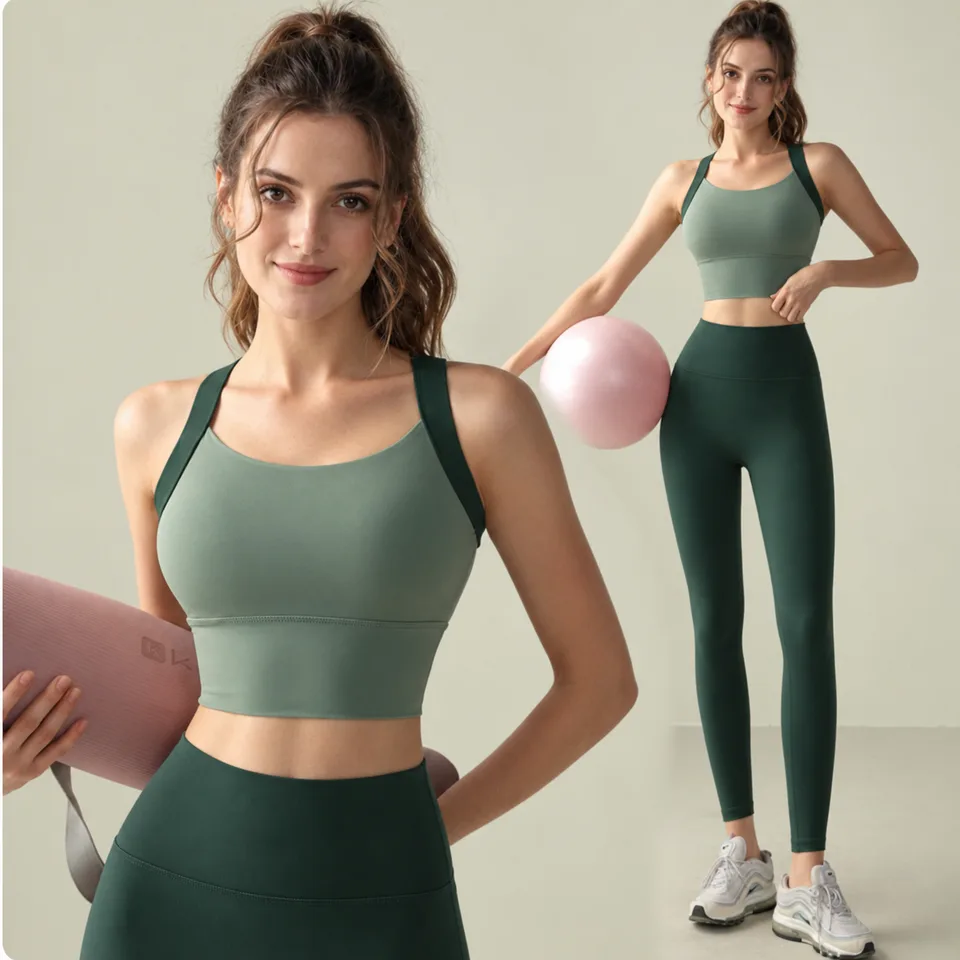
Alo, conversely, aims to span wider across lifestyle scenarios. Anchored by its signature Airlift and Airbrush active leggings lines, the brand has expanded aggressively into skincare, beauty, jewelry, sunglasses, and homeware. In its 2026 product line sheets, elevated natural fibers like silk, linen, and cashmere appear with increasing frequency. In Alo’s own words, the goal is to build a Luxury Wellness Wardrobe for consumers.
It is easy to see that while Lululemon sells activewear, Alo sells the lifestyle of wearing activewear.
Silhouettes and Consumer Positioning
Silhouette strategies are also diverging. Lululemon is gradually scaling back tight leggings in favor of looser fits, as the hyper-fitted trend cools off. In Q2 2026, sales in its core leggings category dropped by nearly 20%, prompting a 15% SKU reduction in North American stores. While store marketing still highlights its yoga heritage, the racks are increasingly stocked with relaxed outerwear and running shoes.
Alo, on the other hand, is retracing Lululemon’s original path, leaning into form-fitting cuts, nude palettes, and midriff-baring silhouettes—a style categorized on Xiaohongshu as "It-girl aesthetic" (辣妹风). To codify this, Alo coined a new portmanteau: Athlexy (Athletic + Sexy).
Reflected in consumer psychology, this underscores a stark contrast in cultural positioning: those buying Lululemon think, "I want to work out," whereas those buying Alo think, "I want to be seen."
Celebrity Influence, Community and Retail
Over its 13 years in China, Lululemon’s most crucial achievement was cementing the link between yoga and its brand name through community building. The brand's gear became the default first professional set for countless studio instructors. Following the same logic, its brand ambassadors lean heavily into sports authority—driver Zhou Guanyu in January 2023, followed by seven-time F1 World Champion Lewis Hamilton in February 2025.
Alo, however, plays a game of immediate gratification. Its global ambassadors—Wang Yibo, JISOO, Jin, and NINGNING—along with Zhao Lusi for the Chinese market, all stem from the entertainment industry, with zero athletic ties.
These opposing endorsement logics foster vastly different brand perceptions among consumers.
At the mention of Lululemon, consumers instantly think of yoga; mention Alo, and the focus remains solely on celebrity buzz.
To be sure, Alo is also attempting Lululemon-style community operations—except it relies on celebrity leverage to compress Lululemon’s 13-year journey into a matter of months. Alo’s eight-week community activation in Shanghai, spanning run clubs, city walks, cycling, and wellness events, has maintained high engagement throughout.
Premium Pricing and the Durability Question
Alo’s initial rollout plan announced eight stores across seven major cities, all situated in top-tier commercial developments in high-tier markets, adhering strictly to a strategy of neighboring luxury houses. The Shanghai flagship is slated for the premier HKRI Taikoo Hui, while the Beijing site picks the ultra-prime China World Mall. In Hangzhou, the Hubin In77 location took over a recently closed AIR JORDAN store—flanked by Apple and Descente, diagonally opposite Louis Vuitton, and under 100 meters on foot from Lululemon.
Pricing is similarly elevated above Lululemon. Data from Jiuqian Data showing transactions from August 12 to September 12, 2026, revealed that Alo’s average order value (AOV) on Tmall reached RMB 962, compared to Lululemon’s RMB 728.4—a 32% premium. Local retail pricing in China is also set 15% to 20% higher than on its US official site. Reports indicate that the US site has removed China from its shipping destinations, effectively cutting off direct shipping and gray-market daigou channels.
Alo entered the market at the exact window when Lululemon’s brand momentum reached an inflection point, prompting consumers to seek fresher alternatives. Alo has indeed succeeded this year in selling pricier and faster than Lululemon—but will it prove more enduring?
Quality, Competition and the Next Growth Challenge
Backlash regarding product quality is already mounting on Xiaohongshu, citing issues like pilling, color fading, peeling logos, and fits ill-suited for Asian body proportions. Furthermore, an drop-frequency approaching fast fashion paired with near-luxury price tags has begun to draw consumer complaints over its "expensive yet fast" formula.
While early adopters voice frustration over quality, Alo's brand awareness remains highly concentrated among Xiaohongshu users in Tier-1 and Tier-2 cities. Broad-market Chinese consumers have not even had the chance to try—or criticize—the product yet. Scaling its customer base without diluting its brand prestige presents a critical challenge for Alo moving forward.
At the same time, fierce local competition adds immense pressure. Local player MAIA ACTIVE has gained traction with silhouettes engineered specifically for Asian women; Vuori, dubbed the "men's Lululemon," is aggressively opening stores; and NikeSKIMS—a collaboration between the Kardashian family’s brand SKIMS and Nike—has made a high-profile entry into China.
The Long-Term Test
Lululemon reached its current height on the back of fabric innovation—powered by its Nulu fabric, second-skin feel, verifiable functionality, and established user habit. Its core challenge today is plateauing growth.
Alo stormed the market through content creation—fueled by celebrity placements worn by Wang Yibo and Zhao Lusi, the hype of its three-story coffee house in Zhangyuan, and sheer novelty. Its core challenge is determining when that buzz will peak.
Ultimately, selling pricier, faster, and lasting longer form the "impossible trinity" of fashion retail—much like quality, cost, and lead time in production, there is no perfect scenario where a brand can truly have it all.
Published from the contributor-supplied English manuscript at the contributor’s request. The original title and body paragraphs are preserved; section headings and an original AI-generated cover were added for presentation.
Contributor market commentary as of October 2026. Sales figures, consumer characterizations and comparative judgments are statements in the submitted manuscript, not independently audited findings by this website.
YOUR NEXT STEP
Put the details to work.
Estimate an order or turn your specifications into a supplier inquiry.