An 18-Year Brand Takes Its Leave
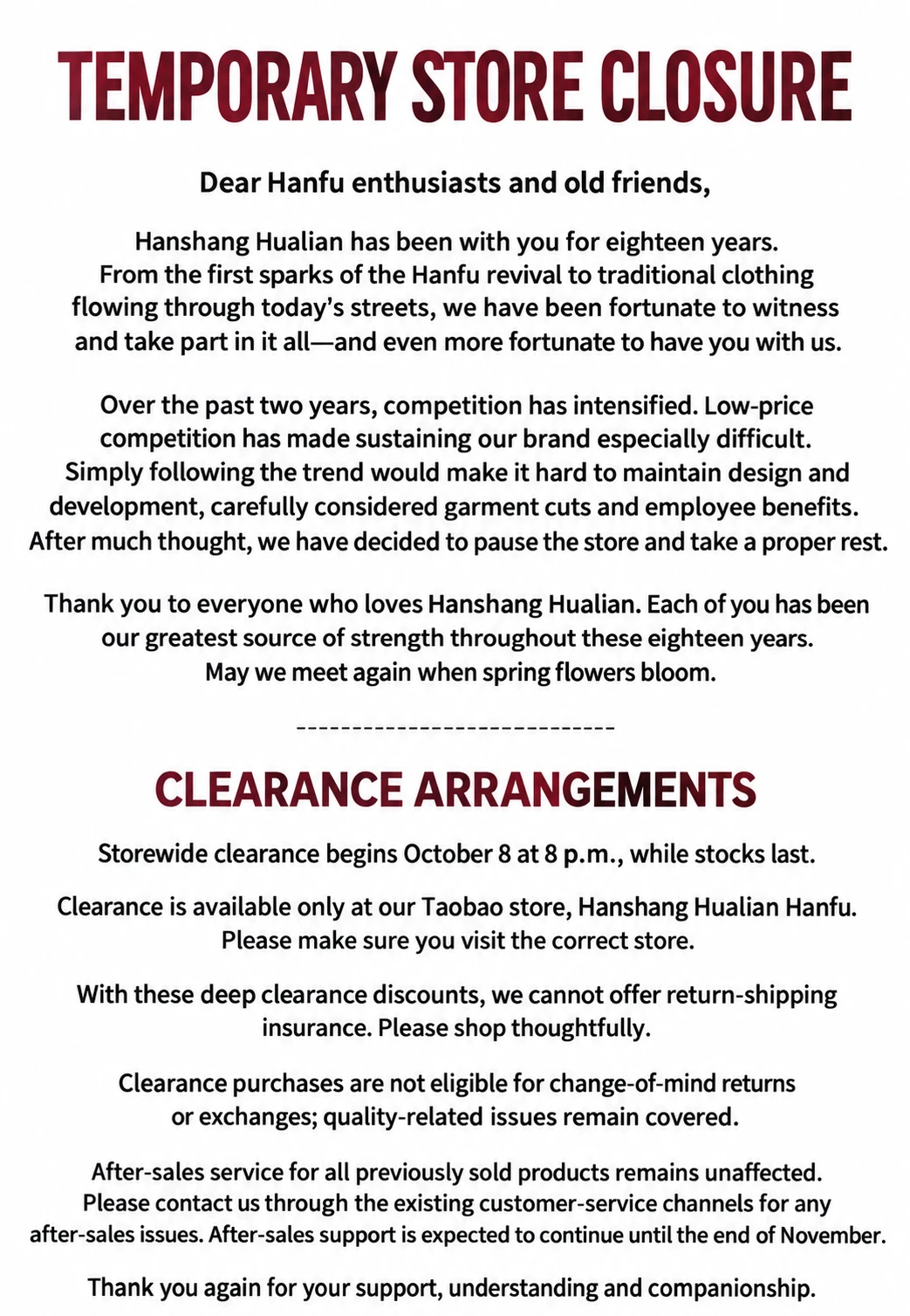
"Farewell for now, everyone. Hanshang Hualian is taking its leave. May we meet again when the flowers bloom in spring."
On October 6, Xiao Ruo, founder of the iconic Hanfu clothing brand Hanshang Hualian, posted a poignant farewell video on her personal account. Simultaneously, the brand’s official storefront released a notice announcing an indefinite operational hiatus. The news sent shockwaves through the Hanfu enthusiast community: After 18 years in the market, the brand widely revered as the "holy grail" of traditional Chinese couture was officially bowing out.
From "Unattainable Dream" to a "Nostalgic Relic"
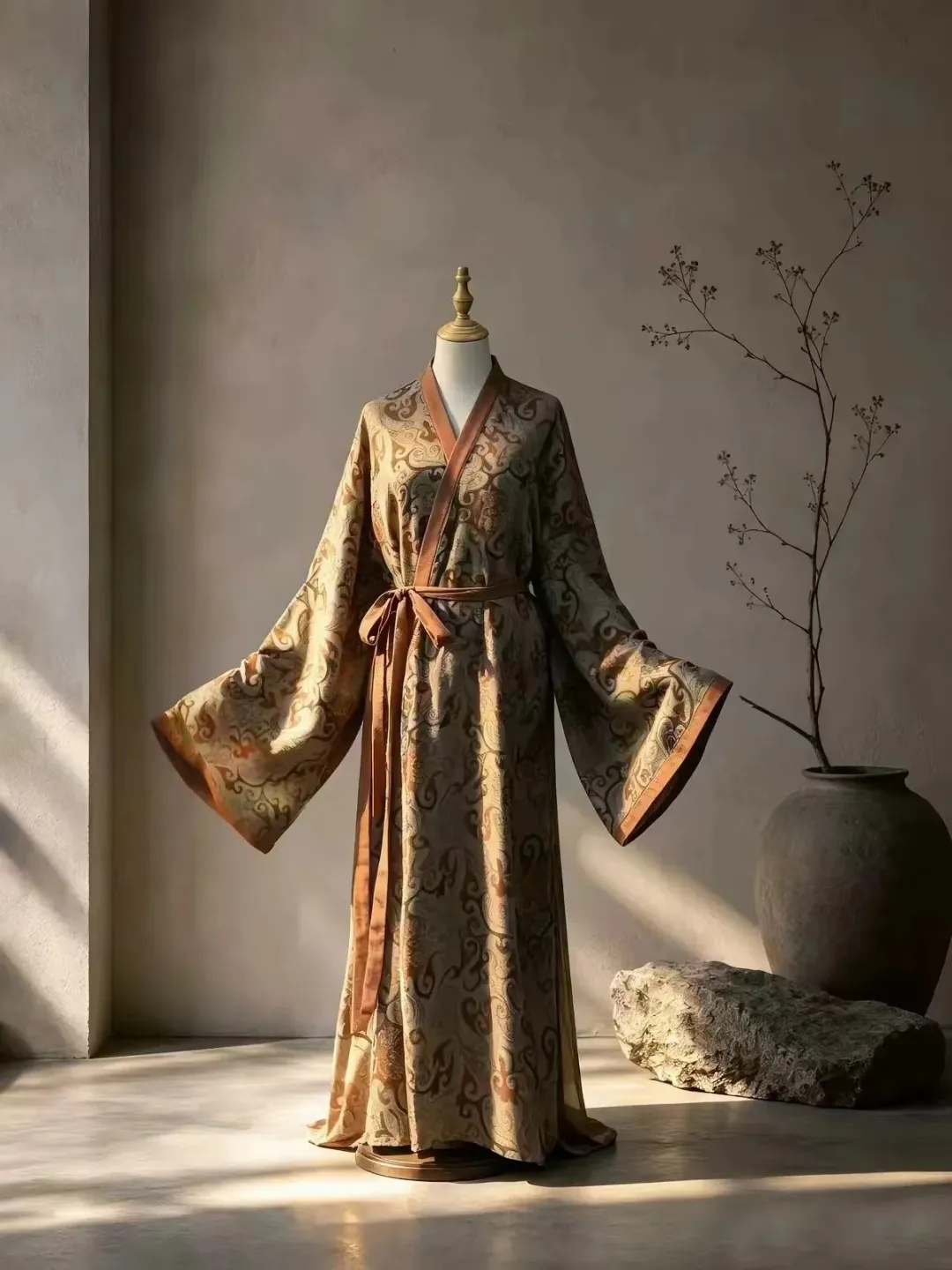
For countless consumers, Hanshang Hualian was deeply tied to their earliest memories of the Hanfu renaissance. Founded in Guangzhou in 2008, it was among the pioneering brands that brought traditional Chinese attire into modern youth culture. Its early flagship designs, such as the famous "Longmu" (Mother of Dragons) and "Jiaorenlei" (Tears of the Mermaid)—modified Tang-style chest-high ruqun dresses—captivated buyers with their intricate, heavy-work dragon embroidery. Despite price tags exceeding $150 USD—a premium tier at the time—they skyrocketed the brand to industry stardom.
In recent years, however, the brand seemed frozen in time.
"I hadn't visited your store in ages, and scrolling through your homepage felt like stepping right back into 2018," one customer commented. Hanshang Hualian had failed to deliver a blockbuster hit like the "Longmu" in years, with critics pointing out that its new releases were hopelessly falling behind modern design trends.
Even more damaging was the widening disconnect between price and quality. Customers increasingly complained that while the brand kept its premium pricing, the fabrics and craftsmanship were thoroughly average. Even during the final liquidation sale, the brand's most expensive item—a 15th-anniversary bridal set—was discounted to a steep 1,299 RMB (~$180 USD), down from an original retail price of 2,888 RMB (~$400 USD).
The Story Behind the Shutdown: How Fierce Has the Market Become?
Addressing the closure, Hanshang Hualian explained in its official statement: "Over the past two years, price wars and hyper-competition have made staying true to our brand vision immensely difficult. If we blindly followed the low-cost trend, we would no longer be able to maintain our standard of original R&D, tailored fitting, or adequate employee benefits."
A Market Undergoing a Brutal Wave of Consolidation
This statement echoed the quiet crisis facing many legacy Hanfu labels.
Indeed, Hanshang Hualian's exit was not an isolated incident. In October 2025 alone, nearly a dozen well-known Taobao Hanfu boutiques—including Ziyi Mingtang and Mingjing Huafu, many with over a decade of operational history—announced their closures in rapid succession.
So, just how ruthless has the competition become? A look at the numbers tells the story:
The Rise of Fast-Fashion Hubs: Cao County in Shandong Province generated 4.775 billion RMB (~$670 million USD) in online Hanfu sales in the first half of this year alone, capturing over half of China's total national market share. Shoppers noted that a traditional horse-face skirt (mamianqun) made with identical fabric and technique costs 400 to 500 RMB from boutique brands, but only around 100 RMB (~$14 USD) when sourced from Cao County's automated supply chains.
A Flooded Market: As of May this year, there were 7,449 active Hanfu-related enterprises in China, with over 60% established in just the last three years.
With agile new entrants delivering better designs at rock-bottom prices, legacy players that fail to adapt are swiftly squeezed out. It is a fate shared by Hanshang Hualian and a snapshot of an industry undergoing a brutal wave of consolidation.
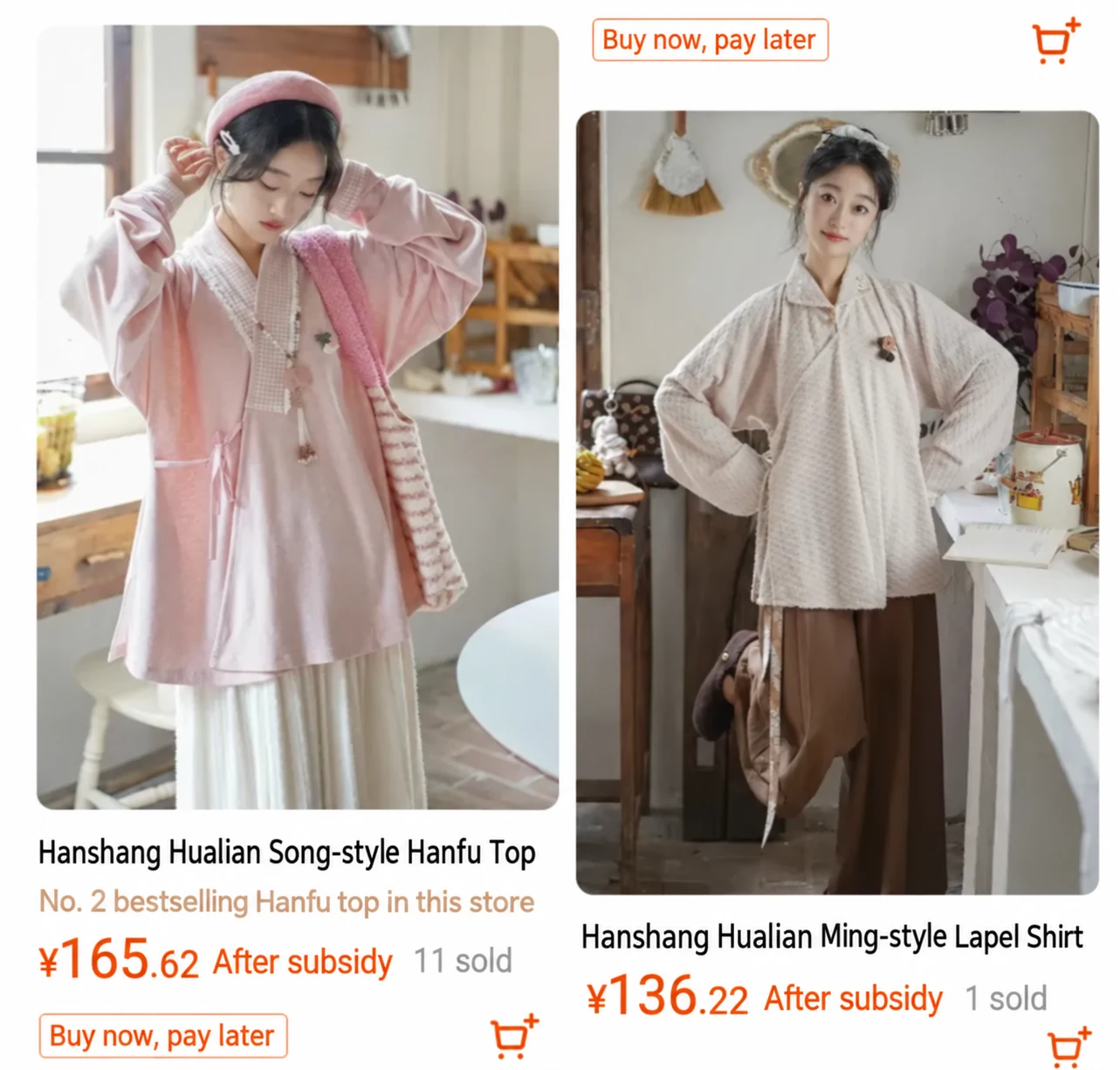
"Up to 80% Off Clearance" Draws Backlash: Where Is the Sincerity?
Notably, the brand's farewell wasn't met entirely with fond nostalgia. Beneath the announcement, comment sections brewed with frustration over the ongoing liquidation sale.
Shoppers called out the brand for misleading marketing, pointing out that "up to 80% off" was a gimmick, as the vast majority of items were discounted far less. Others noticed that the shop had jacked up prices back to full MSRP a day or two before the liquidation event—meaning the "clearance prices" were virtually identical to (and sometimes higher than) regular promotional discounts.
"I checked my order history from April, and the prices then were basically the same as your 'clearance sale' now," one buyer noted, exposing what many felt was a lack of genuine goodwill.
Legacy Brands Are Exiting—Is the Hanfu Craze Fading?
The downfall of legacy labels does not mean the consumer enthusiasm for Hanfu is dwindling. According to iiMedia Research, China's Hanfu market reached 19.11 billion RMB (~$2.68 billion USD) in 2025 and is projected to hit 24.18 billion RMB by 2027, with 34.56% of consumers now wearing traditional attire in their daily lives.
The market continues to expand, but the competitive rules of the game have shifted. As consumers gain access to more diverse, better designed, and affordable alternatives, "brand prestige" is no longer a bulletproof shield. For heritage brands, the real challenge isn't just surviving price wars—it's figuring out how to stay relevant and win back the hearts of modern consumers in a fast-evolving marketplace.
Hanshang Hualian originally built its empire on design excellence. Yet, in an era of rapid market reshuffling, legacy brands that stand still will inevitably be left behind.
Sources
YOUR NEXT STEP
Put the details to work.
Estimate an order or turn your specifications into a supplier inquiry.