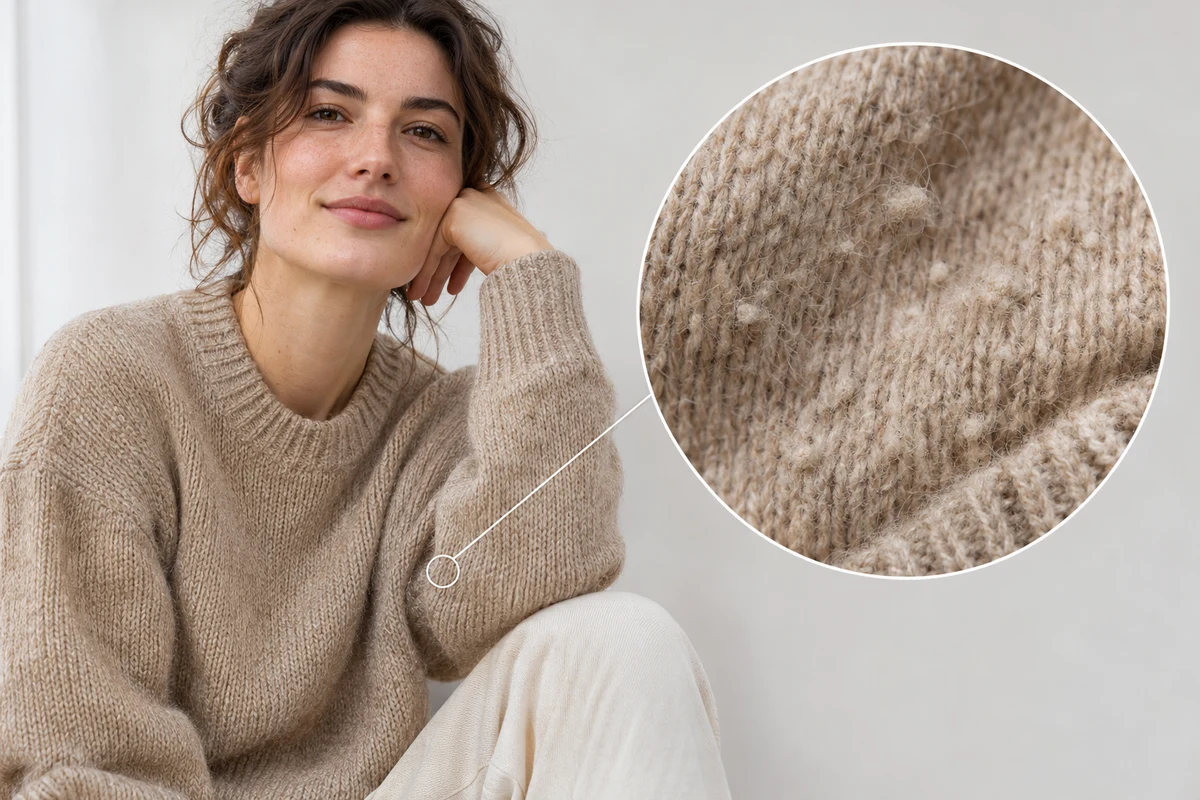
A passing report and a disappointing sweater can coexist
Imagine a customer complaint: the report says pilling grade 4 and the order was accepted, yet the cuffs and underarms look bobbled after two weeks. This is an illustrative situation, not a documented wear trial or a prediction that every grade-4 fabric will fail on that schedule.
A genuine laboratory result can coexist with disappointing wear. The grade describes the tested specimen under a named procedure, at a specified assessment point. It does not promise a pill-free garment for a fixed number of days.
Before blaming the laboratory or dismissing the customer, check the method, specimen identity, preparation, exposure and acceptance requirement. A method standard tells you how to test; a product specification or purchase agreement establishes what result counts as acceptable. “Grade 4” alone is not the complete quality requirement.
Four Chinese test methods: different procedures, not four interchangeable grades
The GB/T 4802 family includes circular locus, modified Martindale, pilling box and random tumble procedures. The official records identify the editions listed below. In particular, GB/T 4802.2-2008 is a modified adoption of ISO 12945-2:2000; a newer ISO edition must not silently be substituted for the GB procedure named on a report. [1][2][3][4]
Each apparatus generates a controlled form of mechanical action. These tests help compare surface-change propensity under their defined conditions. Describing a box as tumbling does not make it a whole-garment wear simulation, and calling a random-tumble test “severe” does not establish that it is universally harsher or more predictive.
The appropriate method depends on the relevant product requirement, fabric and agreed end use. Do not rank reports by the apparatus name alone, or assume that a pilling-box result should always take priority when a complaint arrives.
| Method | Chinese standard | Controlled action | Report details to check |
|---|---|---|---|
| Circular locus | GB/T 4802.1-2008 | Circular brushing/rubbing | Selected conditions, brushing/rubbing counts and assessment |
| Modified Martindale | GB/T 4802.2-2008 | Specified rubbing under a Lissajous movement | Preparation, loading assembly, rubbing arrangement and assessment stages |
| Pilling box | GB/T 4802.3-2008 | Tube-mounted specimens rotate in a lined box | Specimen preparation and specified revolutions |
| Random tumble | GB/T 4802.4-2020 | Specimens tumble in a test chamber | Prescribed exposure and auxiliary material, where required |
Read the exposure conditions alongside the result
For modified Martindale testing, distinguish the pilling procedure from a Martindale abrasion-resistance test. The apparatus name is not enough to identify the test. In particular, do not import a 9 kPa abrasion setting into every pilling specification. Confirm the load or assembly, rubbing arrangement, abradant, assessment stages and preparation required by the exact procedure. [2][5]
For circular locus, check the selected brushing and rubbing conditions. For the pilling box, check specimen preparation and the specified revolution count. For random tumble, check the exposure schedule and any prescribed auxiliary material. These settings belong with the grade when comparing results.
There is no demonstrated universal rule here that 7,000 cycles reproduce actual wearing better than 2,000, or that either figure corresponds to two weeks of use. If you want additional assessment stages, agree them with the laboratory and report them alongside the required result. Do not relabel a modified procedure as an unmodified standard test.
Grade 4 is an appearance rating, not a stage in a countdown
Pilling, fuzzing and matting are related but distinct surface changes. ISO 12945-4:2020 provides for their visual assessment separately. In its grading scheme, grade 4 for pilling includes partially formed pills, whereas grade 4 for fuzzing describes slight surface fuzzing. That distinction alone shows why “grade 4 means slight fuzzing with no pills” is not a safe universal definition. [6]
Check the actual grading references and assessment system required by the test named on your report. The ISO example explains a distinction; it does not overwrite the grading provisions in a particular GB/T edition.
A grade cannot tell you that a fabric is exactly at the end of a fuzzing phase, or that pilling will inevitably start after testing stops. It describes the appearance at the assessment point. Ask which property was rated, which reference was used and whether individual specimen results were consistent.
Fuzz formation, entanglement and wear-off compete
A useful way to understand pilling is to follow three interacting processes: fibers become exposed at the surface, exposed fibers entangle into pills, and fibers or pills wear away. These processes can overlap rather than proceeding through three clean, one-way stages.
The introduction to ISO 12945-1 explains that the observed level depends on the balance between surface-fiber development, entanglement and wear-off. It also notes the difficulty of accelerating all these processes equally across different materials. [7]
This helps explain why extra exposure does not necessarily produce a steadily worse visual grade. A surface can develop pills and later lose some of them. A later, better-looking specimen would not prove that the earlier pills never existed.
Ask for retained specimens or photographs at agreed intermediate assessment points when investigating a difficult material. Their value is the record of surface change, not a claimed conversion from laboratory cycles into a guaranteed wear lifespan.
Fiber composition matters, but it does not determine the result alone
Strong anchoring fibers can keep a pill attached after it forms; easier fiber breakage can allow more wear-off. This is one reason two fabrics with a similar final rating can develop different appearances during use. The balance also depends on yarn and fabric properties. [7]
Do not turn that mechanism into a guarantee that cotton or viscose pills will be unnoticed, that linen never pills, or that every synthetic fabric gives the worst result. Fiber length, yarn twist and hairiness, blend structure, knit or weave construction, surface treatments and finishing can all affect the outcome.
A blend containing 35% polyester and one containing 65% polyester deserve separate evaluation, but those percentages do not establish two predetermined “pilling destinies.” Compare actual materials under a consistent specification and assess the relevant garment construction.
Composition is part of reading the report. It is not a replacement for testing the fabric and finished product you intend to supply.
Wear and laundering introduce combinations the report may not cover
Cuffs can contact a desk, an underarm can rub against the garment body, and a bag strap can repeatedly load one area. The contact surfaces, moisture, movement and local stresses differ from a controlled laboratory procedure.
Laundering can also alter a surface, depending on the material, finish, washing action, detergent and drying route. It is too broad to say that every wash accelerates pilling, or that laboratory results are always optimistic. A test can be more or less demanding than a particular use situation, and the relationship must be established for the product.
Where laundering is relevant, agree a defined pretreatment and assessment sequence in addition to the required test. Keep the as-received result distinct from the result after that sequence. A small, documented garment-wear trial can add context; it does not replace a required laboratory method.
Give care advice that is validated for the garment. Do not recommend tumble drying to every sweater customer. Turning a garment inside out or using a gentler process may be appropriate for some products, while others require different care. The care label should reflect the actual material and construction.
Visual grading requires consistency, especially near a limit
Appearance grading relies on controlled viewing and defined references. ISO 12945-4 includes provisions for multiple observers and results between adjacent grades. A half-grade result is therefore a reporting possibility, not proof that every laboratory has a fixed half-grade error. [6]
If a purchase limit is grade 4, investigate a borderline result carefully. Review the specified assessment conditions, individual specimens, observer agreement and the laboratory’s reporting practice. Do not dismiss the difference between 4 and 4–5 automatically, or treat it as an unquestionable difference in wear lifespan.
For repeat orders, keep approved references and use a consistent method, exposure and preparation. A change in laboratory, method or specimen treatment can make a simple comparison of headline grades misleading.
How to investigate a “passed in the lab, pilled in wear” complaint
Start with identity: does the report cover the same fabric, finishing route and production lot as the complained-about garment? Retain the worn garment, unused stock and the approved reference so you can compare them.
Read the full procedure: standard number and edition, specimen preparation, assessment property, exposure stages, apparatus settings, individual grades and the stated acceptance limit. A passing statement should be traceable to the requirement actually agreed.
Map the complaint: record where the pills occur, how often the garment was worn, contact with bags or outerwear, and the washing and drying history. Treat these as investigation facts, not reasons to blame the wearer without evidence.
Agree follow-up work with the laboratory. That might include testing retained stock, evaluating the relevant care sequence, adding intermediate assessments or selecting a complementary procedure. Keep supplementary work clearly identified and preserve the original result.
Finally, explain the outcome in terms the customer can use. A laboratory grade is evidence about a defined test. It is not a blanket exemption from investigating disappointing product performance.
What visible fuzz and pills can tell you
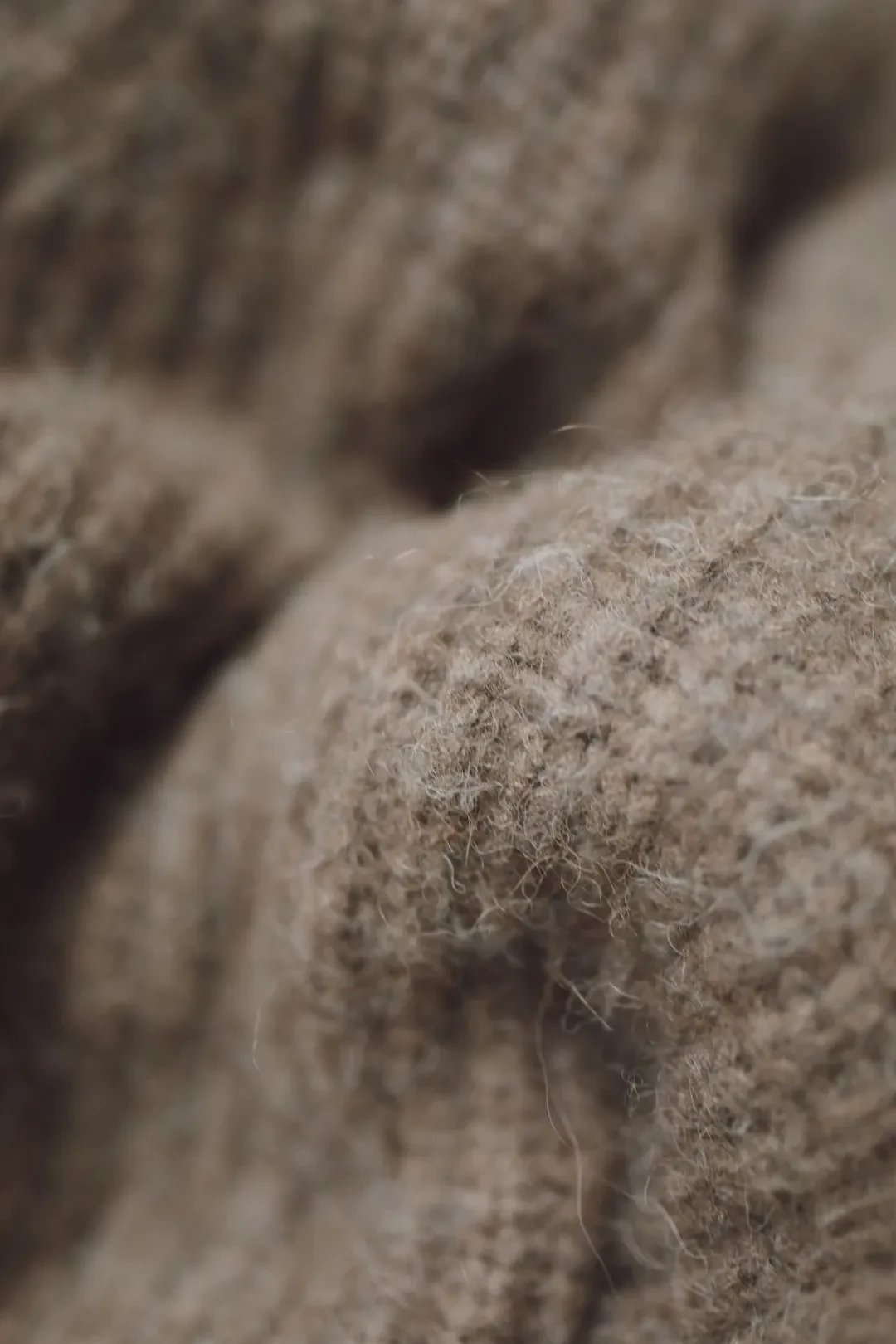
The close-up below illustrates the exposed fibers and small surface accumulations discussed in this article. A photograph can help document appearance, location and change over time when it is taken consistently.
A single close-up cannot establish the fiber composition, the previous laboratory grade or the order and rate of every pilling process. For a complaint file, take comparable before-and-after views, record the wear and care history, and retain the physical specimen for examination.
Sources
- GB/T 4802.1-2008 — official circular locus method record
- GB/T 4802.2-2008 — official modified Martindale record
- GB/T 4802.3-2008 — official pilling-box record
- GB/T 4802.4-2020 — official random-tumble record
- ISO 12945-2:2020 — modified Martindale method
- ISO 12945-4:2020 — visual assessment of pilling, fuzzing and matting
- ISO 12945-1:2020 — introduction in ANSI-hosted publisher preview
YOUR NEXT STEP
Put the details to work.
Estimate an order or turn your specifications into a supplier inquiry.