What Does the Shell Fabric Do?
Fill power and fill weight tell you about the insulation. The shell tells you how well the jacket protects it. A shell that limits airflow helps preserve warmth in wind, while the down’s loft traps the insulating air. The outer fabric also takes most of the rubbing from straps, cuffs and daily wear. The lining and baffles help keep the fill in place.
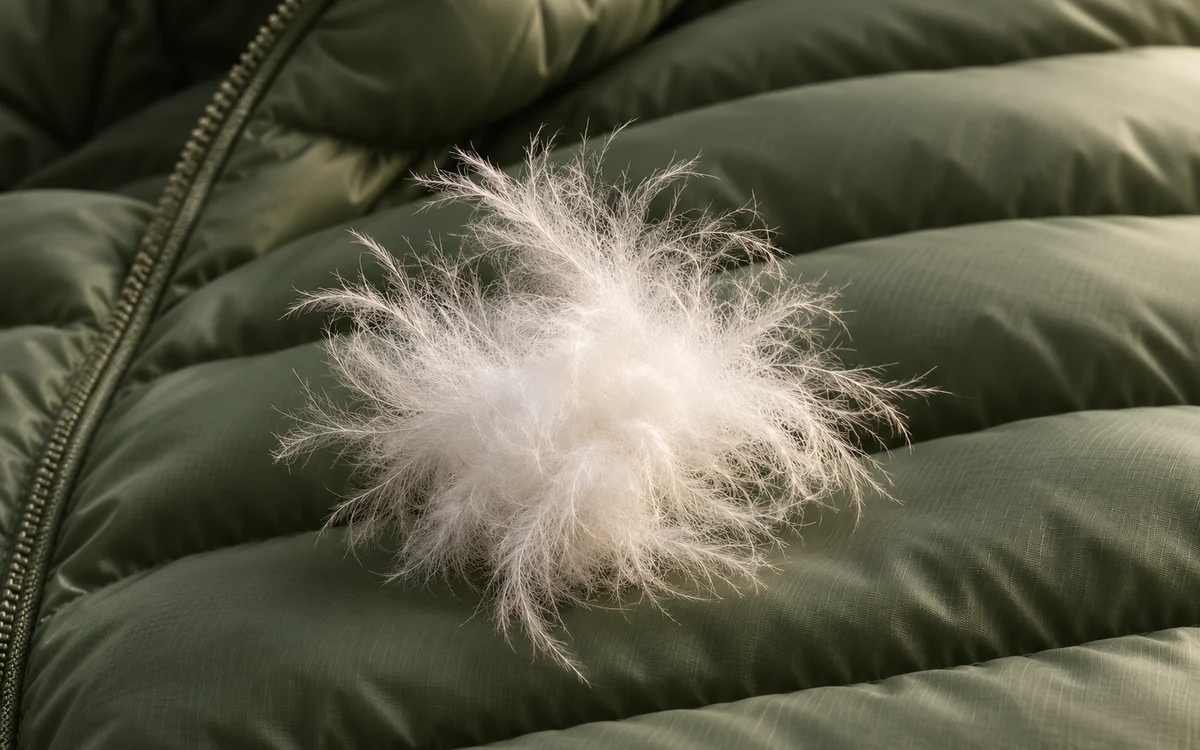
Down can escape through the fabric, needle holes or seams. If a sample sheds around a stitch line, changing to a denser fabric may leave the underlying sewing problem unresolved.
Nylon vs. Polyester for Down Jacket Shells
Polyester and nylon are common choices. Polyester can make a practical shell for everyday wear, with options ranging from light taffeta to heavier, more textured fabrics. Check abrasion, snagging and air permeability on the actual fabric. A light polyester weave may behave very differently from a dense one with a coating.
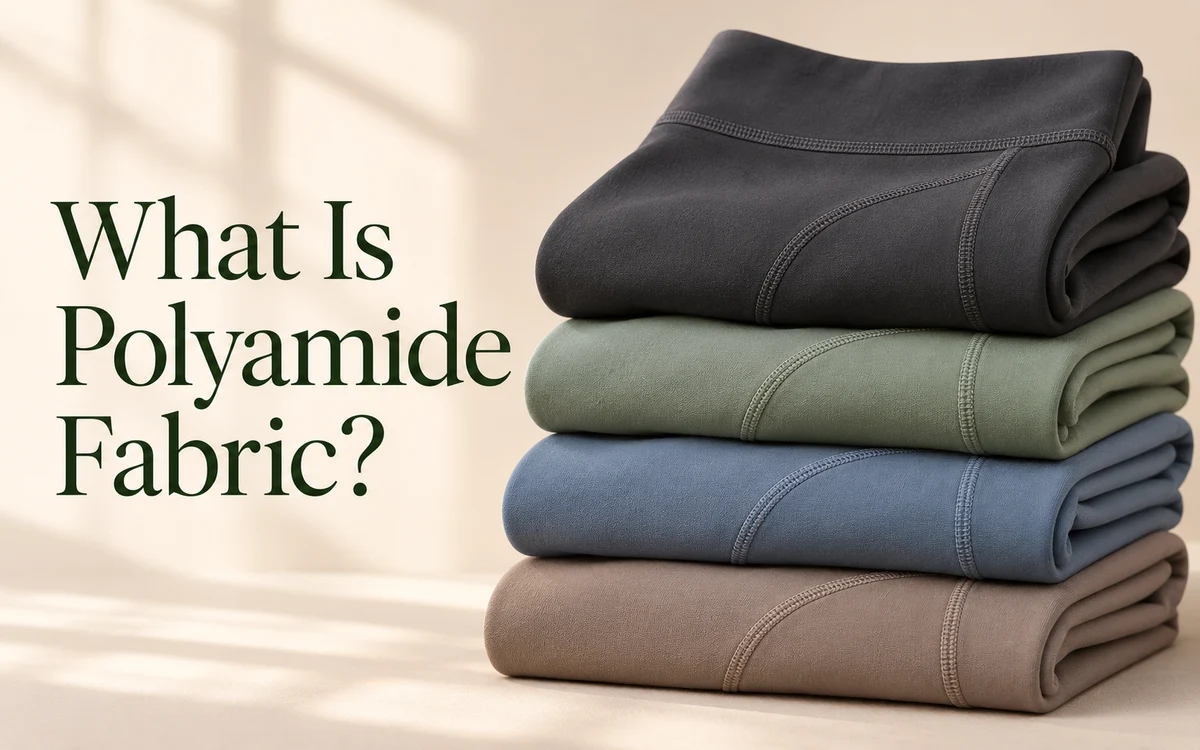
Nylon, also called polyamide, is widely used for lightweight shells. Fine nylon yarns can produce a supple fabric, and woven ripstop is one construction to sample when tear resistance matters. Nylon 6,6 is one option. Ask for finished fabric weight and tear strength rather than inferring either from the fiber name. For jackets used outdoors, check colorfastness to light on the intended shade.
A nylon shell does not automatically make a warmer jacket than a polyester shell. Compare air permeability, fill loft and the finished design. A wind-resistant shell can make a difference on a cold platform or exposed trail even when the fill is the same.
Water-Repellent vs. Waterproof Down Jackets
A durable water repellent finish, or DWR, helps water bead on the face fabric. It can suit light showers or brief snow exposure. For sustained precipitation, look for a waterproof construction and check how the garment handles seams, zippers and other openings. A water-beading demonstration only tells you about the surface. [1]
GORE-TEX is an example of membrane technology used in weather-protective clothing. Confirm the specific laminate and garment construction. A breathable membrane lets some water vapor pass, but comfort still depends on conditions and ventilation. Down leakage requires its own check.
Toray is a textile supplier with multiple fabric lines. If a supplier quotes a lightweight Toray shell, ask for the exact fabric code, weight, finish and test report. Those inputs tell you which version you are sampling and whether its downproof performance suits your fill.
Cotton, Wool and Blended Shell Fabrics
Cotton-rich fabrics and wool blends can give a down coat a matte, textured or tailored appearance. They are options for city outerwear where hand and drape may matter more than packed size. Check weight, drying behavior and wind resistance. A fabric that absorbs more moisture can feel heavy when wet, while moisture reaching the fill can reduce its loft.
Nylon–cotton or polyester–wool blends can combine a particular hand with useful durability. The blend ratio is one part of the specification. Check the weave, finish and whether a separate downproof lining or inner fabric is needed. Breathability depends on the assembled jacket as well as the outer fabric.
How to Check a Down Jacket Shell Before Buying
Hold the fabric to the light and feel it between your fingers to compare weave and hand. These quick checks cannot establish downproofness. A fixed thread-count threshold, such as 90 threads per square inch, cannot predict leakage across all fills, fabrics and seam constructions.
Look at the lining, stitch lines and baffle seams. Ask where any leakage appeared during sample testing. For bulk sourcing, request a downproof test using the intended fill, and inspect a sewn sample before and after the agreed wash cycle. Labs can evaluate fabrics and finished jackets and distinguish leakage through fabric from leakage at seams or stitch lines. [2]
For everyday wear, compare polyester and nylon shells against the same requirements for hand, abrasion and wind resistance. For a packable layer, weigh the finished garment and check that the light shell tolerates repeated use. For prolonged wet weather, decide whether you need a waterproof insulated jacket or a separate rain shell. Follow the specific garment care instructions to maintain the finish and insulation.
| Use | Shell to sample | What to verify |
|---|---|---|
| Daily commute | Woven polyester or nylon | Abrasion, wind resistance and fill leakage |
| Packable insulation | Lightweight nylon or polyester | Finished weight, tear strength and downproofness |
| Sustained wet weather | Waterproof laminate and suitable seam construction | Water resistance at seams and openings |
| Tailored city coat | Cotton-rich or wool-blend face fabric | Drape, drying and inner down containment |
Sources
YOUR NEXT STEP
Put the details to work.
Estimate an order or turn your specifications into a supplier inquiry.