36 separate documents.
275 pages in total. Searchable vector text and connectors, overview maps and readable branch editions. A document index and start guide are included.
ZIP · 67.4 MiBFabric, production and business — a clearer plan for your next drop.
Start hereENGLISH REFERENCE LIBRARY · DIGITAL DOWNLOAD
36 visual references for fashion design, fabric selection, merchandising and apparel development. Move between the big picture and the practical details, in English.
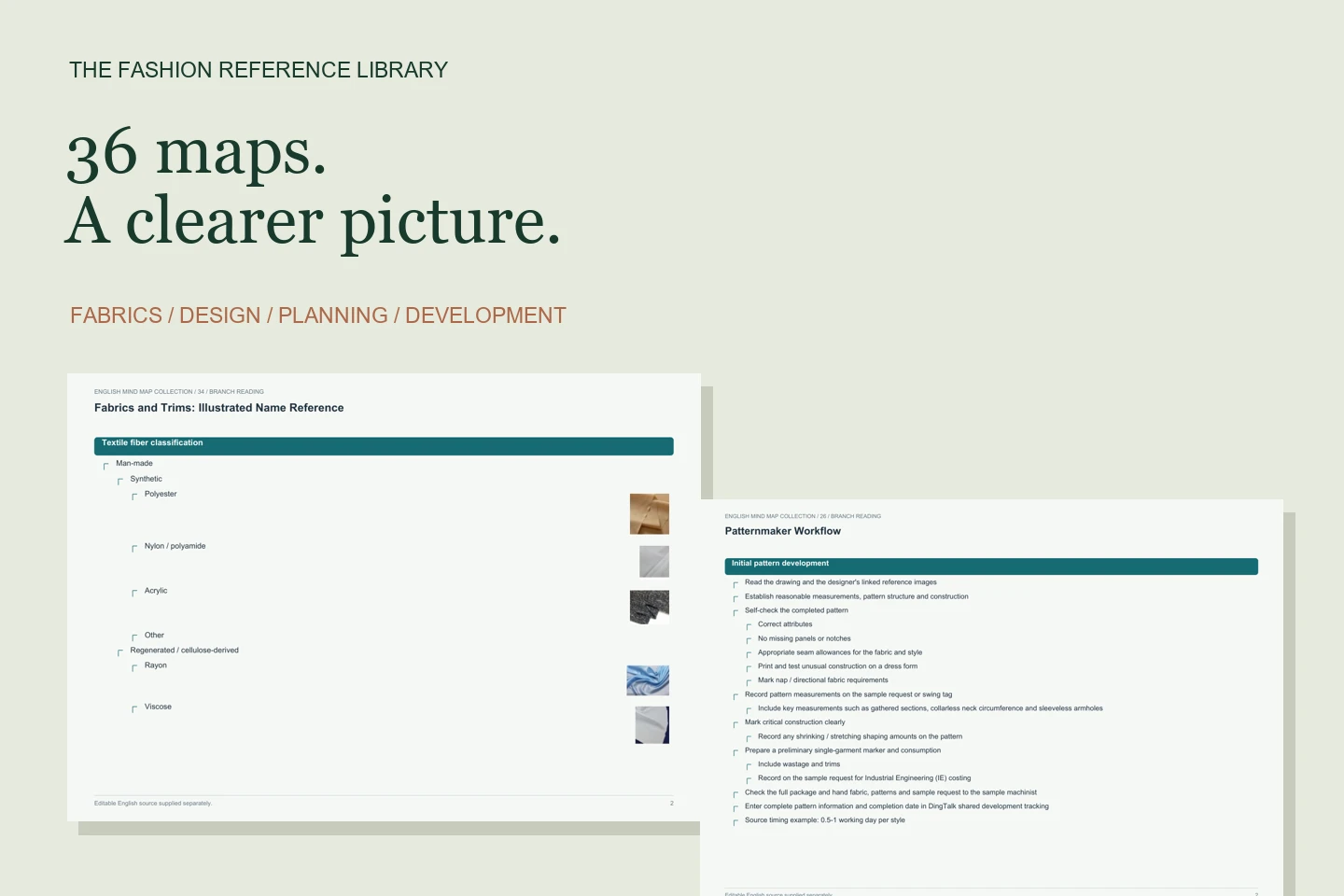
ONE COLLECTION · TWO DOWNLOADS
Clothing development crosses several disciplines. These English fashion mind maps put the relationships on a page: what a fabric choice affects, how a collection takes shape, and which tasks pass between design, patternmaking, sampling and merchandising.
Each of the 36 PDFs starts with a complete map, followed by landscape branch pages for closer reading. The library has been translated and re-typeset from Chinese reference documents, with English teaching labels and the small illustrations retained where the original included them.
275 pages in total. Searchable vector text and connectors, overview maps and readable branch editions. A document index and start guide are included.
ZIP · 67.4 MiBSVG maps, FreeMind-compatible MM trees, Markdown outlines and English JSON, plus localized PNG and SVG illustration assets. Keep the assets folder with the maps.
ZIP · 169.8 MiBTHE COMPLETE DIRECTORY
All 36 documents are listed here, organized by their main use. Document numbers follow the delivered library; the category grouping does not change the files.
Understand fibers, fabric families, linings and trims; organize swatches and compare materials for a design.
Connect a seasonal direction to product categories, selection, assortment structure and an investment plan.
Explore silhouette, fit, construction, restyling and ways to extend one idea into a collection.
Follow the handoffs between custom print development, patternmaking and sample machining.
Clarify assistant duties, review samples, track development documents and build design capabilities.
See how product design connects with the operational work needed to bring an online range to market.
Company names, Chinese market brand classifications and historical examples appear where they are part of the source. They do not imply endorsement or a current industry benchmark. The source’s undefined “IS” abbreviation is retained in map 12. Map 32 contains ten named methods and is titled 10 Ways to Combine Fabrics.
LOOK INSIDE
These four English PDF screenshots show the reading-page format and the mix of visual and process material. Open a preview for a closer look; it is a static image, not a full-file download.
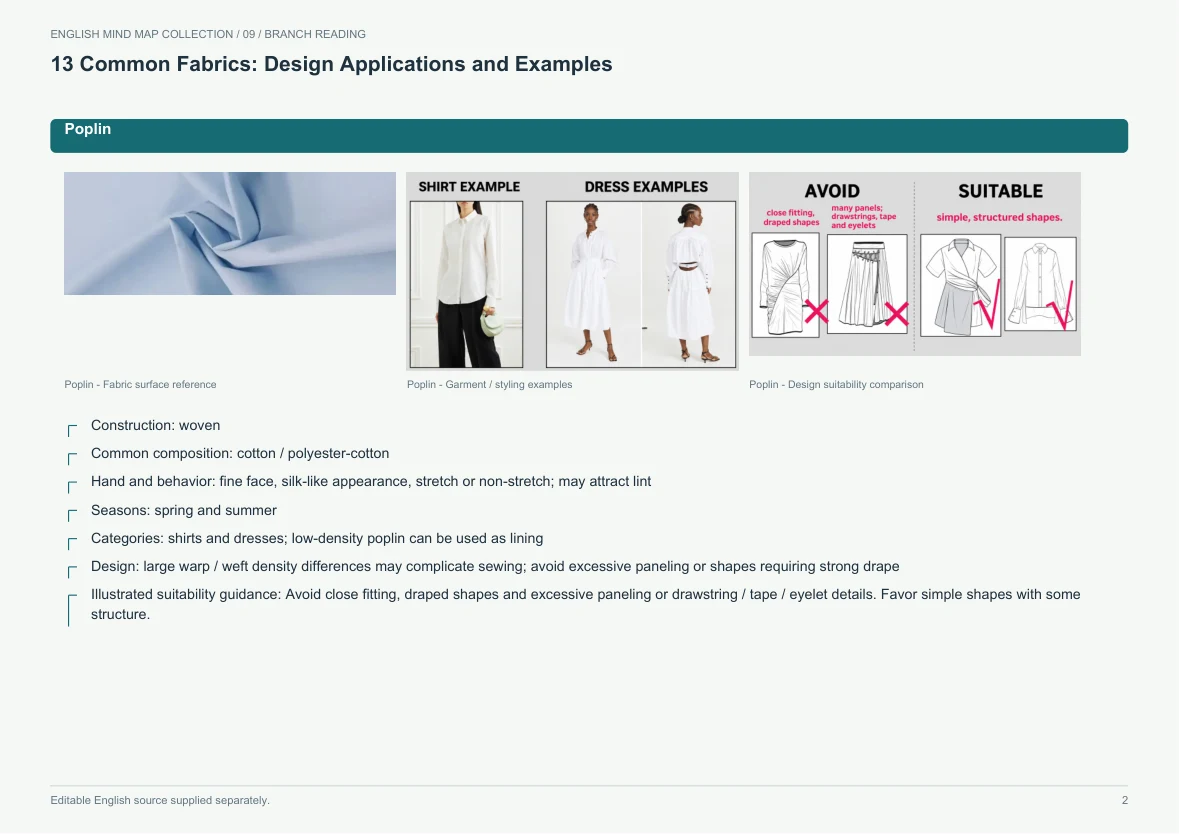
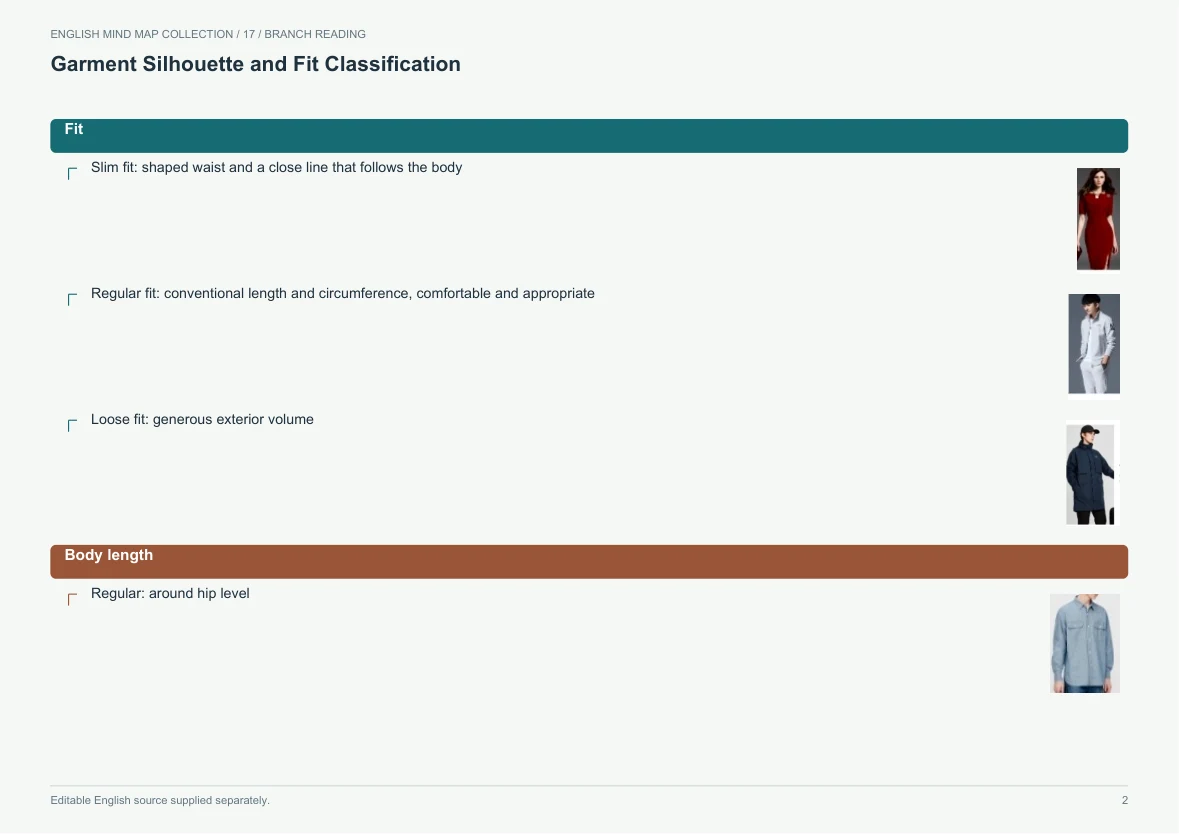
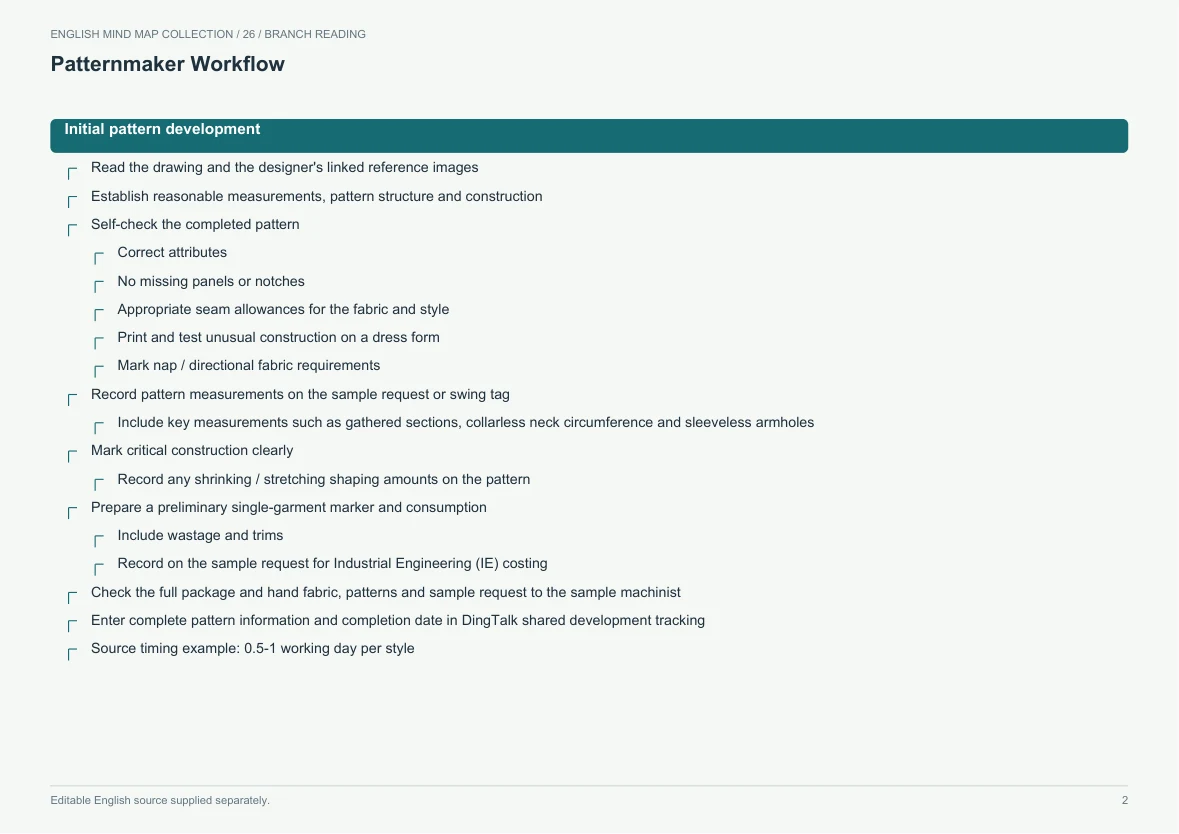
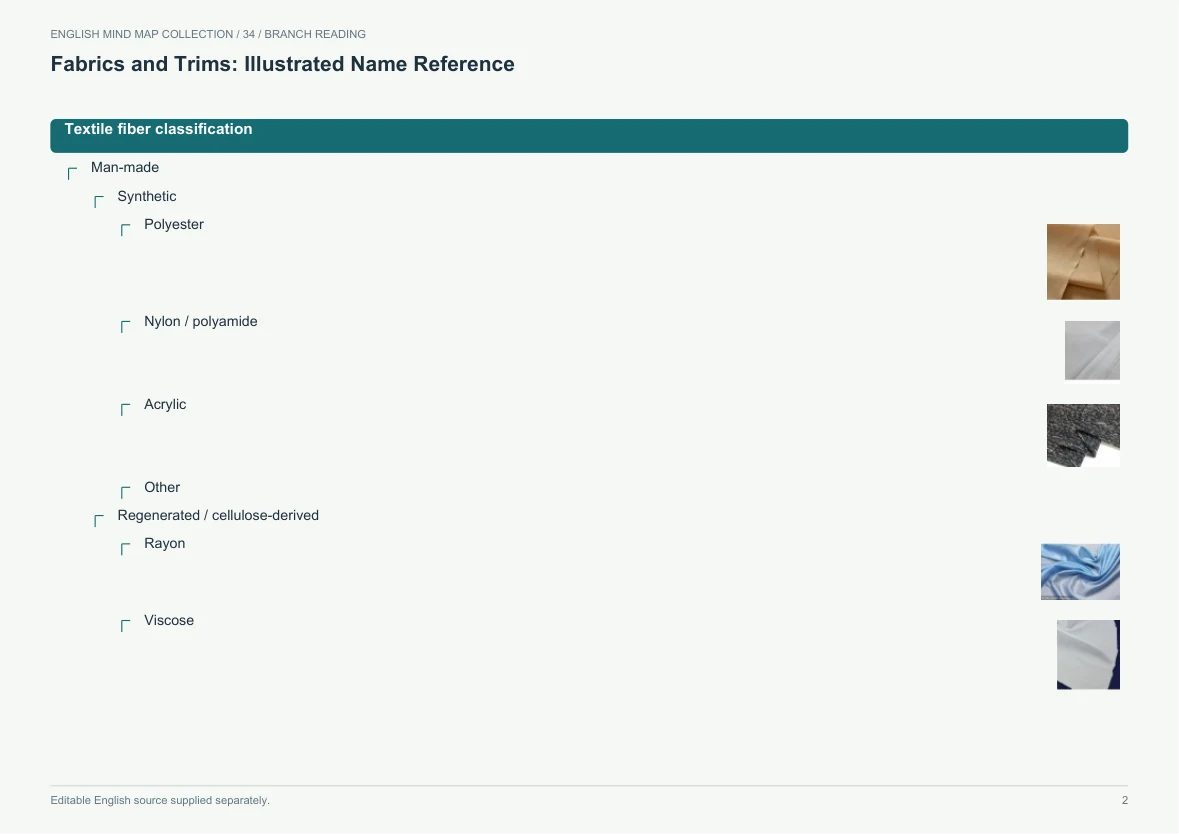
Vector text stays sharp in the delivered PDFs. Photographic examples remain raster images; translating the labels does not add detail to a small source photograph.
BUILT FOR YOUR WORKING DESK
Connect your product idea to material choices, assortment planning and the sample-development sequence. Start with the merchandising workflow and fabric selection maps.
Review silhouette and construction options, organize collection extensions and clarify assistant responsibilities before a review meeting.
Use product taxonomies, selection steps and assortment examples to structure a range conversation and an initial investment plan.
Build a shared vocabulary for fibers, linings and trims. Organize swatches and compare candidate fabrics before asking suppliers for samples.
See role handoffs, sample reviews and development document checklists. Adapt the editable maps to your own internal process.
Use the overview maps for revision, then follow individual branches for terminology and examples. No specialist editing software is needed to read the PDFs.
This is a reference library, not an accredited course, a ready-to-produce tech pack, graded sewing patterns, supplier certification or individual consulting. Material properties and workshop methods depend on the actual product and supplier. Validate specifications before production.
AVAILABILITY, FORMATS & PERMISSION
Before downloads open, you can request a free copy of the collection by emailing [email protected]. Please use the subject Fashion Mind Map Collection — Free Copy Request so we can identify your request.
Requests are handled by email. Payment and automatic downloads are currently paused; no purchase is required to request a copy before launch. December 2026 is the expected opening date, and this page will be updated if the schedule changes.
Use a current PDF reader for the PDF ZIP. Editing requires a compatible SVG, MM or text editor. A desktop computer is recommended for the large overview maps. Extract the ZIP and keep illustration assets alongside the editable files.
You can study the maps and adapt the editable sources for your own internal work. Resale, redistribution, public uploading and sharing the archive or sources with other people are not included. Ask about team or classroom distribution. Third-party names and images are not licensed for separate commercial reuse.
The collection contains the described revision 2 files. See the digital-resource terms. For a missing or corrupt file, email us with the filename and a description of the problem.
BEFORE YOU DECIDE
The collection contains 36 separate English PDFs, totaling 275 pages, and a second ZIP of editable SVG, FreeMind-compatible MM, Markdown and JSON sources with their illustration assets. Downloads are expected to open in December 2026. Before then, email [email protected] to request a free copy.
Yes. Beginners can use the branch layouts to learn terminology and see how fabrics, design decisions and development tasks connect. Experienced practitioners can use them as reference checklists. They are reference materials, not a step-by-step accredited course or a substitute for practical training.
The text and connectors are vector, so they remain sharp when zoomed or printed. Twelve maps include 437 illustration groups; 24 are text-based. Photographs and texture examples are raster images and retain the resolution limits of the source material. Not every page is illustrated.
Yes. Use a compatible vector editor for SVG maps, a FreeMind-compatible application for MM trees, or a text editor for Markdown and JSON. Keep the supplied assets folder beside the source files. Image display in MM applications varies, and photographs embedded inside an SVG are not editable vector drawings.
Downloads are expected to become available in December 2026. Until then, you can request a free copy by emailing [email protected] with the subject Fashion Mind Map Collection — Free Copy Request. Requests are handled by email; payment and automatic downloads are currently paused.
The collection is for individual study and your own internal professional use, including internal edits. It does not allow resale, redistribution, public uploads, sharing the archive or distributing editable sources to others. Contact us for team or classroom distribution permission. Third-party brand names and images are not licensed for separate commercial reuse.
No. This collection translates and reorganizes supplied reference material. Historical company examples, brand classifications and source claims are not independently verified. Brand names indicate examples only, with no affiliation or endorsement. Check specifications and operating decisions against your own suppliers and current requirements.
Email [email protected] with the affected filename and a description of the issue. We can help identify the correct package or supply a corrected file where needed. Extract the ZIP before opening it, and keep the illustration assets alongside the editable sources.
No. The free 46-page fashion merchandising guide remains available in Tools. This collection is a separate library of 36 mind maps across materials, design, planning and development. You can read the free guide before deciding whether the broader collection fits your needs.