
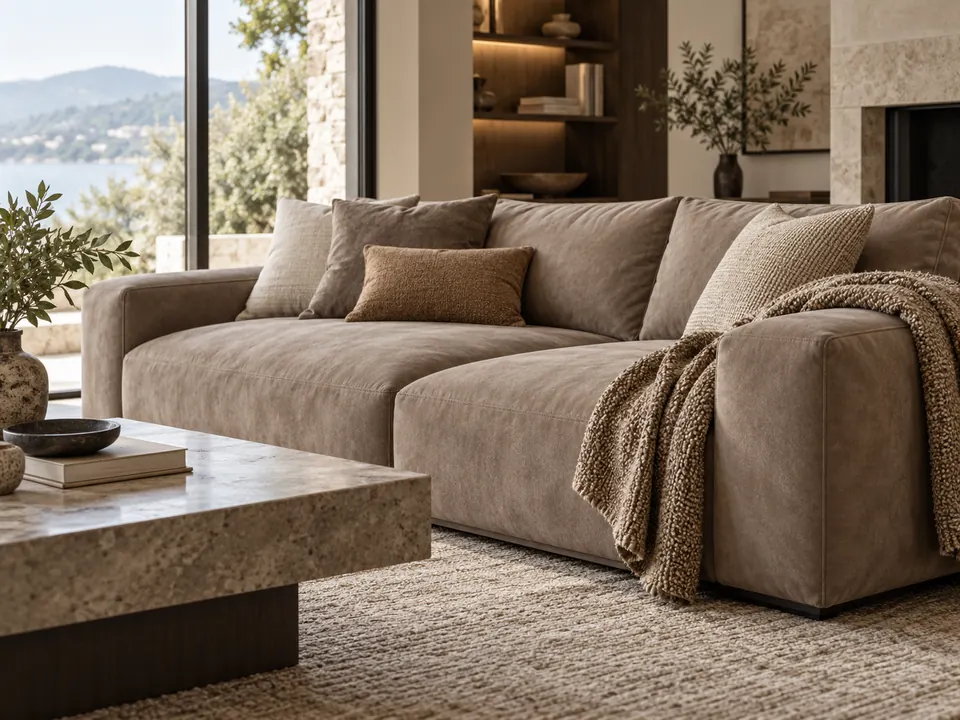

Autumn and winter buying brings a rush of suede inquiries for clothing, sofas and vehicle interiors. Inside dye houses, full machines do not necessarily mean healthy margins: process losses, small runs and price competition can swallow the fee.
A lively inquiry market, a different story at the mill
In the second half of the year, buyers begin preparing autumn and winter stock. Suede color cards move through the market, traders ask for new quotations, and inquiries come from clothing makers, sofa and soft-furnishing suppliers, and vehicle-interior programs. From the trading floor, the fabric looks busy.
Inside a dye house, the same rush can look less attractive. Machines may be booked and the month-end return still painfully thin. One uneven nap, shade variation or failed bulk lot can turn a seemingly acceptable order into a loss. Demand is real, but the processing risk sits with the factory that has to deliver the finished surface. The point of this field note is to explain where that gap opens and why the gap is wider for some suede programs than for others.
Why a good-looking suede can be difficult to make
Suede-finish microfiber is process intensive. A typical sea-island route may include pre-setting, controlled alkali weight reduction to separate the fiber, sanding, dyeing, color fixing, softening and final setting. Each stage affects the next. The surface that makes suede attractive also makes defects conspicuous: the buyer can see and feel changes in the nap.
The practitioner account behind this article gives a weight-reduction window of about 18–22% for one sea-island product. That number should not be copied into every recipe. Yarn type, sea component, construction and desired hand determine the actual target. Too little separation can leave a hard feel; too much treatment can reduce strength. Research on sea-island PET ultramicrofibers likewise shows why alkaline hydrolysis conditions must be controlled to obtain the intended microfiber structure and dyeing behavior. [1]
Sanding adds another source of variation. Emery condition, machine settings and how uniformly the fabric runs affect nap fineness and appearance. If the face is uneven or a local shade difference appears after splitting and sanding, a second dye pass may not restore the original surface. The affected meters may be downgraded or rejected, so first-pass yield matters more than a full-looking order book.
One fabric name, two very different markets
Commodity suede competes mainly on capacity, price and delivery. Many mills can attempt a standard product, so the fee is pressed down. That model can work when long runs and stable quality keep the machines productive; it becomes fragile when lots shrink or first-pass yield slips. A single failed batch can erase the return from several good ones.
Specialty suede is sold against a different set of requirements. Apparel brands may want a particular drape and nap. Upholstery buyers may specify abrasion and appearance retention. Vehicle-interior buyers may also require rubbing colorfastness, flammability performance, anti-static behavior or a defined recycled-material claim. These are requirements to verify for each customer and use, not properties that every fabric called suede automatically has. The trade-off is clear: a more demanding brief can support a better processing fee, but it also requires stable equipment, process control, testing and documentation.
For recycled claims, a verbal assurance is not enough. Textile Exchange says the Global Recycled Standard covers third-party verification of recycled content and chain of custody, with additional production requirements. [3] A mill should confirm what certificate and transaction documentation a buyer actually needs before treating a recycled story as a selling point. The premium opportunity lies in consistently meeting a specified result, not simply putting a functional label on a conventional cloth.
Protect profit before adding more orders
First, protect first-pass yield. Write down and repeat the approved alkali-treatment, pre-setting and sanding parameters for each construction. Inspect emery regularly and compare bulk hand, nap and shade against the approved sample early enough to stop a drifting run. Sampling costs money, but catching a mismatch before thousands of meters have passed through the line costs less than downgrading the entire lot.
Second, quote the whole job. Put wastewater treatment, changeovers, laboratory work, expected loss, inspection and payment terms beside the headline fee. A very low offer, an unclear specification or an unrealistic deadline deserves a deliberate risk calculation. Filling a machine is useful only when the finished meters can be accepted and paid for. Reliable customers with clear quality requirements may be worth more than nominally larger but unpredictable orders.
Third, develop specialty capabilities only where the factory can prove them. Recycled content, flame resistance, abrasion resistance and anti-static performance each need the right process and appropriate tests. For automotive or export work, ask for the buyer's actual specification and required evidence before investing in a trial. The durable advantage is repeatable quality and trustworthy records, not a long list of unverified functions.
What this season's suede rush really says
Suede still has a wide set of uses. Apparel, home furnishings and vehicle interiors all create demand, and autumn and winter preparation can make the market look especially active. Yet volume by itself no longer guarantees a good return for the dye house. Longer process routes, costly mistakes, environmental treatment and smaller orders can absorb the processing fee.
The practical dividing line is less about whether a factory can accept a suede order and more about whether it can finish the required quality consistently at a price that covers the full route. Mills that know their loss rate, control the nap and choose the right jobs have a firmer basis for profit. Mills chasing the lowest fee need near-perfect runs just to preserve a thin margin. That is why booming inquiries and strained earnings can be true at the same time.
This market note was adapted from a practitioner-supplied account of suede inquiries, dye-house production and order economics. Technical context on sea-island microfiber processing and recycled certification was checked against the cited primary sources. The three application images are AI-generated illustrations, not photographs of an observed order or factory.
Qualitative Keqiao market observations for the autumn and winter preparation period. No mill-level sample, audited margins or market-wide order series was supplied. The 18–22% weight-reduction window in the source account describes a particular sea-island suede route; it is not a universal specification for all suede. Actual targets must be set for each yarn, construction and finish.